 Seattle Exterior
 Storm Damage Repair Built for West Seattle's Roofs
West Seattle sits up on bluffs and slopes with long, open views of Puget Sound, and that same exposure that makes the views nice also means the roofs up here take more direct wind than homes tucked into inland Seattle neighborhoods. When a windstorm rolls through King County off the water, West Seattle roofs are often among the first to show it — lifted shingles, torn ridge caps, and flashing worked loose by gusts that inland blocks never feel as hard. If you've had a storm move through and you're seeing missing shingles, a leak that started right after, or debris damage from a falling limb, this page walks through what that kind of damage actually looks like, what a correct repair involves, and how we handle it for West Seattle homeowners specifically.
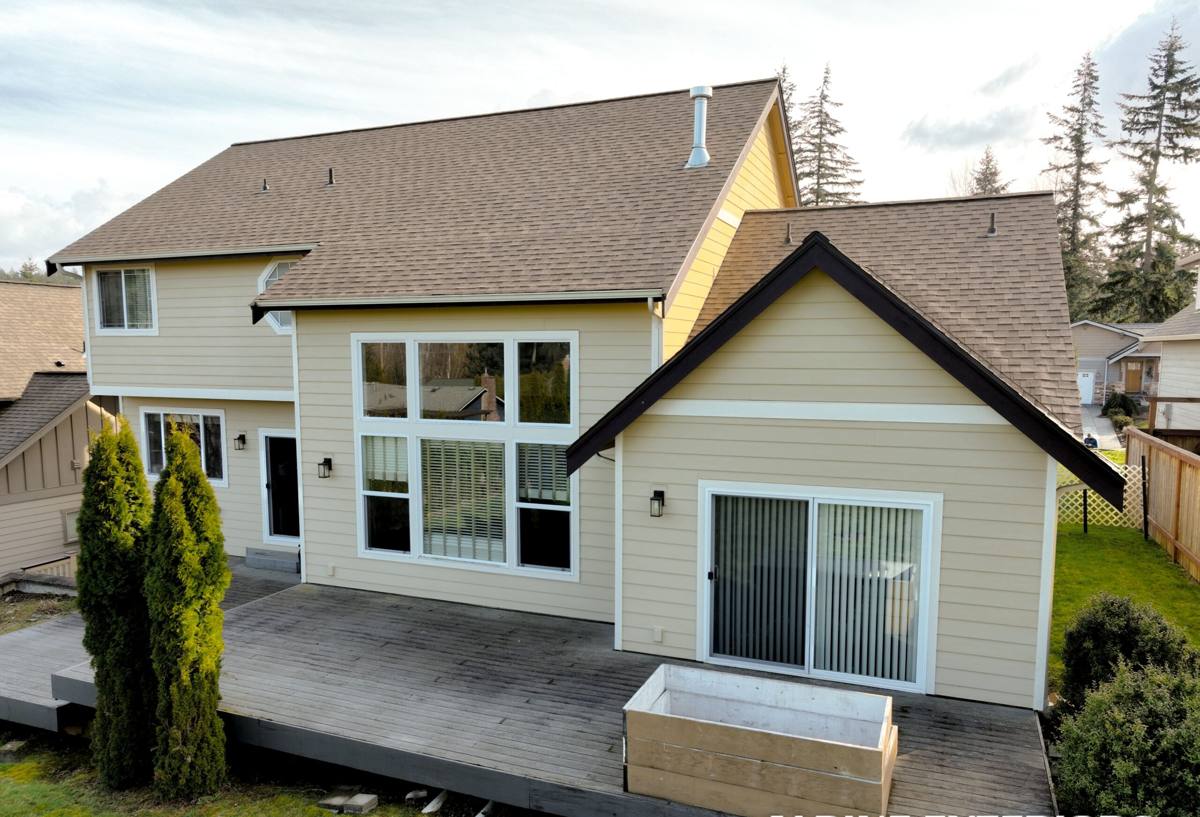
What Storm Damage Actually Looks Like on a West Seattle Roof
Storm damage doesn't always announce itself with an obvious hole. Most of the calls we get in West Seattle after a wind event fall into a handful of patterns:
- Lifted or creased shingles — wind gets under a shingle edge and pries it partway up. The shingle may look fine from the ground but the seal is broken, and it will leak with the next rain even though nothing is visibly missing.
- Missing shingles or tabs — full pieces torn off, usually along roof edges, ridges, and any area where the roof catches wind coming off the Sound.
- Damaged ridge caps — the cap shingles along the roof's peak take the brunt of straight-line wind and are often the first thing to go.
- Flashing pulled loose — around chimneys, skylights, and roof-to-wall transitions, where a few good gusts can walk fasteners loose over one storm or several.
- Impact damage from limbs or debris — West Seattle has plenty of mature trees, and a falling branch can crack shingles, dent gutters, or punch through decking in a bad case.
- Gutter and downspout damage — wind-torn or debris-clogged gutters that dump water against the fascia and siding instead of away from the house.
The tricky ones are the first two — lifted shingles and small missing sections. They're easy to miss from the ground or in a quick look from a ladder, and they're exactly the kind of damage that turns into a hidden leak over the following weeks.
Why the Climate Here Makes This Worse
Seattle's weather isn't just "rainy" — it's driving, wind-pushed rain that comes at a roof sideways instead of straight down, which finds every gap a storm has opened up. West Seattle's exposure to Puget Sound adds two more factors that inland roofs deal with less:
Salt Air
Homes closer to the water pick up salt-laden air, and that air is harder on exposed metal — nail heads, flashing, gutter hardware, and any fastener that isn't properly coated or sealed. A storm that pries up a shingle edge or loosens flashing gives that salt air a new point of entry, which speeds up corrosion in exactly the spot the storm already weakened.
A Long Moss Season
Seattle's mild, wet stretch runs long, and moss doesn't need much encouragement to take hold on north-facing slopes and shaded valleys. Moss holds moisture against the shingle surface and works its way under tabs and around fasteners over time. A roof with an existing moss problem is already weaker at the seams — so storm wind has an easier time lifting shingles that moss has already been undermining. Repairing storm damage without addressing nearby moss just sets up the same failure again next season.
Repeat Storm Cycles
King County typically sees several windstorm systems move through each fall and winter, not just one. A roof that takes a hit and isn't properly repaired often takes a second, worse hit on the next system, because the first storm already broke the seal on shingles nearby.
Our Storm Damage Repair Process
We keep the process straightforward and honest — no upselling a repair into a replacement unless the roof actually needs it.
- Ground-level and roof inspection. We check the obvious damage first, then look at the areas storms hit hardest here: ridges, edges, flashing points, and any shaded or moss-prone slopes.
- Interior check where relevant. If there's any sign of a leak, we look at the attic or ceiling below the affected area to see how far water has traveled before we close anything up.
- Documentation. We note and photograph the specific damage, which is also what you'll want on hand if you're filing an insurance claim.
- Written scope and estimate. You get a clear explanation of what's damaged, what needs to be replaced versus resealed, and why — before any work starts.
- Repair. Matching shingles or components go in, flashing is resealed or replaced, and any exposed decking is checked for water damage before it's covered back up.
- Final check. We confirm the repair area is fully sealed and that surrounding shingles weren't disturbed in a way that leaves them vulnerable to the next storm.
Repair vs. Replacement: How We Make the Call
Not every storm-damaged roof needs a full replacement, and not every roof can be safely patched. The honest answer depends on the roof's age, how widespread the damage is, and what condition the rest of the roofing is in.
| Factor | Leans Toward Repair | Leans Toward Replacement |
|---|---|---|
| Roof age | Under 15 years, shingles still flexible | Approaching or past manufacturer's expected lifespan |
| Extent of damage | Isolated to one slope or section | Spread across multiple slopes or the whole roof |
| Underlying condition | Decking and surrounding shingles sound | Soft decking, widespread moss undermining, or prior storm damage never fixed |
| Shingle match | Matching shingles are available | Discontinued shingle line, visible mismatch would result |
| History | First significant storm event | Repeat damage from multiple storm seasons |
If a repair is the right call, we'll tell you that plainly. If the damage points to a bigger underlying problem, we'll explain why and give you the reasoning, not just a bigger invoice.
What a Correct Storm Repair Includes
A rushed storm repair is one of the most common reasons homeowners end up calling again after the next windstorm. A correct repair covers the whole affected system, not just the visible gap:
- Matching shingle type, profile, and as close a color match as the product line allows
- Properly re-sealed or replaced flashing at any disturbed roof-to-wall, chimney, or skylight transition
- Decking inspected and replaced if water has softened it, not just covered over
- Fasteners set to manufacturer spec — under-driven or over-driven nails are a common cause of repeat lifting
- Surrounding shingles checked for wind-loosened seals, not just the obviously missing ones
- Gutters and downspouts cleared and reattached so water actually leaves the roof instead of backing up against it
- A quick moss check on the repaired slope, since a freshly resealed roof with active moss nearby won't hold as long
Insurance Claims and Storm Damage
Wind and storm damage is one of the more straightforward categories for a homeowner's insurance claim, but the claim is only as good as the documentation behind it. We provide a written scope with photos of the specific damage, which is what most adjusters want to see. We're glad to walk you through what we found and answer an adjuster's questions about the scope of repair, but the claim itself and the settlement are between you and your insurer — we stick to giving you an honest, accurate picture of the roof.
Why a Local West Seattle Crew Matters Here
Storm damage repair is one of those jobs where local experience actually changes the outcome. A crew that works West Seattle regularly already knows which roof orientations catch the worst of the wind off the Sound, which slopes hold moss longest through the wet season, and what a wind-lifted shingle looks like here versus a shingle that's simply worn out. That matters when the difference between a repair and a replacement comes down to judgment, not just a checklist. It also matters for turnaround — after a widespread windstorm, being able to get to a West Seattle roof quickly instead of waiting behind a citywide backlog can be the difference between a same-week fix and a slow leak that turns into a ceiling repair too.
Get a Free, No-Pressure Estimate
If a recent storm left you with missing shingles, a new leak, or damage from a fallen limb, we're happy to take a look and give you a straight answer on what it needs. There's no obligation and no pressure — just an honest assessment from a crew that knows what West Seattle roofs are up against. Use the form below to request a free estimate.