 Seattle Exterior
 Ballard sits close enough to Puget Sound and Salmon Bay that its roofs take on a different kind of punishment than roofs a few miles inland. Salt-laden air, wind-driven rain off the water, and a moss season that can run most of the year all wear on roofing materials in ways that show up as leaks, soft spots, and premature flashing failure. A roof repair here has to account for that environment, not just patch the symptom.
Why Ballard Roofs Wear Differently
Three things combine to make roof repair in this part of Seattle a specialized job rather than a generic one. First is the salt air itself — moisture carrying salt accelerates corrosion on exposed metal flashing, nails, vents, and gutter hardware, which is often where a "roof leak" actually starts. Second is driving rain, which in this climate rarely falls straight down; wind off the water pushes it sideways under shingles, around chimneys, and into any gap in flashing that would stay dry in a calmer climate. Third is moss and lichen, which thrive in the Pacific Northwest's damp, shaded conditions and hold moisture against the roofing surface far longer than the material was designed to tolerate.
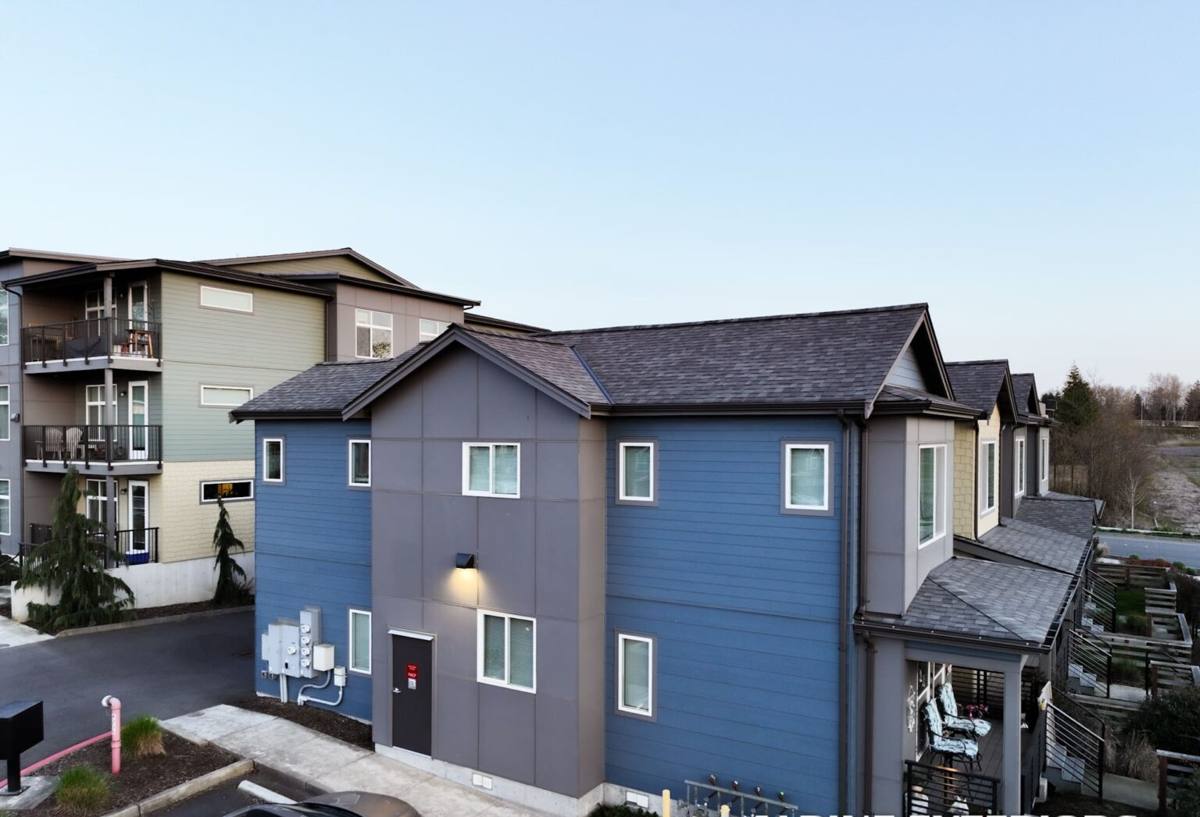
King County's older housing stock adds another layer. A large share of Ballard's homes are Craftsman bungalows and early-to-mid-century houses with roof decking, ventilation, and flashing details that were standard decades ago but don't always meet what a modern repair should look like. Newer townhomes, additions, and accessory dwelling units built to fill in Ballard's density bring low-slope roofing into the mix as well, which fails differently than steep-slope shingle roofs and needs its own repair approach.
The Repairs We See Most in Ballard
Asphalt Shingle Roofs
Most Ballard homes have asphalt shingle roofing, and the most common repair calls involve wind-lifted or cracked shingles, granule loss around valleys and roof edges, and nail pops that let water track underneath the shingle layer. Flashing around chimneys, skylights, and roof-to-wall transitions is a close second — these are the spots wind-driven rain finds first.
Cedar Shake and Older Roofing
On the neighborhood's older houses, original or older-generation cedar shake roofing can still be found. Repairs here focus on split or cupped shakes, moss intrusion between courses, and underlayment that has broken down faster than the shakes themselves. We're upfront that shake roofing is high-maintenance in this climate, and we'll tell you honestly when a patch is a short-term fix versus when the roof is telling you something bigger.
Low-Slope and Flat Roofing
Additions, garages, and some newer builds use low-slope membrane or built-up roofing. These don't fail like shingle roofs — ponding water, seam separation, and membrane punctures are the usual culprits, and they need a repair approach suited to that material rather than shingle-roof techniques applied to the wrong surface.
Warning Signs Ballard Homeowners Shouldn't Ignore
Roof problems in this climate rarely announce themselves with a dramatic leak on day one. More often they show up as small clues that build over a wet season. Worth a call if you notice:
- Dark streaking or thick moss growth on north-facing or shaded roof slopes
- Granules collecting in gutters or at the base of downspouts
- Daylight visible through the attic roof deck, or damp insulation below the roofline
- Discoloration or a soft feel on interior ceilings near exterior walls or chimneys
- Curling, cracked, or missing shingles after a windstorm
- Rust staining below metal flashing, vents, or gutter seams
- Sagging or spongy spots when walking a low-slope roof section
What a Correct Roof Repair Actually Involves
A repair that actually holds up in this climate goes past swapping out the shingle that's visibly damaged. Water rarely stays where it enters — it travels along the deck or underlayment before it shows up as a stain, so the entry point and the stain are often in different spots. A proper repair starts by tracing the leak back to its source, checking the surrounding underlayment and decking for hidden saturation, and confirming that flashing, fasteners, and ventilation in that section are still doing their job before anything gets closed back up.
Ventilation matters more here than homeowners often expect. A roof deck that can't breathe traps moisture from both directions — driving rain from outside and condensation from a warm, humid attic underneath. That trapped moisture is a major reason decking rots and shingles fail early in this region, and it's a factor we check on every repair call, not just on full replacements.
Matching materials matters too. Shingle color, weight, and profile vary between manufacturers and even between production runs, so a patch that's structurally sound can still stand out or, worse, create a slightly mismatched water path if it's not tied into the existing courses correctly. We match as closely as the existing roof allows and explain the trade-offs when an exact match isn't realistic.
Moss, Algae, and Debris Between Repairs
Moss is less a cosmetic issue and more a moisture-retention problem. Once it establishes itself on a shaded slope, it holds water against the shingle surface long after the rest of the roof has dried, which softens granules and shortens the material's working life. It also works its way under shingle edges and lifts them slightly, which is exactly the kind of gap wind-driven rain exploits.
Between repairs, the most useful things a Ballard homeowner can do are keeping gutters and valleys clear of needles and debris, trimming back tree cover that keeps a roof slope shaded and damp, and having moss physically removed rather than left to spread — chemical treatments alone don't undo the damage already done to the shingle surface. None of this replaces a repair when the roofing material itself has failed, but it slows how fast the next repair becomes necessary.
Repair or Replace? How to Think About It
Not every damaged roof needs to come off. The honest answer depends on the roof's age, how localized the damage is, and what condition the rest of the roofing system is in.
| Situation | Repair Usually Makes Sense | Replacement Usually Makes Sense |
|---|---|---|
| Roof age | Roof is under 15–20 years old with a full remaining service life | Roof is near or past its expected lifespan for the material |
| Extent of damage | Damage is limited to one section, slope, or penetration | Damage or wear shows up across multiple slopes |
| Decking condition | Decking underneath is dry and structurally sound | Decking is soft, rotted, or repeatedly getting wet |
| Repair history | This is the first or an isolated repair call | The same areas keep needing repeat repairs |
| Moss and wear pattern | Granule loss and moss are moderate and localized | Widespread granule loss and moss across most of the roof |
We'll give you a straight answer either way. If a repair genuinely solves the problem, that's what we'll recommend — there's no benefit to us or you in replacing a roof that has years of life left in it.
How Our Ballard Roof Repair Process Works
- Inspection and diagnosis. We walk the roof (weather permitting) and check the attic side where accessible, tracing the actual water path rather than just the visible symptom.
- Honest assessment. You get a clear explanation of what's failing, why, and whether it's a repair or something bigger — in plain language, not a sales pitch.
- Written scope and estimate. You know exactly what work is being done and why before anything starts.
- The repair itself. Matching materials where possible, correcting flashing and ventilation issues found along the way, not just the original complaint.
- Final check. We confirm the repaired area is properly sealed and tied into the surrounding roofing before we consider the job done.
Materials and Cost Factors
Roof repair pricing varies with the scope of the damage and what's found once the affected section is opened up. Small, isolated repairs are often a few hundred dollars; larger repairs involving decking replacement, extensive flashing work, or multiple sections run into the thousands. The factors below drive most of that range.
| Factor | Why It Affects Cost |
|---|---|
| Roof material | Asphalt shingle patches are typically less involved than cedar shake or low-slope membrane repairs |
| Decking condition | Rotted or saturated decking has to be replaced, not just covered, which adds labor and material |
| Roof pitch and access | Steeper roofs and difficult access add time and safety requirements |
| Flashing complexity | Chimneys, skylights, and multiple roof valleys each add detail work |
| Material matching | Sourcing a close match to older or discontinued shingle lines can affect cost and timeline |
Why a Crew That Already Works Ballard Matters
Roofing knowledge that applies to a dry inland climate doesn't always transfer directly here. A crew that regularly works Ballard and the surrounding Seattle neighborhoods has already seen how salt air corrodes specific flashing details, how wind off the water pushes rain into roof-wall transitions, and how fast moss reestablishes on shaded King County roofs. That experience shows up in fewer callbacks and repairs that are built for the conditions the roof will actually face, not generic conditions.
It also means realistic expectations. We're not going to tell you a roof needs full replacement when a targeted repair will genuinely hold, and we're not going to undersell a repair on a roof that's clearly at the end of its service life. Either way, the recommendation is based on what we find on your roof, not a standard script.
If you're noticing moss buildup, a slow leak, or storm damage on your Ballard roof, we're happy to take a look and give you a straightforward assessment. Use the form below to request a free, no-pressure estimate — there's no obligation, just an honest read on what your roof actually needs.