 Seattle Exterior
 Why Magnolia's Waterfront Setting Is Hard on Decks
Magnolia sits on a peninsula wrapped on three sides by Puget Sound, Shilshole Bay, and the Ship Canal, which means most homes here get a steady dose of salt-laden marine air blowing in off the water almost year-round. That air moves faster through open hardware, screw heads, and any exposed metal than it does a few miles inland, and it's one of the biggest reasons decks in this neighborhood corrode, streak, and loosen up faster than homeowners expect. Layer in King County's long, wet season — real driving rain pushed sideways by wind off the Sound, not just a gentle straight-down drizzle — and a deck that wasn't detailed correctly at the ledger, the flashing, and the fastener level will start showing problems within a few winters, not a few decades.
Magnolia also has more mature tree cover than a lot of Seattle neighborhoods, especially near the bluffs and around Discovery Park. Shade is nice in July, but from October through April it means decks under or near tree canopy stay damp longer and grow moss faster. A deck built for Magnolia has to account for all three of these things at once — salt air, hard rain, and shade-driven moss — not just be "a deck that happens to be in Seattle."
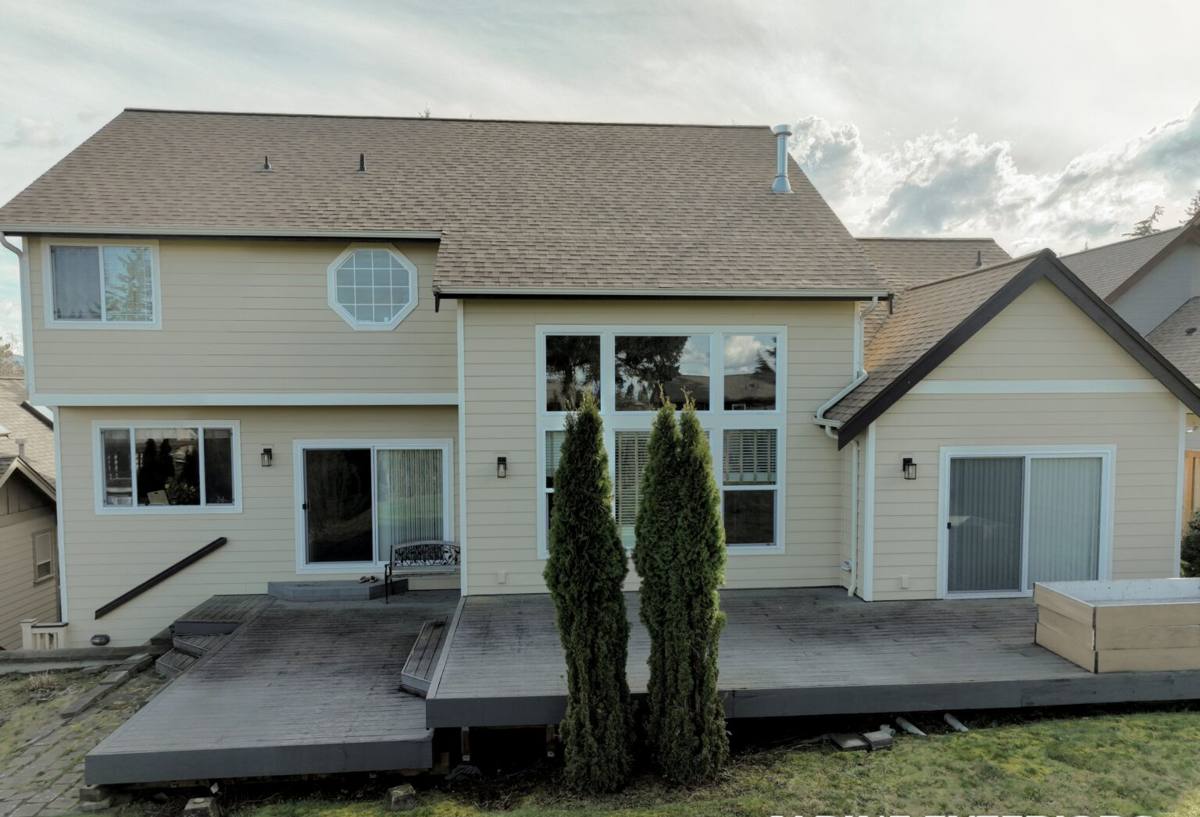
What a Correctly Built Custom Deck Involves
Framing and Ledger Attachment
The ledger board — where the deck attaches to the house — is the single most important detail on any attached deck, and it's also the spot most likely to fail quietly behind the scenes if it's flashed wrong. Water that gets behind an improperly flashed ledger doesn't just rot the ledger itself; it can work its way into the house framing and sheathing, which is a much more expensive problem to fix later. On a correct build, the ledger gets proper flashing that sheds water away from the house, not toward it, along with structural lag screws or through-bolts sized to the actual load, not just whatever was on the truck.
Footings matter just as much. Magnolia's terrain includes a fair number of sloped and bluff-adjacent lots, and footing depth needs to account for the actual soil and slope conditions on that specific property, not a generic assumption. Undersized or shallow footings are one of the more common corners cut on lower-bid deck jobs, and they're also one of the hardest problems to spot after the decking boards are down.
Decking Material Choices
There's no single "right" decking material for every Magnolia home — it depends on how much sun the deck gets, how much upkeep the homeowner wants to do, and budget. Cedar and other wood decking still have a place, especially on homes where the look matters and the owner is willing to stay on top of sealing and cleaning. Composite and PVC decking trade a higher upfront cost for a lot less annual maintenance, which tends to matter more on shaded, moss-prone decks where wood needs more frequent attention to stay safe underfoot.
Fasteners, Flashing, and Hardware
Given the salt air, we treat fastener and hardware selection as a real decision, not an afterthought. Stainless steel or high-grade coated fasteners, hidden fastener systems where appropriate, and correctly lapped flashing tape at every transition point all cost a little more up front and save a lot of grief later. This is also where a lot of the cheapest deck bids cut corners, because mismatched or bargain hardware is invisible on the day the job is finished — it only becomes a visible problem two or three winters in.
Decking Material Comparison for a Marine Climate
| Material | Upfront Cost | Maintenance in Wet, Salty Air | Moss/Slip Behavior in Shade |
|---|---|---|---|
| Pressure-treated wood | Lowest | Needs regular sealing/staining; fasteners must be rated for treated lumber | Can get slick if not cleaned; absorbs moisture |
| Cedar | Moderate | Naturally rot-resistant but still needs periodic sealing near the water | Similar moss risk to other wood in full shade |
| Composite | Higher | Low — occasional washing, no sealing or staining | Textured surfaces resist slipping better; still needs occasional cleaning in deep shade |
| PVC | Highest | Lowest — doesn't absorb moisture, minimal upkeep | Generally the most consistent underfoot in wet, shaded spots |
Our Process, From Estimate to Final Walkthrough
We start with an on-site visit, because a deck design that ignores a home's actual sun exposure, slope, and view lines never works out well. On a Magnolia lot, that usually means talking through how much shade the deck will get through the day, whether the site slopes toward the water or the street, and what the sightlines to Puget Sound or the Sound-facing neighborhood look like from a raised structure.
- Site visit and assessment — soil, slope, sun/shade pattern, existing structure condition if it's a replacement
- Design and material selection based on how the space will actually be used and how much upkeep the owner wants long-term
- Permit preparation and submission through the City of Seattle before any framing begins
- Demo of the old deck if applicable, then footings, framing, and ledger work
- Decking, railing, and stair installation
- Final walkthrough covering fastener check, drainage, and railing security before we consider the job done
Moss, Drainage, and Shade — A Magnolia-Specific Problem
Because so many Magnolia properties have real tree cover, moss is less of an occasional nuisance here and more of a design problem that has to be solved at build time. A deck surface that doesn't drain and dry out between rain events will grow moss no matter what material it's built from — the difference is how much that moss affects safety and how much cleaning it takes to manage. Proper board spacing, a slight slope built into the frame so water actually runs off instead of pooling, and adequate airflow underneath the deck all reduce how long the surface stays damp after a storm rolls through.
Homeowners can help this along by keeping nearby branches trimmed back enough to let some light and air reach the deck surface, and by rinsing off organic debris — leaves, needles, seed pods — before it breaks down into the kind of grime moss thrives on. None of this eliminates moss entirely in a shaded, wet climate, but it's the difference between an occasional pressure wash and a deck that's slick most of the winter.
Permits and Code Basics for Seattle Decks
Most attached decks in Seattle require a building permit, and King County and city inspectors will look closely at footing depth, ledger attachment, and guardrail height on any deck raised a meaningful distance above grade. Guardrails become a code requirement once a deck surface reaches a certain height above the ground, and stair and rail spacing follow standard building code limits meant to keep gaps too narrow for a small child to pass through. We handle the permit submission and inspection scheduling as part of the job, which matters most on corner lots or properties near critical slope areas, where Seattle's review process tends to ask more questions.
What Drives the Cost of a Custom Deck
| Factor | Why It Matters |
|---|---|
| Size and shape | More square footage and complex angles both add material and labor time |
| Height above grade and footing depth | Sloped or bluff-adjacent lots often need deeper or more numerous footings |
| Decking material | Wood, composite, and PVC carry different upfront costs and long-term upkeep |
| Railing style | Cable, glass, and custom wood railings all price differently than standard baluster rail |
| Stairs and landings | Multiple stair runs or mid-level landings add framing and labor |
| Permit and inspection scope | Slope, critical area, or setback review can add time to the permitting phase |
Checklist: Questions to Ask Before Hiring a Deck Contractor
- Will you pull a permit and schedule inspections, or is that left to me?
- What fastener and hardware grade do you use, and is it rated for marine/coastal exposure?
- How is the ledger board flashed, and can you explain why?
- What footing depth are you planning for this specific lot, and why?
- Do you have current liability insurance and, if required, a bond?
- Can you walk me through drainage and how the design will handle shade and moss?
- What's actually included in the estimate versus billed as an add-on later?
Why Hire a Crew That Already Works in Magnolia
A contractor who's built decks throughout Magnolia already knows which streets sit on sloped or bluff-adjacent lots that need extra attention at the footing stage, which blocks tend to have heavier tree canopy and therefore more moss pressure, and how the City of Seattle's permitting office typically handles review for this part of town. That familiarity saves time during design and reduces the odds of a surprise mid-project — whether that's a soil condition, a setback question, or a drainage detail that a crew unfamiliar with the neighborhood might not think to ask about up front.
It also means the finished deck gets built with Magnolia's actual climate in mind from day one, rather than treated as a generic backyard project. That's the difference between a deck that still looks and performs well after a decade of Puget Sound weather and one that needs early repairs because a detail was overlooked.
If you're planning a new deck or replacing one that's showing its age, we're happy to take a look and put together a free, no-pressure estimate — just fill out the form below and we'll go from there.