 Seattle Exterior
 Ballard's Housing Stock and Why Windows Fail Here
Ballard is a mix of early-1900s craftsman and foursquare homes, mid-century additions, and a growing number of townhomes and infill builds packed close to the water. That range matters when it comes to windows. A hundred-year-old double-hung window with original wood trim needs a different installation approach than a 2005 vinyl slider that was never flashed correctly to begin with. We see both constantly in this neighborhood, and the fix is rarely just "put in a new window." It's diagnosing what the wall assembly is doing around that opening first.
Ballard's proximity to Puget Sound and the Ship Canal means homes here take on more airborne moisture and salt than houses further inland in Seattle. Add in mature tree cover on many blocks, and you get shaded, damp wall sections that stay wet longer after a storm. Windows are one of the first places that shows up as failed seals, soft trim, or fogged glass.
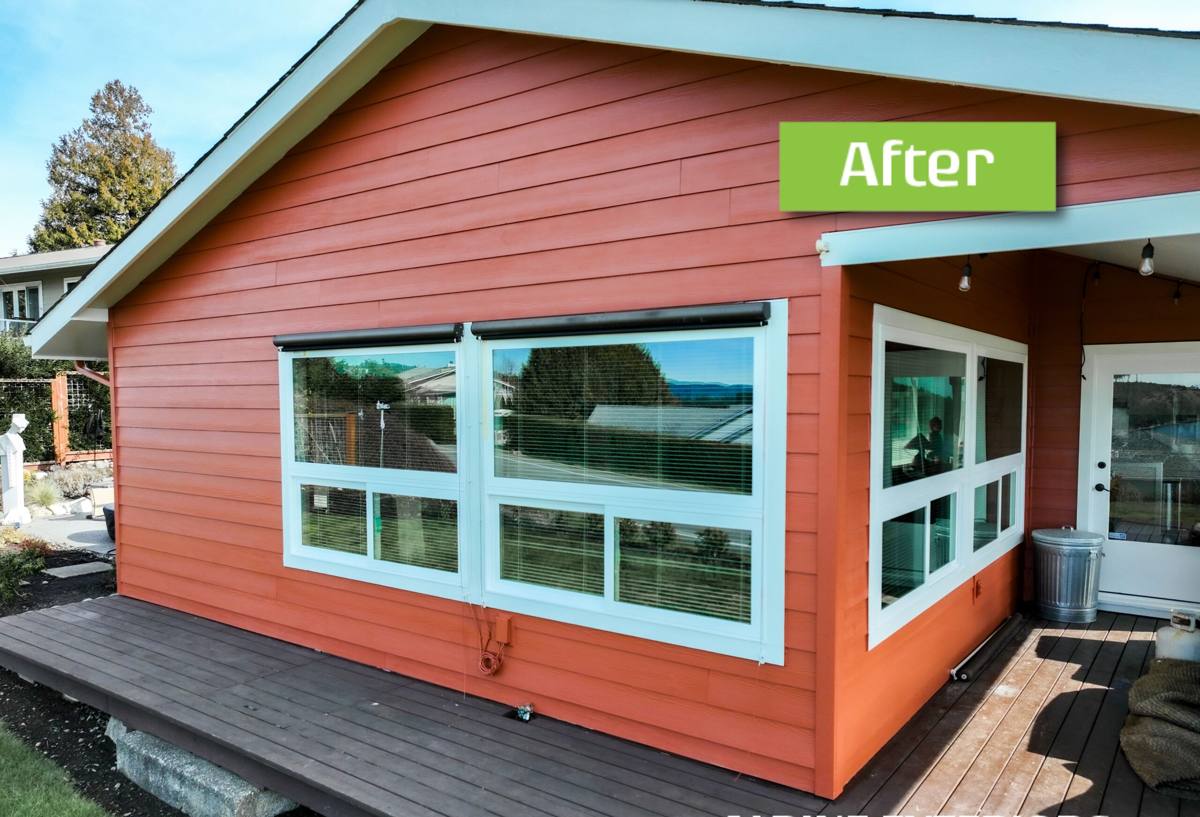
What Salt Air, Rain, and Moss Actually Do to Windows
Three specific conditions drive window failure in Ballard, and each one attacks a different part of the assembly:
Salt Air
Salt-laden air off the Sound accelerates corrosion on exposed metal — window hardware, screws, aluminum cladding, and older steel casement frames all corrode faster here than they would twenty miles inland. Once hardware seizes or corrodes, weatherstripping and locking mechanisms stop sealing properly, and that's when air and water start finding their way in around the sash.
Driving Rain
Seattle's rain isn't usually heavy, but it's frequent and often wind-driven, especially in fall and winter storms that come off the water. Wind-driven rain doesn't just fall on a window — it gets pushed sideways and upward into any gap in the flashing or sealant. A window that would be fine in a calm rain can leak in Ballard because of how the wind pattern hits the wall.
Moss and Sustained Moisture
Ballard's moss season runs long — shaded siding, north-facing walls, and wood trim stay damp for weeks at a stretch during the wetter months. Moss and algae hold moisture against wood sills and trim, which is exactly the condition that causes rot. By the time moss is visibly growing on a windowsill, the wood underneath has usually been wet for a while.
Signs Your Windows Need Attention
Most window problems in Ballark homes show up gradually. Here's what we tell homeowners to watch for:
- Soft, spongy, or discolored wood at the sill or bottom corners of the frame
- Visible moss, algae, or persistent green staining on the trim or sill
- Fogging or condensation between the panes of a double-pane window (a sign the seal has failed)
- Drafts you can feel near the frame even when the window is closed and locked
- Difficulty opening, closing, or locking — often a sign of corroded hardware or a warped frame
- Paint that's peeling or bubbling specifically around the window, rather than the whole wall
- Interior drywall or trim staining below or beside a window after a storm
- Noticeably higher heating bills without another clear cause
Any one of these on its own might not mean a full replacement. But two or three together, especially on a wall that faces the prevailing weather, usually means the window and the flashing around it both need a real look.
What a Correct Window Installation Actually Involves
The window unit itself is only part of the job. In a climate like Ballark's, how the opening is prepared and sealed matters just as much as the product going into it. A rushed installation with a great window will still leak. A careful installation with a mid-range window will hold up for decades.
Removing the Old Window the Right Way
We take the old unit out carefully and inspect the framing, sheathing, and sill underneath before anything new goes in. This is the point where hidden rot or water damage from a previous bad install gets found — and it's much cheaper to deal with now than after a new window is sealed on top of it.
Sill Pan and Flashing
A sloped sill pan directs any water that gets past the window back outside instead of into the wall cavity. Flashing tape integrates with the home's weather-resistive barrier so water sheds downward and outward, shingle-style, the same way roofing works. This step is invisible once the job is done, but it's the single biggest factor in whether a window leaks five years from now.
Air Sealing and Insulation
The gap between the window frame and the rough opening needs to be filled with a proper low-expansion foam or insulation — not stuffed with excess material that can bow the frame, and not left loose enough to leave air gaps. Both mistakes are common with rushed installs.
Exterior Sealant and Trim
Caulking and trim finish the job on the outside, but sealant is a backup layer, not the primary water barrier — the flashing underneath does that work. We use exterior-grade sealants rated for the Pacific Northwest's freeze-thaw and constant-moisture cycle rather than a general-purpose caulk that will crack and shrink within a couple of seasons.
Window Materials and Styles That Hold Up Near the Sound
Every material has trade-offs. Here's how the common options compare for a Ballard property specifically, factoring in salt air and sustained moisture exposure:
| Material | Performance Near Salt Air | Maintenance | Typical Fit |
|---|---|---|---|
| Vinyl | Good — won't corrode or rot, though hardware quality varies by manufacturer | Low | Budget-conscious replacements, rentals, additions |
| Fiberglass | Very good — dimensionally stable, resists moisture and corrosion well | Low | Long-term owners wanting minimal upkeep |
| Aluminum-clad Wood | Good on the exterior face, but clad seams need to be watched near salt air | Moderate | Craftsman and period-appropriate remodels |
| Solid Wood | Requires diligent upkeep — most vulnerable to moss, rot, and moisture cycling | High | Historic restorations where original character is the priority |
We don't push one material on every job. A solid wood window can be the right call on a character home in Ballark's older blocks if the owner is committed to the upkeep — but we'll say so plainly if that upkeep isn't realistic for a given household, rather than selling a product that's a poor match for how the home will actually be maintained.
Glass Packages
Dual-pane, low-E glass is the baseline we recommend for this area — it cuts heat loss and reduces condensation risk on interior glass during cold, damp stretches. Triple-pane is worth discussing on north-facing walls or homes closer to busier streets where both insulation and sound matter more.
Our Installation Process, Start to Finish
Homeowners generally want to know two things: how disruptive this will be, and whether it's being done right. Here's the sequence we follow:
- On-site assessment — we look at each window opening individually, not just the unit, since two windows on the same house can have completely different conditions behind the trim.
- Honest scope and estimate — what needs replacing, what can be repaired, and what we'd flag as "watch this but it's not urgent yet."
- Measurement and ordering — precise measurements matter more on retrofit jobs where we're working within an existing opening rather than framing new.
- Removal and inspection — old unit comes out, framing and sheathing get checked for hidden moisture damage before anything new is installed.
- Sill pan, flashing, and air sealing — the moisture-management work described above, done before the new window goes in and sealed.
- Setting and securing the window — leveled, plumbed, and fastened per manufacturer spec, since an out-of-square window won't operate or seal correctly no matter how good the product is.
- Exterior and interior trim, sealant, and cleanup — finished to match the surrounding trim as closely as practical.
- Final walkthrough — we open, close, and lock every window with the homeowner present before calling the job done.
New Construction Openings vs. Retrofit Installation
Most window replacement work in an established neighborhood like Ballard is retrofit — meaning the new window goes into the existing rough opening, working around trim, siding, and interior finishes that stay in place. This keeps disruption and cost down but requires precise measuring and careful flashing integration with the existing weather barrier, since there's less room for error.
Full-frame replacement, where we remove down to the framing and start over, is worth it when the sheathing or framing around the opening has water damage, or on additions and remodels where the opening itself is changing size. It costs more and takes longer, but it's the right call when the wall assembly behind the trim is already compromised — patching a window into damaged framing just moves the problem down the road.
Cost Factors Worth Understanding
Window pricing varies a lot based on specifics, and we'd rather explain the variables than throw out a number that doesn't apply to your project. Broadly, a single-window replacement on an existing opening tends to run in the low-to-mid thousands per window installed, with full-frame work, custom sizes, or multiple windows on one visit changing that math significantly. The real drivers are:
| Factor | Why It Changes Cost |
|---|---|
| Retrofit vs. full-frame | Full-frame requires more labor, trim work, and sometimes siding repair |
| Material | Vinyl is typically the most affordable; fiberglass and wood cost more upfront |
| Glass package | Triple-pane and specialty coatings add cost over standard dual-pane low-E |
| Hidden damage | Rot or moisture damage found during removal adds repair scope before the new window can go in |
| Access and height | Upper-story or hard-to-reach windows take more time and equipment |
| Number of windows | Doing several windows in one visit typically reduces the per-window cost |
We walk through these factors on-site before giving a number, so the estimate reflects your house and not a generic average.
Why a Crew That Already Works in Ballard Matters
A window installer who mainly works drier inland areas of King County can still do competent work, but they won't necessarily think to check for the things that matter here first — corroded hardware from salt exposure, moss-driven rot at shaded sills, or flashing that needs to account for wind-driven rain off the Sound. Crews who work Ballark regularly recognize these patterns quickly because they've seen the same conditions on the block over, not because of any special certification.
That familiarity also shows up in smaller ways: knowing which older Ballard homes commonly have non-standard window openings from past remodels, understanding how the neighborhood's mix of exposed and tree-shaded walls affects which windows fail first, and not being surprised by what's behind the trim when an opening gets checked.
If you're weighing a window project in Ballard — whether it's one failing window or a full house of aging originals — we're happy to take a look and give you a straightforward assessment of what's actually going on and what it would take to fix it right. There's no pressure and no obligation; use the form below to request a free estimate.