 Seattle Exterior
 A Deck Built for Beacon Hill's Hills and Weather, Not a Generic Lot
Beacon Hill sits up above the rest of the city, and that elevation changes how a deck needs to be built here. Many lots slope steeply, older homes were framed decades before today's deck codes existed, and the tree cover and hillside microclimate mean a lot of shade, a lot of moisture, and a lot of moss. A deck that would hold up fine on a flat, sunny lot somewhere else can fail early on a hillside property in this neighborhood if it wasn't designed with that terrain in mind.
We build and repair decks across Seattle and King County, and Beacon Hill jobs come with their own set of considerations: grading and slope, older foundations and framing tied into the original house, mixed sun and deep shade depending on the yard, and the general Pacific Northwest reality of salt air drifting up from the Sound, driving rain for months at a stretch, and a moss season that runs longer here than in drier parts of the country. A deck built without accounting for those things will look fine for a year or two and then start showing problems — soft spots, slick surfaces, rot at the ledger board — well before it should.
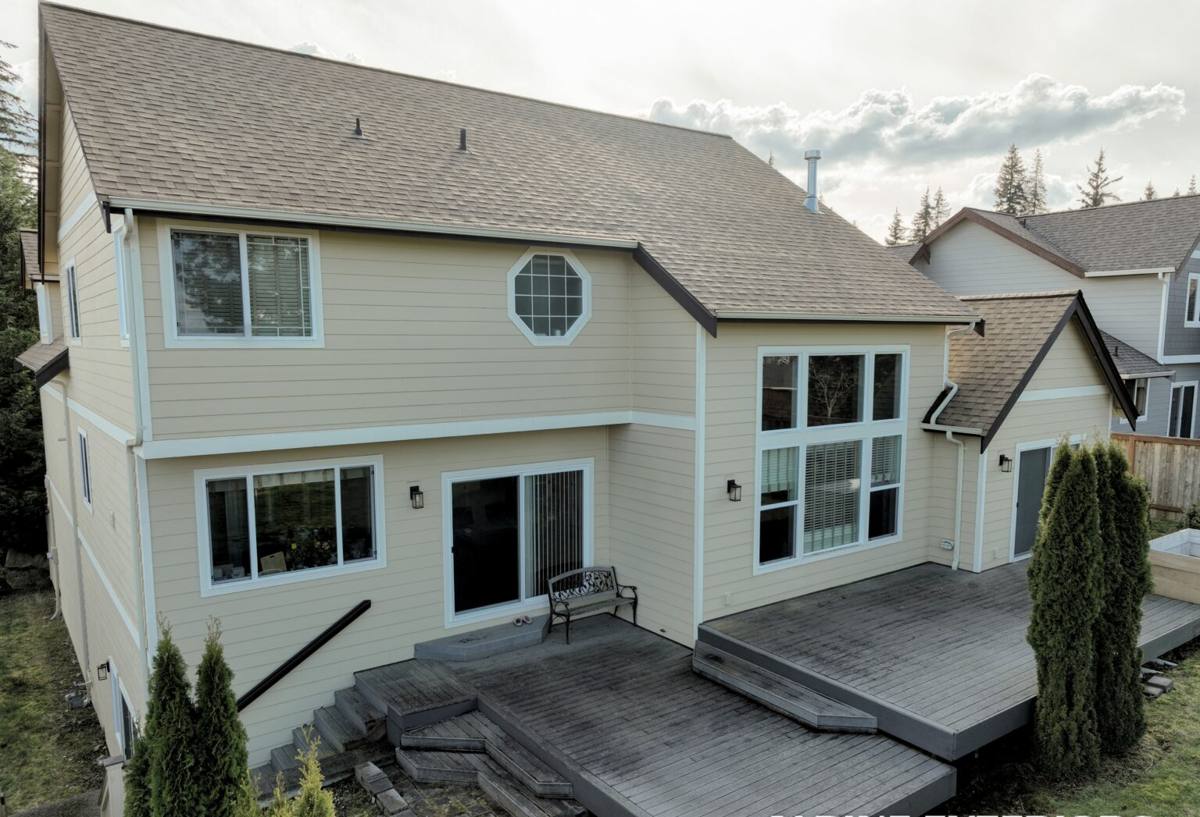
What Local Weather Actually Does to a Deck
Moisture That Never Fully Lets Up
Seattle's rainy season isn't just about total rainfall — it's the number of consecutive damp, low-sun days where wood and composite surfaces don't get a real chance to dry out. On a hillside lot with tree cover, that effect is worse. Water sits in end grain, in fastener holes, and in any spot where two boards meet tightly. Over a few seasons, that's where rot starts, usually from the inside out, which is why a deck can look okay on the surface while the framing underneath is already compromised.
Moss, Algae, and Slick Surfaces
Moss doesn't just grow in the shady corner of the yard — it grows on horizontal wood and composite surfaces that stay damp, and Beacon Hill's shaded slopes and tree canopy give it plenty of places to take hold. Beyond looking bad, moss and algae hold moisture against the decking material and create a genuinely slippery walking surface, which matters on stairs and ramps especially.
Salt Air and Metal Fasteners
Seattle isn't a beachfront town, but Puget Sound's salt air reaches inland further than people expect, and it accelerates corrosion on lower-grade fasteners, brackets, and hardware. A deck built with the wrong fastener spec might not show a problem for a couple of years — then the screws start bleeding rust streaks into the decking, or worse, structural hardware weakens where you can't see it.
Choosing the Right Decking Material for This Neighborhood
There's no single "best" decking material — the right choice depends on your budget, how much upkeep you're willing to do, and how much sun versus shade your specific lot gets. Here's how the common options actually compare for a Beacon Hill property:
| Material | Upfront Cost | Maintenance | How It Handles Shade & Moisture |
|---|---|---|---|
| Pressure-treated lumber | Lowest | Needs re-staining/sealing every 1-2 years | Prone to moss and mildew in shaded, damp spots without upkeep |
| Cedar | Mid-range | Regular sealing to keep its color and resist moisture | Naturally moisture-resistant, but still needs care in constant shade |
| Composite decking | Higher upfront | Occasional washing, no staining or sealing | Resists rot well, though moss/algae can still grow on the surface film if it's never cleaned |
| PVC decking | Highest | Lowest — mostly rinsing | Fully resistant to rot; still needs periodic cleaning to stay slip-free in shade |
Our honest take: on shaded, damp Beacon Hill lots, composite or PVC decking earns its higher upfront cost back in avoided maintenance, especially if the deck sits under trees where staining would need to happen constantly. On sunnier, more open lots, a well-maintained cedar deck can perform very well and gives you a look composite can't fully match. We'll walk your specific yard with you and give you a straight answer rather than pushing whatever has the best margin.
What a Correctly Built Deck Actually Involves
A deck is a structure, not just a surface to walk on, and most of the problems we get called out to fix trace back to shortcuts taken in the parts you can't see once the boards are down.
- Footings sized for the soil and slope — hillside lots often need deeper or additional footings compared to flat ground, and getting this wrong is how decks develop lean or settling over time.
- Ledger board flashing done correctly — the connection where the deck attaches to the house is the single most common source of hidden rot when it's flashed poorly or not at all.
- Joist spacing matched to the decking material — composite and PVC boards often need tighter joist spacing than lumber; using lumber-spec spacing under composite decking is a shortcut that shows up as bounce and sag within a few years.
- Proper drainage and slope away from the house — even a slight pitch in the decking surface keeps water moving instead of pooling, which matters even more under tree cover where things dry slowly.
- Stainless or coated fasteners rated for exterior/coastal-influenced exposure — cheap fasteners are one of the most common points of early failure we see.
- Guard rail and stair details built to code, not just to look right — this is a safety item, and it's also one of the first things an inspector or future home buyer's inspector checks.
How We Approach a Beacon Hill Deck Project
1. On-Site Walkthrough
We start by actually walking the lot — the slope, the sun/shade pattern, how the house is currently framed, and what's underneath an existing deck if we're replacing one. Hillside lots especially need eyes on-site before any real numbers get discussed.
2. Honest Scope and Material Conversation
We talk through material options against your budget and how much upkeep you actually want to do, not just what looks best in a photo. If a lower-maintenance material makes more sense for a shaded, damp part of your yard, we'll say so.
3. Permitting
Most new decks and many deck rebuilds in Seattle require a permit, and slope, height above grade, and proximity to property lines can all affect what's required. We handle the permit process as part of the job so you're not left figuring out King County and city requirements on your own.
4. Build, With Attention to What's Underneath
Footings, framing, flashing, and fastener selection get the same attention as the visible decking — because on a hillside, damp lot, that's the part that determines whether the deck is still solid in ten years.
5. Walkthrough and Care Guidance
Before we consider the job done, we walk it with you and cover basic maintenance specific to your deck's material and sun exposure — what it needs and how often.
Signs Your Existing Beacon Hill Deck Needs Attention
A lot of deck problems are easy to catch early if you know what to look for. Worth checking a couple times a year, especially heading into and out of the wet season:
- Soft or spongy spots underfoot, especially near the house or stairs
- Persistent green or black staining that doesn't wash off easily
- Gaps opening up between boards, or boards that have started to cup or crown
- Rust streaking around screw heads or metal hardware
- Any visible gap, staining, or softness at the ledger board where the deck meets the house
- Railings or stair posts that feel the slightest bit loose when you push on them
- Standing water anywhere on the deck surface after rain instead of it draining off
Some of these are simple maintenance fixes. Others — especially ledger board issues or soft framing — mean the structure needs a real inspection before it gets worse. We're happy to take a look and tell you honestly which category you're in.
Permits and Hillside Considerations
Because a fair number of Beacon Hill properties sit on sloped lots, projects here sometimes involve a bit more engineering thought than a flat-lot deck — footing depth, guard height where the ground drops away, and sometimes drainage planning so the new structure doesn't redirect water toward the house or a neighboring property. Seattle's permitting requirements apply regardless of neighborhood, but slope adds a layer that's worth having a contractor familiar with hillside builds handle rather than guessing at.
Simple Maintenance to Fight the Moss Season
Whatever material your deck is built from, a few habits go a long way in a climate where damp shade sticks around for months:
- Sweep leaves and debris off regularly, especially in fall — trapped organic matter is what moss and algae feed on
- Rinse or gently wash the surface a couple times a year, more often in heavily shaded areas
- Keep gutters and downspouts clear so water isn't dumping directly onto or near the deck
- Re-seal or re-stain wood decking on schedule rather than waiting until it looks like it needs it
- Trim back overhanging branches where possible to let more light and air reach the surface
Why It Matters That We Already Work This Neighborhood
A contractor who mostly works flat, sunny lots elsewhere in King County can still build a technically sound deck — but they may not think through slope-appropriate footings, or default to lumber-spacing joists under composite decking, or underestimate how much shade a particular yard actually gets through the year. Working Beacon Hill regularly means we've already thought through the hillside grading questions, the permit specifics, and the moss-and-moisture reality of this part of Seattle, so those considerations are built into the plan from the first visit rather than discovered later.
If you're planning a new deck, replacing one that's past its useful life, or just want an honest read on whether yours needs repair or replacement, we're glad to come take a look. Reach out using the form below for a free, no-pressure estimate.