 Seattle Exterior
 Beacon Hill's Climate Is Harder on Siding Than It Looks
Beacon Hill sits up on a ridge above the rest of south Seattle, and that elevation cuts both ways. Homes get some of the best views in the city, but they also catch weather that lower, more sheltered neighborhoods don't see as directly. Wind off Puget Sound and the Duwamish waterway pushes salt-laden air up the slope, and west- and south-facing exposures take the brunt of it. Add King County's long, wet fall-through-spring stretch and you've got siding that's rarely given a full chance to dry out before the next system rolls through.
Moss is the part homeowners notice first. In this climate it isn't a cosmetic nuisance — it's a sign that a wall assembly is staying damp longer than it should. Moss and algae hold moisture against a wall surface, and if that surface is a material that swells, delaminates, or absorbs water when its coating fails, the moss problem becomes a rot problem underneath it. We see this pattern often enough on Beacon Hill re-siding jobs that we plan for it from the first inspection rather than treating it as a surprise.
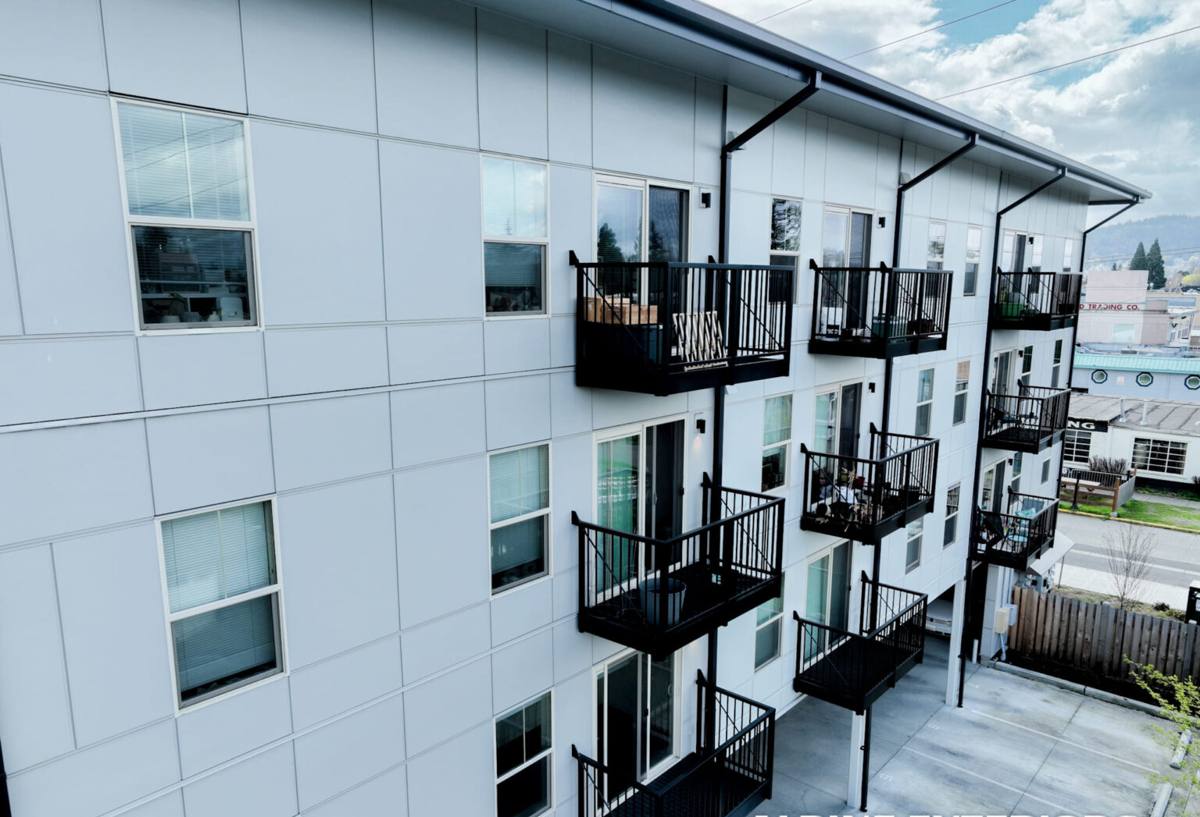
What This Means for Your Siding Choice
Any siding material can look fine going up. The difference shows five, ten, fifteen years in, once it's absorbed a few hundred cycles of rain, salt air, and the freeze-thaw swings that show up most winters. For a Beacon Hill home, the material needs to:
- Resist moisture absorption at the board itself, not just at the paint layer
- Hold a factory finish that doesn't need repainting every 5-8 years to keep water out
- Stay dimensionally stable through wet winters and drier summers, so joints and caulk lines don't work themselves loose
- Shed salt residue and grime without the surface breaking down chemically
- Resist moss and mildew growth on the surface itself, not rely entirely on a wall's ability to dry
This is exactly the list that eliminates a lot of otherwise reasonable-looking siding products once you're honest about long-term performance in this specific climate.
Why We Only Install James Hardie Fiber Cement
We don't install vinyl, LP SmartSide, primed wood, cedar, or other fiber cement brands. That's a deliberate standard, not a sales pitch, and it comes down to how each of those materials behaves once it's been through a few Pacific Northwest winters.
Vinyl is inexpensive and low-maintenance in dry climates, but it's a thin plastic product that expands and contracts with temperature swings, can crack in impacts, and doesn't hold up well against long-term UV and salt exposure — colors fade and panels can warp. Engineered wood products like LP SmartSide use a wood-strand core that, however well-treated, is still wood; if water gets past a seam or a poorly sealed cut edge, the core can swell and deteriorate from the inside where you can't see it until the damage is advanced. Primed wood and cedar look great initially but need real maintenance — regular repainting or staining — to keep water out, and that's a demanding schedule to keep up with in a climate that gives you a short dry season to work in.
James Hardie fiber cement is cement, sand, and cellulose fiber — it doesn't rot, it doesn't provide a food source for pests, and it's non-combustible. The ColorPlus factory finish is baked on under controlled conditions, which gives it more consistent coverage and UV resistance than field-applied paint, and it's backed by a real transferable warranty on both the substrate and the finish. It isn't cheap, and it isn't the fastest material to install correctly — but for a home taking on salt air and driving rain every year, it's the one that holds up without asking the homeowner to keep re-treating it.
The Right Hardie Product Line for This Exposure
James Hardie engineers its siding by climate zone, and homes in our region generally call for the HZ5 line, built for wetter, harsher weather conditions than the HZ10 product sold in drier parts of the country. For a west- or south-facing Beacon Hill elevation catching direct wind and rain, we'll also talk through lap siding versus panel systems, and where trim and batten details need extra attention at penetrations and transitions — those are usually the first places a wall assembly lets water in, regardless of what siding is on the face.
What a Correct Installation Actually Involves
Fiber cement is only as good as the wall assembly behind it. A rushed or undersized install can leave a Hardie-sided home with the same moisture problems as a cheaper product, just delayed a few years. There are a few pieces we treat as non-negotiable.
Drainage Plane and Rain Screen
Water finds its way behind cladding eventually — that's true of every siding material. What matters is whether it has somewhere to go. We install a proper weather-resistive barrier and, on exposures that see the most wind-driven rain, a rain screen gap that lets bulk water drain and lets the wall cavity dry rather than trapping moisture against the back of the siding.
Flashing and Fastening
Every window, door, and roof-to-wall transition is a place water wants to get in. Flashing has to be layered correctly — upper courses overlapping lower ones — so water is directed out and away rather than funneled behind the siding. Fasteners have to be the right type, driven to the right depth, and spaced to the manufacturer's specification; over-driven or under-driven nails are one of the most common causes of premature siding failure we see on re-inspections.
Joints, Caulking, and Finish Details
Hardie's factory finish is engineered to be more durable than field-applied paint, but the cut edges, joints, and trim details still need to be sealed and, where required, field-painted with a compatible product. Getting this wrong is a common shortcut — it looks fine at handoff and shows problems years later, right at the seams.
Our Process on a Beacon Hill Project
- On-site assessment. We look at your home's specific exposure — which walls face prevailing wind and rain, where moss and staining are already showing, and where the existing siding or trim has failed.
- Tear-off and sheathing check. Once the old siding is off, we inspect the sheathing and framing underneath for any hidden rot or moisture damage before anything new goes up. This is often the point where a home's real condition becomes clear.
- Weather barrier and rain screen installation. We install the drainage plane and rain screen system appropriate to that wall's exposure, not a one-size-fits-all approach across the whole house.
- Flashing at every penetration. Windows, doors, vents, and roof lines get flashed and integrated with the weather barrier before siding covers them up.
- Hardie siding installation to spec. Correct fastener type, spacing, and clearance from grade and hard surfaces, following James Hardie's published installation instructions — which is also what keeps the manufacturer's warranty valid.
- Final detailing and inspection. Caulking, touch-up finishing at cut ends, and a walkthrough before we call the job done.
Fiber Cement vs Other Common Siding Choices
| Factor | James Hardie Fiber Cement | Vinyl | Engineered Wood (LP-type) |
|---|---|---|---|
| Moisture behavior | Cement-based, doesn't absorb and swell | Water-resistant surface, but seams can trap moisture | Wood-strand core, vulnerable if water reaches it |
| Finish durability | Factory-baked ColorPlus finish | Color molded in, fades with UV/salt exposure over time | Factory-treated surface, cut edges need field sealing |
| Fire resistance | Non-combustible | Combustible plastic | Combustible wood product |
| Typical upkeep | Occasional wash, minimal repainting | Low maintenance but can warp/crack over time | Requires monitoring seams, edges, and coating condition |
| Warranty structure | Long-term, transferable manufacturer warranty | Varies widely by product tier | Varies, often shorter on the substrate |
Long-Term Care in a Marine Climate
Even the right material benefits from basic upkeep, and it's less than people expect. A yearly rinse-down removes salt residue, pollen, and the grime that gives moss a foothold. Keeping gutters clear and downspouts directing water away from the foundation matters more here than in drier climates, since a clogged gutter during a heavy King County storm can send water sheeting down a wall for hours. Trim back vegetation and tree cover that keeps a wall shaded and damp longer than the rest of the house — those are almost always the sections where we find the earliest moss buildup on an inspection. Beyond that, fiber cement doesn't ask for much: no re-staining schedule, no annual recaulking of every panel, no repainting every few years just to keep water out.
Why Local Installation Experience Matters
Manufacturer specs are the same everywhere, but how you apply them to a specific home isn't. A crew that regularly works Beacon Hill's mix of older bungalows, mid-century homes, and newer infill construction has already seen how wind moves across a west-facing slope, where driving rain tends to concentrate on a given roofline, and what a few decades of that exposure typically does to the wall assembly underneath old siding. That's the kind of judgment that doesn't show up in a spec sheet — it shows up in where we add extra flashing, how we detail a rain screen on an exposed elevation, and which parts of a house get the closest look during tear-off.
Signs Your Beacon Hill Home May Need New Siding
- Persistent moss or algae growth that comes back within months of cleaning
- Soft spots, bubbling, or visible warping in wall surfaces
- Paint that's peeling or blistering rather than just fading
- Visible gaps or cracking at seams, corners, or trim boards
- A musty smell or damp feeling near exterior walls from the inside
- Siding installed more than 20-25 years ago with no major updates since
If any of that sounds familiar, it's worth having someone take a real look before it turns into a sheathing or framing repair rather than a siding job. We're happy to come out, walk the exterior with you, and give you a straight, no-pressure estimate on what your home actually needs — just fill out the form below to get started.