 Seattle Exterior
 Asphalt Shingle Roofing in Bellevue
Asphalt shingles are the most common roof covering on Bellevue homes, and for good reason: they're affordable, proven, and available in styles that suit everything from a 1970s split-level near downtown to a newer build on the Eastside. But "asphalt shingles" isn't a single product, and a roof that's installed correctly for King County's climate looks very different underneath the surface than a roof thrown on to pass a quick inspection. We install, repair, and replace asphalt shingle roofs on Bellevue homes, and this page covers what actually matters for a roof that holds up here.
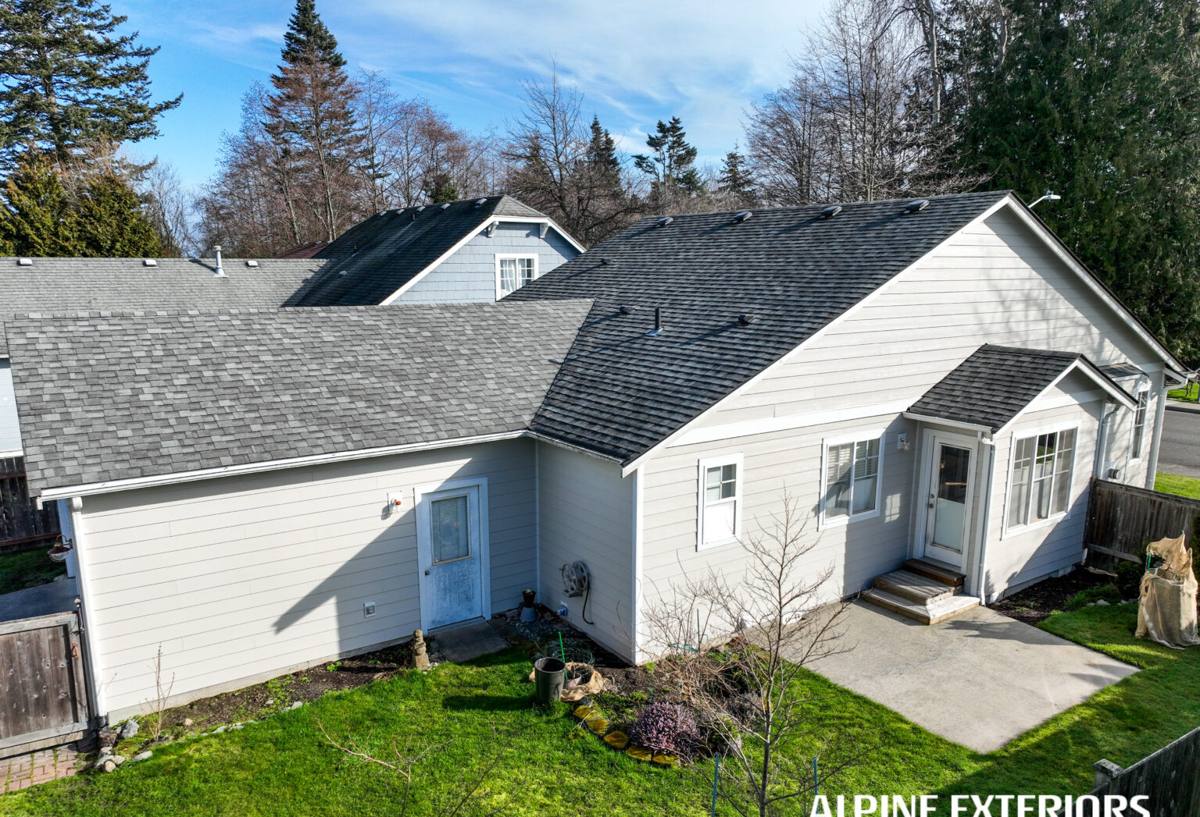
Why Bellevue's Climate Is Hard on Shingle Roofs
Bellevue doesn't get the direct salt spray of a coastal town, but it shares the broader Puget Sound weather pattern: long stretches of driving rain, mild but persistent humidity, and short winter freeze-thaw cycles that stress roofing materials in ways drier climates never do. Add tree cover from cedars, firs, and maples throughout Bellevue's neighborhoods, and you get near-constant shade and organic debris on the roof deck — the exact conditions moss and algae need to take hold.
A few climate-driven realities we design around on every Bellevue roof:
- Extended wet season: Roofs here can stay damp for days at a time, which means underlayment and flashing quality matter more than in drier regions.
- Moss and moisture retention: Shade and organic debris create a moss season that runs much of the year, and moss holds water against the shingle surface long after rain stops.
- Freeze-thaw cycling: Even mild winter cold snaps can freeze trapped moisture in a compromised roof system, expanding cracks and lifting shingle edges.
- Wind-driven rain: Storms off the Sound push rain sideways at times, which tests lap seals, flashing, and ridge details more than a straight-down rain ever would.
None of this makes asphalt shingles a poor choice for Bellevue — it's still one of the most practical roofing materials for this region. It does mean the installation details have to account for moss, moisture, and wind in ways a generic install guide won't cover.
What a Correctly Installed Shingle Roof Needs Here
Underlayment and Ice/Water Protection
A synthetic underlayment rated for the region, combined with self-adhered ice-and-water membrane at eaves, valleys, and roof penetrations, gives the deck a second line of defense when wind-driven rain or a failed shingle lets water through. In a climate where the roof rarely gets a long dry stretch to fully dry out, this layer isn't optional — it's what keeps a small leak from becoming rotted decking.
Flashing at Every Transition
Chimneys, skylights, dormers, and roof-to-wall intersections are where the majority of leaks start on Bellevue homes — not in the open field of shingles. Step flashing, counter-flashing, and properly lapped valley metal have to be installed in the correct sequence with the shingle courses, not caulked over as an afterthought.
Ventilation
Trapped attic moisture condenses on the underside of the roof deck and accelerates rot from the inside out, which is a common issue in Northwest homes with older or undersized ventilation. A balanced intake-and-exhaust system keeps the attic dry and helps the shingles themselves last their full service life instead of curling early from heat and moisture cycling.
Fastening and Wind Rating
Shingles fastened with the correct nail pattern and placement resist wind uplift far better than a rushed install. We match fastening schedules to the shingle manufacturer's specification, not a shortcut pattern, because a roof that loses shingles in a windstorm usually failed at the nail line, not the material.
Comparing Common Asphalt Shingle Options
| Shingle Type | Typical Lifespan | Best For | Trade-Offs |
|---|---|---|---|
| 3-Tab | 15–20 years | Budget-conscious re-roofs, rental properties | Lower wind resistance, flatter look, shorter warranty period |
| Architectural (Laminate) | 25–30 years | Most Bellevue homes — the current standard choice | Higher upfront cost than 3-tab, but far better wind and moisture performance |
| Premium/Designer | 30+ years | Higher-end homes, distinctive rooflines | Highest material cost; installation sensitivity is greater, so crew experience matters more |
For most Bellevue homes, architectural shingles are the practical middle ground — meaningfully better wind and weather performance than 3-tab, without the cost premium of designer lines. We'll walk through the honest trade-offs for your specific roof rather than defaulting to the highest-margin option.
Moss and Algae: Prevention Beats Removal
Moss is the single most common shingle roof complaint we see in Bellevue, and it's largely preventable with the right approach at install time and light annual maintenance afterward:
- Zinc or copper control strips installed near the ridge release trace metal ions with every rain, which inhibits moss and algae growth over the strip's lifespan.
- Keeping overhanging branches trimmed back reduces shade and debris buildup — both are food and shelter for moss spores.
- Soft washing (not pressure washing) removes existing moss without stripping the granules that protect the shingle from UV and weather.
- Clear gutters and valleys prevent standing water and organic buildup that gives moss an easy foothold.
Pressure washing a shingle roof is a mistake we see homeowners make or inherit from a previous contractor — it strips protective granules and shortens the roof's remaining life. If your roof already has heavy moss, we'll assess whether it's a maintenance issue or a sign the roof is past the point where cleaning helps.
Repair, Recover, or Full Replacement?
Not every Bellevue roof problem calls for a full tear-off. We evaluate three factors before recommending a scope of work:
Deck Condition
If the roof deck underneath has soft spots, rot, or delamination from long-term moisture exposure, no amount of new shingles will fix the underlying problem — that's a replacement, not a repair.
Remaining Shingle Life
Localized damage — a section lifted in a windstorm, a leak around one flashing point — on an otherwise sound, mid-life roof is usually a straightforward repair. Widespread granule loss, curling, or brittleness across the whole roof signals the shingles are near the end of their service life regardless of any one leak.
Age and Warranty Status
A roof nearing or past its expected lifespan often makes more sense to replace outright, especially if repair costs are starting to stack up. We'll give you a straight answer on which category your roof falls into rather than defaulting to the larger job.
Our Process for a Bellevue Shingle Roof
- On-site inspection: We walk the roof (weather permitting) and check the attic for ventilation, moisture staining, and deck condition — not just a look from the ground.
- Written scope and estimate: You get a clear breakdown of what's being done, the shingle line and underlayment system specified, and a firm price before any work starts.
- Deck prep: Old roofing is removed down to the deck, damaged sheathing is replaced, and the deck is inspected before anything new goes down.
- Underlayment and flashing: Ice-and-water membrane, synthetic underlayment, and new flashing are installed at every valley, penetration, and transition.
- Shingle installation: Shingles are installed to manufacturer fastening specs, with attention to ridge, hip, and edge detailing where wind exposure is highest.
- Ventilation check: Intake and exhaust venting is verified or upgraded as part of the job, not treated as a separate add-on.
- Final walkthrough: We review the completed roof with you, including cleanup and any manufacturer warranty registration paperwork.
What to Ask Before Hiring for a Bellevue Roof
A checklist worth running through with any contractor bidding your roof, including us:
- Are they licensed and insured to work in Washington, with proof available on request?
- Does the estimate specify the exact shingle product, underlayment type, and ice-and-water coverage — or just "new roof"?
- Is ventilation addressed explicitly, or left out of the scope entirely?
- Do they have experience with the moss, moisture, and wind conditions specific to King County roofs, not just roofing in general?
- Is the warranty structure — manufacturer material warranty versus workmanship warranty — explained clearly and in writing?
A contractor who already works Bellevue roofs regularly will have answers to all of these without hesitation, because these are the details that determine whether a roof lasts 25 years or leaks in year five.
Why Local Experience Matters for This Job
Roofing crews who work broadly across the Puget Sound region build an instinct for where Bellevue roofs typically fail — usually flashing details, ventilation gaps, or moss-related moisture retention — because they see the same patterns across similar homes and tree cover repeatedly. That translates into fewer surprises during tear-off, more accurate estimates upfront, and installation choices (control strips, underlayment specification, flashing sequencing) that are tuned to how this specific climate actually behaves over a 20-to-30-year roof lifespan, not a generic national install standard.
If you're dealing with a leak, visible moss buildup, or a roof that's simply getting old, we're happy to take a look and give you a straight, no-pressure assessment. Use the form below to request a free estimate for your Bellevue home.