 Seattle Exterior
 Board & Batten Siding in West Seattle: What the Climate Demands
West Seattle sits right up against the water, and that location shapes everything about how siding performs there. Homes on this peninsula take on salt-laden air coming off Puget Sound, driving rain that hits walls sideways during winter storms, and a long stretch of the year — fall through spring — where shade, moisture, and mild temperatures create ideal conditions for moss and algae growth. Board and batten siding, with its bold vertical lines and strong shadow lines, is a popular choice for both older Seattle-area homes and newer builds in the neighborhood. But the profile itself creates more seams and more places for water to find a way in than a standard lap siding job, which means the material and the installation both matter more here than they would somewhere drier and calmer.
This page covers what board and batten siding needs to hold up in West Seattle's specific conditions, what a correct installation actually involves, and why we only install James Hardie fiber cement for this application in King County.
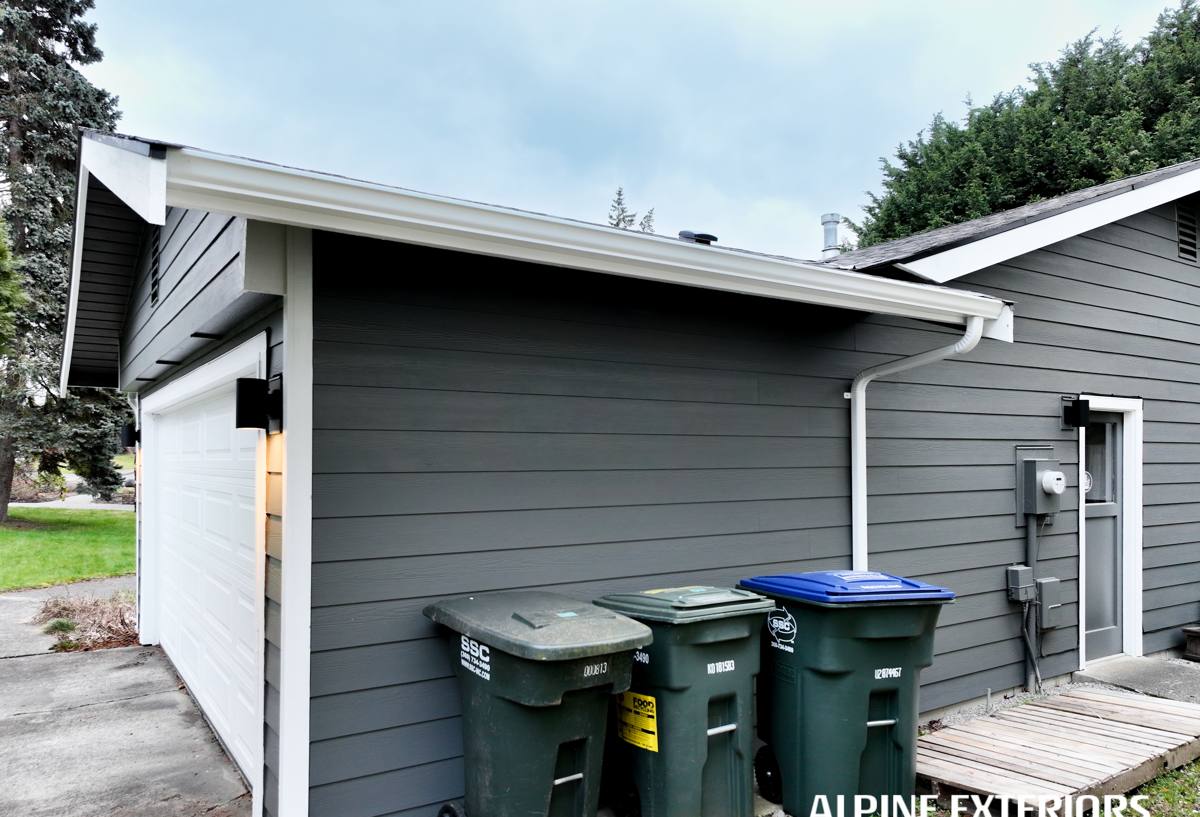
Why Board & Batten Is a Good Fit for West Seattle Architecture
Board and batten has deep roots in Pacific Northwest residential design — it shows up on craftsman-era homes, farmhouse-style remodels, and a lot of the newer modern builds going up on view lots around West Seattle. The vertical panel-and-batten pattern reads as clean and substantial, and it pairs well with the mix of traditional and contemporary homes you see throughout the neighborhood. It also works well as an accent — gables, dormers, or a front entry feature — paired with horizontal lap siding on the rest of the house, which is a common combination we install.
The style choice is easy. The material and installation choice is where most of the long-term performance risk lives, and that's the part worth slowing down on before committing.
What Salt Air, Driving Rain, and Moss Season Actually Do to Siding
Salt Air
Proximity to saltwater accelerates corrosion of exposed metal fasteners, flashing, and trim, and it can also degrade certain paint and coating systems faster than they'd wear inland. Siding facing the water side of a home takes the brunt of this exposure.
Driving Rain
West Seattle's exposed, hilly terrain means wind-driven rain doesn't just run down a wall — it gets pushed sideways and upward into seams, joints, and butt gaps. Board and batten has more vertical seams per square foot of wall than lap siding, so every one of those seams is a potential entry point if it isn't detailed correctly.
Moss and Algae Season
Shaded north and west-facing walls, mild temperatures, and long wet stretches from roughly October through May create ideal conditions for moss, algae, and mildew growth on exterior surfaces. Siding that holds moisture at the surface, or that has a painted finish prone to chalking and fading, tends to show green and black staining faster in these conditions.
What a Correct Board & Batten Installation Involves
Board and batten looks simple from the street, but the installation details are what determine whether it lasts 30-plus years or starts failing in five. A correct job in this climate includes:
- A drainable water-resistive barrier behind the siding, with all penetrations and laps properly sealed and shingled to shed water downward
- A rainscreen air gap (furring strips) so any moisture that does get behind the siding can drain and dry out instead of sitting against the sheathing
- Correct flashing at every window, door, and roof-to-wall intersection — these are the highest-risk leak points on any home, and doubly so on a wall with vertical board seams
- Factory-primed or factory-finished cut ends, with field-applied sealer on any cut edge exposed to weather
- Fastener placement and spacing that follows the manufacturer's engineering specs for the wind exposure at this location — not a generic pattern
- Proper clearance at the bottom of the siding from grade, decks, and roof lines so water can't wick up from below
Skip any one of these steps and the siding may look fine for a year or two while the real damage — trapped moisture, sheathing rot, mold — builds behind the wall where nobody can see it until it's expensive to fix.
Why We Only Install James Hardie for Board & Batten Work
We don't install LP SmartSide, vinyl, Cemplank, Allura, primed spruce, or cedar board and batten. That's a deliberate standard, not a marketing line, and it comes down to how each of those materials tends to perform over time in a marine climate like this one.
Wood products — cedar and primed spruce — look great on day one, but they're organic material in a region that stays wet for months at a time. They need regular refinishing to keep water out, and once a coating fails, rot can set in behind the surface before it's visible. Engineered wood products like LP SmartSide use a resin-treated wood substrate that resists moisture better than raw wood, but it's still a wood-based product, and any breach in the factory coating or field-applied sealant at a cut edge creates a path for moisture absorption and swelling. Vinyl board and batten is low-maintenance and inexpensive, but it's a thin plastic product that can warp in temperature swings, crack in impacts, and fade under UV exposure — and it isn't the look most homeowners choosing board and batten are actually going for. Other fiber cement brands like Cemplank and Allura are legitimate fiber cement products, but we've standardized on one manufacturer so our crews install one system correctly, every time, rather than switching specs and details between brands.
James Hardie fiber cement is cement, sand, and cellulose fiber — it's non-combustible, it doesn't rot, it doesn't attract insects, and it holds paint and factory finish far longer than wood-based alternatives in wet, mild climates. For West Seattle specifically, Hardie's HZ10 product line is engineered for climates with sustained moisture exposure, which fits the marine, rain-heavy conditions found throughout King County. The factory-applied ColorPlus finish is baked on under controlled conditions and carries its own finish warranty, which matters in a climate where field-applied paint tends to fail faster on siding facing wind and salt-laden air.
Material Comparison for Board & Batten in a Marine Climate
| Material | Moisture Behavior | Maintenance | Longevity in This Climate |
|---|---|---|---|
| James Hardie Fiber Cement | Doesn't absorb water, won't rot or swell | Occasional wash; factory finish resists fading | Decades, when installed to spec |
| Cedar / Primed Spruce | Absorbs moisture; needs coating to stay protected | Refinishing every few years | Shorter without diligent upkeep |
| LP SmartSide (engineered wood) | Resin-treated but still wood-based; vulnerable at breached edges | Field sealing of cuts, periodic inspection | Moderate; sensitive to installation quality |
| Vinyl | Doesn't absorb water but can trap moisture behind panels; warps with heat | Low, but panels can crack or fade | Moderate; performance depends on product grade |
| Other Fiber Cement (Cemplank, Allura) | Similar base material properties to Hardie | Comparable to Hardie | Comparable, though we don't install these brands |
How Our Process Works for a West Seattle Board & Batten Project
We start with an on-site assessment of the specific wall or elevation getting board and batten — checking exposure to prevailing wind and rain direction, existing moisture damage, current flashing condition, and how the siding will tie into windows, trim, and roof lines. From there we scope the water-resistive barrier and rainscreen approach, confirm the Hardie product line and color, and detail fastening and flashing to the manufacturer's specs for this wind zone. During installation we control cut-edge sealing, batten spacing, and clearances closely, since those details are exactly what separates a board and batten job that lasts from one that doesn't. We also walk the finished work with the homeowner before we consider the job done.
Maintenance Expectations Once It's Installed
James Hardie board and batten is genuinely low-maintenance compared to wood alternatives, but "low-maintenance" doesn't mean "no maintenance" in a climate this wet. A simple annual routine keeps it performing well:
- Rinse siding with a garden hose (not a pressure washer aimed directly at seams) once or twice a year, more often on shaded, moss-prone walls
- Check caulking at window and door trim annually and have any cracked or missing sealant redone
- Keep gutters clear so overflow doesn't run down the face of the siding
- Trim back vegetation and tree cover that keeps a wall shaded and damp longer than necessary
- Address moss or algae staining early with a gentle wash rather than letting it build up over multiple seasons
Why Hiring a Crew That Already Works West Seattle Matters
Board and batten installation isn't complicated in theory, but getting it right in this specific location means understanding how wind comes off the water, which elevations take the worst of the driving rain, and how moss tends to establish on shaded walls in this particular neighborhood. A crew that installs siding across the greater Seattle area and King County day in and day out has already seen how these houses age and where the callbacks tend to come from — that experience shows up in flashing details and fastening choices that a generic install might skip. It also means faster, more accurate estimates, because we're not guessing at exposure conditions from a satellite photo.
Get an Honest Look at Your Project
If you're weighing board and batten siding for a home in West Seattle, we're happy to come take a look, walk the exposure conditions specific to your property, and give you a straight answer on what the job actually needs — no pressure, no inflated scope. Request a free estimate below and we'll go from there.