 Seattle Exterior
 Storm Damage Roof Repair Built for Capitol Hill's Housing Stock
Capitol Hill is one of Seattle's older, denser neighborhoods, and that shows up on its roofs. Many homes here are craftsman, Tudor, and early 20th-century builds with steep-pitched roofs, tight eaves, and decades of roofing history layered underneath the current surface. Mixed in are newer townhomes, converted duplexes, and low-slope roofs on apartment and mixed-use buildings. Each of those roof types fails differently in a storm, and a repair that works on one can be the wrong move on another. We work on all of them, and we treat storm damage repair as a diagnostic job first and a repair job second — figure out exactly what the weather did before anything gets patched, replaced, or resealed.
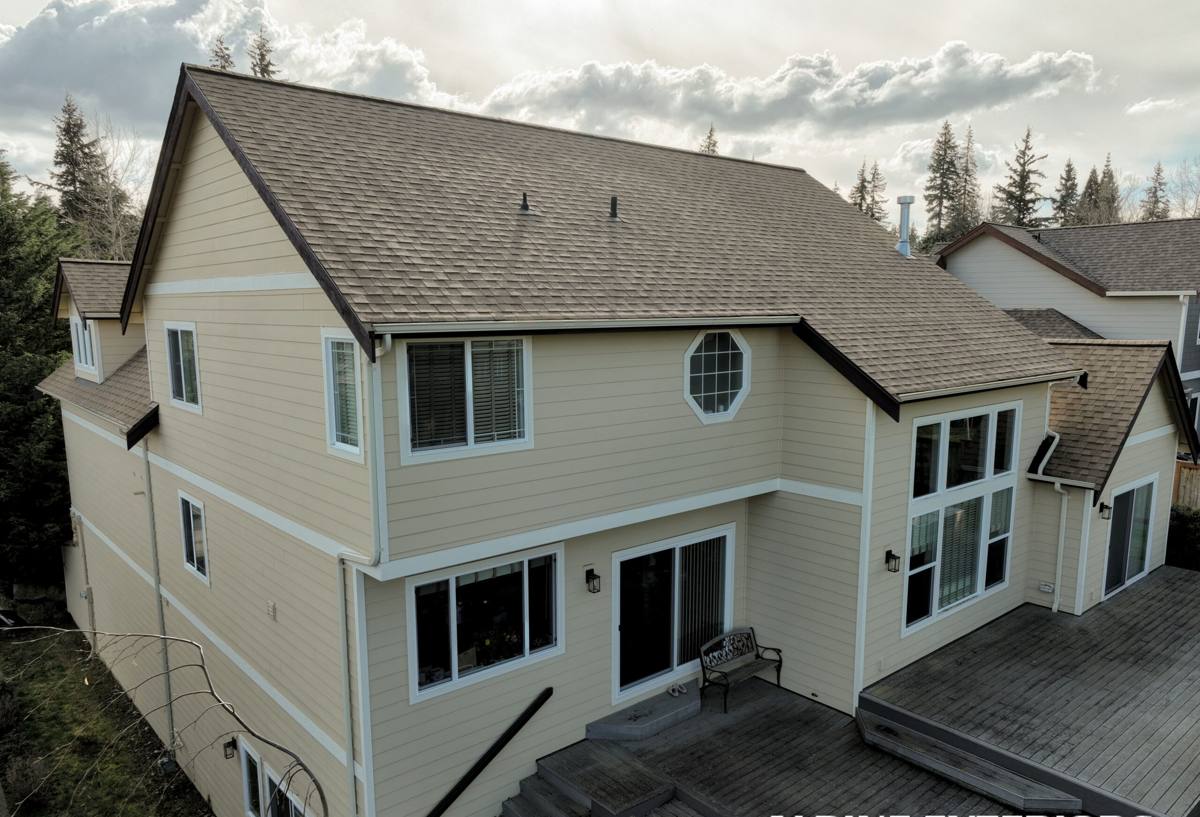
What Puget Sound Storms Actually Do to a Roof
Seattle doesn't get hurricanes, but King County gets something roofs handle just as poorly over time: long stretches of wind-driven rain, salt-laden air off Puget Sound, and heavy shade that keeps moss and lichen established year-round. None of these show up as one dramatic event. They accumulate.
Wind and Gusts
Windstorms moving through the region can lift shingle edges, tear loose ridge caps, and snap branches off the mature trees that line many Capitol Hill streets. A single strong gust doesn't need to remove a whole section of roofing to cause damage — it only needs to break the seal on a few shingles or crack a piece of flashing. That damage is often invisible from the ground.
Wind-Driven Rain
Rain that falls straight down is rarely the problem. Rain pushed sideways by wind finds every gap in flashing, every under-sealed shingle tab, and every spot where a roof penetration (vent, chimney, skylight) wasn't detailed correctly the last time someone worked on it. On steep older roofs common in this neighborhood, wind-driven rain can travel up under shingles far enough to reach the underlayment, which is where slow leaks start.
Moss, Lichen, and Long-Term Moisture
Capitol Hill's tree canopy and the region's damp, mild winters create ideal conditions for moss and lichen growth on roofing. Moss itself doesn't just sit on the surface — it holds moisture against shingles, lifts tabs as it grows, and works its way under flashing edges. A storm that would be minor on a clean, dry roof can do real damage to one that's already been softened by a season or two of unmanaged moss.
Signs Your Roof Took Storm Damage
Most storm damage doesn't announce itself with a hole in the ceiling. It shows up as smaller signs that are easy to miss from the ground or from inside the house. After any significant wind or rain event, it's worth checking for:
- Shingles that look curled, cracked, or out of alignment with the surrounding roof plane
- Granules collecting in gutters or at the base of downspouts
- Bent, lifted, or missing flashing around chimneys, vents, and skylights
- New or fresh-looking moss growth concentrated in one area, which can indicate a spot that's staying wetter than the rest of the roof
- Water stains on interior ceilings or upper walls, especially after a storm
- Debris — branches, needles, leaf mats — built up in valleys or against the roof-to-wall transition
- Sagging or soft spots when viewed from an attic or crawlspace, if accessible
Any one of these on its own might not mean much. Two or three together, especially after a windstorm, is worth a proper look before the next round of rain gets in.
What a Correct Storm Damage Repair Involves
Assessment Before Repair
The repair is only as good as the inspection behind it. We check the full roof plane, not just the area that looks obviously damaged, because wind and water rarely stay confined to one spot. That includes flashing, ventilation, the condition of surrounding shingles, and whether moss or debris contributed to the failure. Skipping this step is how a homeowner ends up paying for the same repair twice.
Matching Materials, Not Just Covering the Damage
On an older Capitol Hill roof, matching new shingles to weathered ones isn't always possible exactly, but a competent repair accounts for that — using compatible materials, proper nailing patterns, and correct overlap so the patched section performs like the rest of the roof rather than becoming its own weak point.
Flashing and Underlayment Get Real Attention
Most of the leaks we trace back to storm damage started at flashing, not out in the open field of the roof. A repair that replaces shingles but reuses damaged or marginal flashing is a repair that will leak again. We treat flashing, valleys, and penetrations as the priority, not an afterthought.
Salt Air and Fastener Corrosion
Capitol Hill's proximity to Puget Sound means salt-laden air is part of the local environment, and it accelerates corrosion on exposed metal — nail heads, flashing edges, gutter fasteners. When we're already up on a roof for storm repair, we check fastener condition in the surrounding area rather than assuming it matches the age of the shingles.
Repair Complexity: What Changes the Scope of the Job
| Factor | Why It Matters | What We Check |
|---|---|---|
| Roof pitch | Steep older Capitol Hill roofs require different access, fall protection, and shingle handling than low-slope roofs | Safe access points and whether the pitch limits which repair methods apply |
| Roof age and layers | Homes with multiple roofing layers underneath the current surface complicate flashing and fastening | What's actually under the surface layer before quoting a fix |
| Tree cover | Heavy shade means faster moss return and slower drying after storms | Whether moss or standing moisture contributed to the original damage |
| Extent of wind-driven rain intrusion | Surface damage and underlayment damage require very different scopes of work | Attic or interior signs of water having already reached the deck |
| Access and site constraints | Narrow lots, close-set houses, and street parking common on Capitol Hill affect equipment staging | Realistic access before setting a schedule, not after arriving on site |
Our Process for Capitol Hill Storm Repairs
- Inspection. We assess the full roof, not just the visibly damaged section, and document what we find before recommending anything.
- Honest scope. We tell you whether this is a targeted repair, a larger section replacement, or something that's reaching the end of its useful life regardless of the storm. We don't pad a repair into a full replacement, and we don't undersell one that actually needs it.
- Weather-appropriate scheduling. Storm repairs in this region often need to happen between rain systems. We plan around realistic weather windows rather than promising a date we can't keep.
- The repair itself. Correct flashing, correct materials, correct fastening — done to hold up against the next storm, not just to pass a visual check.
- Debris and moss cleared from the work area. A repair surrounded by moss mats or storm debris fails faster, so we clear the immediate area as part of the job.
- Documentation for your records. Photos and a written summary of what was found and what was done, useful if you're also filing an insurance claim.
Storm Damage and Insurance Claims
Many storm-related roof repairs are covered under homeowners insurance, but coverage depends on your specific policy, the cause of damage, and your insurer's own inspection. We're not your insurance adjuster and we won't promise a claim outcome. What we can do is document damage clearly — photos, a written scope, and a straightforward explanation of what the weather did — so you have accurate information to bring to your insurer. If a repair turns out not to be storm-related but wear-related, we'll tell you that too, since it changes how the claim conversation goes.
Why a Crew That Already Works Capitol Hill Matters
Capitol Hill has real access challenges that don't show up on a generic job estimate: narrow streets, limited parking, close-set lot lines, and older homes where roof framing and flashing details vary block to block. A crew that regularly works this neighborhood already knows how to stage equipment without blocking a street for hours, how to protect landscaping and neighboring property in tight side yards, and what to expect from the construction era common to this area's housing stock. That familiarity shortens the job and reduces surprises — both for the schedule and for the final invoice.
It also matters for moss and drainage patterns specific to this part of Seattle. A roof shaded by mature trees on a steep King County hillside dries differently than a roof out in the open, and a repair plan that ignores that will fail sooner than it should.
Reducing Storm Damage Between Now and the Next Storm
Most of what determines how a roof handles the next windstorm or heavy rain system gets decided in the calm months in between. A few habits make a real difference on Capitol Hill roofs specifically:
- Keep gutters and downspouts clear, since clogged drainage is one of the fastest ways wind-driven rain turns into an interior leak
- Address moss growth before it spreads, rather than after it's lifted shingles
- Trim back tree limbs that overhang the roof, since falling branches are one of the more common causes of storm damage in tree-heavy neighborhoods
- Have flashing and penetrations checked periodically, not just after visible damage appears
If a recent storm has you wondering whether your roof took damage, we're happy to take a look and give you an honest, no-pressure assessment. There's no obligation attached to a free estimate — just a clear read on what your roof actually needs. The request form below is the fastest way to get on our schedule.