 Seattle Exterior
 Building Decks for Green Lake's Particular Climate
Green Lake sits in one of the wetter pockets of a wet city. Between the lake's own humidity, the tree canopy that keeps yards shaded well into the afternoon, and the steady parade of fronts that roll off the Sound, decks in this neighborhood work harder than a spec sheet suggests. Salt-laden air moving in from Puget Sound, driving rain that comes in sideways more often than straight down, and a moss season that can stretch from October into May all chip away at a deck that wasn't built with this specific climate in mind.
A deck built to a generic national standard will often look fine for the first year or two. The problems that show up in Seattle decks tend to be slower and less obvious: fasteners that weep rust stains before the wood around them fails, joists that stay damp two days after every other surface in the yard has dried, and a green film on the walking surface that gets slicker every winter. None of that is inevitable. It's a function of material choice, drainage detail, and fastener selection — the parts of a deck build that are invisible once the boards go down but decide how the deck ages.
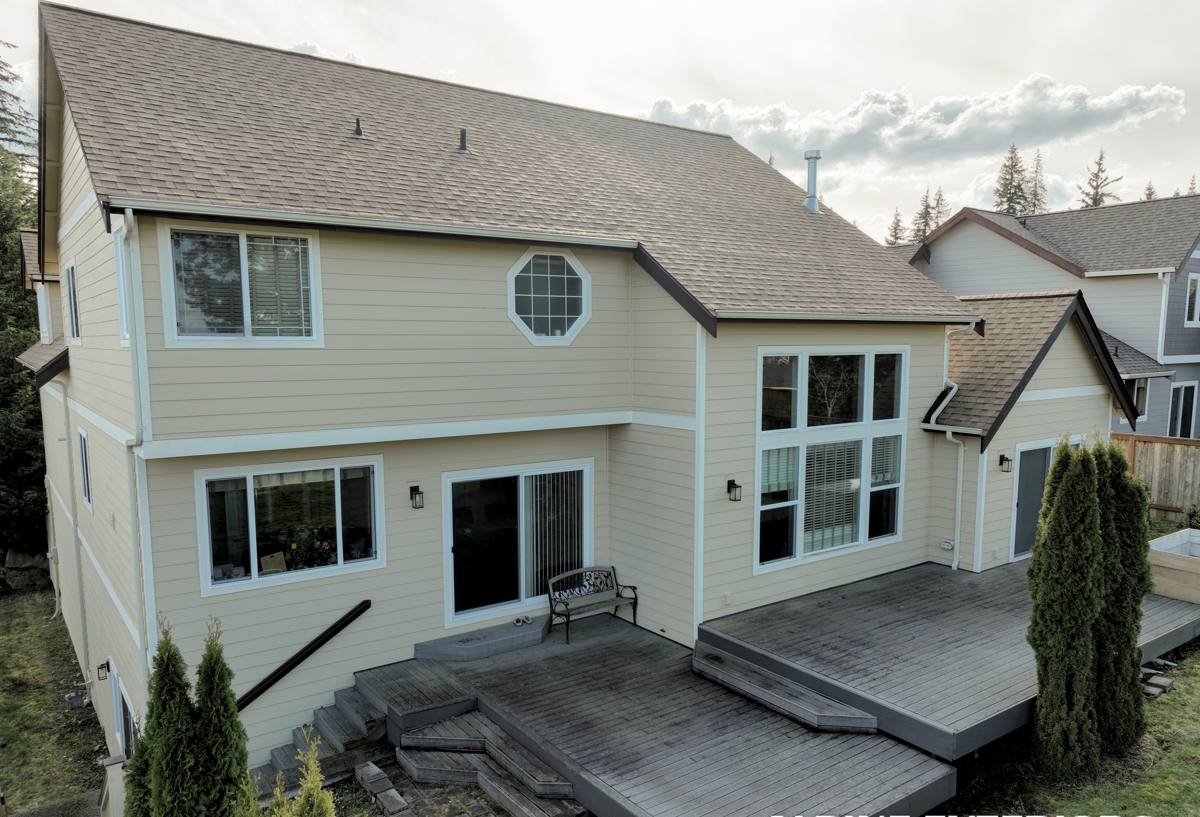
What Green Lake Homes Actually Need From a Deck
Most homes in this neighborhood were not built with today's deck expectations in mind — a lot of the original outdoor structures are smaller, older, and were never designed for the kind of year-round use people want now. When we're asked to build new or replace an aging deck here, three things come up again and again:
- Enough drainage slope and gapping that water doesn't pond under the shade of mature trees, where surfaces stay wet longer
- A walking surface that stays reasonably grippy under moss and algae growth without needing constant power-washing
- Framing and fasteners that won't corrode or rot out from underneath a deck that looks fine on top
None of these are exotic requests. They're just details that get skipped when a crew is used to building in a drier climate, or when a job is priced to the bare minimum. Getting them right the first time is cheaper than fixing them in year six.
Moss and Algae: Design, Not Just Cleaning
Moss season here is long, and no amount of scrubbing fully solves a deck that's shaded, low to grade, and slow to dry. A correctly designed deck reduces the conditions moss needs in the first place — adequate joist spacing and ventilation underneath, a board profile that sheds water instead of trapping it in grooves, and, where the site allows, orienting or spacing the structure to get a little more sun and airflow across the surface. We can't change how much shade a lot has, but we can build a deck that dries faster than the one it's replacing.
Decking Material Choices for This Climate
There's no single "best" decking material — there's a best material for a given budget, sun exposure, and maintenance appetite. Here's how the common options actually perform under Green Lake's rain-and-shade conditions:
| Material | How it handles our wet climate | Maintenance reality |
|---|---|---|
| Pressure-treated wood | Good performance if properly sealed and re-sealed; moisture cycling is the main long-term stress | Annual or biennial cleaning and sealing; moss control is an ongoing task |
| Cedar | Naturally moisture- and insect-resistant, but still needs finish maintenance in a shaded, wet yard | Regular oiling or staining to prevent graying and moss uptake |
| Composite decking | Very stable in moisture, resists rot by design; surface texture matters for slip resistance under moss | Occasional washing; no sealing or staining required |
| PVC/capped composite | Fully moisture-sealed board, best resistance to staining and algae uptake | Lowest maintenance; higher upfront material cost |
We don't push one product line over another as a rule — we walk the site, talk about how much upkeep the homeowner actually wants to do, and match the material to that answer. What we do insist on, regardless of decking material, is doing the substructure right, because that's the part nobody sees and the part that fails first if it's cut short.
What a Correctly Built Deck Involves
The decking boards get all the attention, but the structure underneath is what determines whether a deck lasts fifteen years or thirty. In a climate like ours, a handful of details matter more than they would somewhere dry:
Footings and Framing
Footings need to be sized and set below frost depth per King County requirements, and framing lumber should be rated for ground contact where it's close to grade or shaded soil. We check joist spacing against the actual decking product being installed — composite and PVC boards often have tighter span requirements than solid wood, and skipping that step is a common source of bounce and premature sagging.
Ledger Attachment and Flashing
Where a deck attaches to the house, the ledger board and its flashing are doing the most important waterproofing job on the whole structure. A poorly flashed ledger is one of the most common sources of hidden rot we find when we're asked to look at an older deck — water gets behind the flashing, into the rim joist, and into the house framing before anyone notices anything from the outside. We flash every ledger connection to shed water away from the house, not just seal it and hope.
Fasteners and Hardware
Coastal-influenced air corrodes standard fasteners faster than most homeowners expect. We use corrosion-resistant, coated fasteners and connectors rated for exterior and ground-contact use, matched to whatever decking material is going down — mixing incompatible metals (for example, the wrong screw in contact with certain composite or treated lumber) can accelerate corrosion and void material warranties.
Drainage and Under-Deck Ventilation
Water needs somewhere to go. That means proper board gapping, a slight slope away from the house, and enough clearance underneath for air to move and the ground to dry between rain events. On lower decks close to grade, we'll sometimes recommend a gravel or drainage layer underneath instead of bare soil, specifically to cut down on the standing dampness that feeds moss and rot.
Cost Factors for a Green Lake Deck Project
Every deck is priced around its own site and design, but the variables that move the number the most are consistent. This isn't a quote — it's a guide to what drives cost up or down so a conversation with us starts from a realistic place.
| Factor | Why it matters here |
|---|---|
| Decking material | Pressure-treated wood costs less upfront; composite and PVC cost more but reduce maintenance over the deck's life |
| Height and grade | Taller decks and sloped Green Lake lots often need engineered footings and additional framing |
| Shade and drainage work | Heavily shaded, tree-canopied lots may need extra drainage or ventilation detailing to manage moss and moisture |
| Railing and guard requirements | Elevated decks require code-compliant guards, which add material and labor |
| Access to the site | Tight side yards or lots without alley access can add labor time for material handling |
| Permitting and inspection | Most new decks and many replacements require a permit through the city; this is time and a fee, not optional |
Permits and Local Code
Decks above a certain height, or attached to the house in certain ways, typically require a building permit and inspection under Seattle's building code. This isn't paperwork for its own sake — the inspection process is what catches an undersized footing or a missed ledger flashing detail before it's buried under decking boards. We handle the permit process as part of the job rather than treating it as the homeowner's problem, and we build to pass inspection the first time, not to squeak by.
How Our Process Works
- On-site assessment. We walk the yard, look at sun and shade patterns, existing drainage, and how the space connects to the house before talking materials.
- Design and material selection. We go through the material comparison above in the context of this specific lot — budget, maintenance tolerance, and how much sun the deck will realistically get.
- Permit and engineering. We prepare and submit what's required for the project's size and height, and handle inspection scheduling.
- Demolition and site prep, if needed. Old decking, and any rotted framing found underneath, gets removed and assessed rather than built over.
- Framing and structural work. Footings, ledger flashing, joists, and hardware go in to the standards described above, ready for inspection where required.
- Decking, railing, and finish work. Boards, railings, stairs, and any finish or sealing get installed to the manufacturer's specifications.
- Final walkthrough. We go over the finished deck together, including what maintenance it needs and on what schedule.
Keeping a Green Lake Deck in Good Shape
A well-built deck in this climate still needs regular attention — the goal of good construction is to make that upkeep manageable, not to eliminate it. A basic seasonal routine:
- Sweep debris and leaves off the surface regularly, especially in fall when the tree canopy drops the most
- Clean moss and algae off the walking surface before it builds up, using a deck-safe cleaner rather than a pressure washer set too aggressively
- Check and re-seal wood decking on the schedule the product calls for — usually every one to two years in this climate
- Look under the deck once a year for standing water, debris blocking drainage, or any sign of moisture at the ledger connection
- Tighten or replace any hardware showing rust or corrosion before it spreads to surrounding wood
Why a Crew That Already Works This Neighborhood Matters
Deck-building fundamentals don't change from one Seattle neighborhood to the next, but the fine judgment calls do — how much drainage detail a shaded, tree-heavy Green Lake lot needs versus a sunnier site across town, which King County permit thresholds apply to a given lot, how a house's existing siding and trim details affect ledger flashing. A crew that's already done this work nearby isn't guessing at any of it. That translates into fewer surprises mid-project, a design that accounts for the site's real conditions instead of a generic template, and a deck that's built to hold up through another long Pacific Northwest wet season — not just to look good on installation day.
If you're planning a new deck or need to replace one that's showing its age, we're happy to take a look and talk through honest options for your property. Reach out for a free, no-pressure estimate using the form below.