 Seattle Exterior
 Siding Built for Green Lake's Particular Climate
Green Lake sits close enough to Puget Sound and Lake Washington that homes here deal with a specific combination of weather stress: salt-tinged air carried in on marine winds, long stretches of driving rain off the Sound, and a moss season that can run from October well into spring. None of that is unique to Green Lake on its own, but the combination — moisture-laden air plus shaded, tree-lined lots plus siding that rarely gets a full day of direct sun to dry out — is what wears down the wrong siding material faster than homeowners expect.
We install siding across Seattle and King County, and Green Lake's mix of older bungalows, mid-century ramblers, and newer infill construction gives us a good read on how different materials actually hold up here, not just how they're marketed to hold up. That experience is why this company installs James Hardie fiber cement siding exclusively — and why we think it's worth explaining what that decision is based on before you sign a contract with anyone.
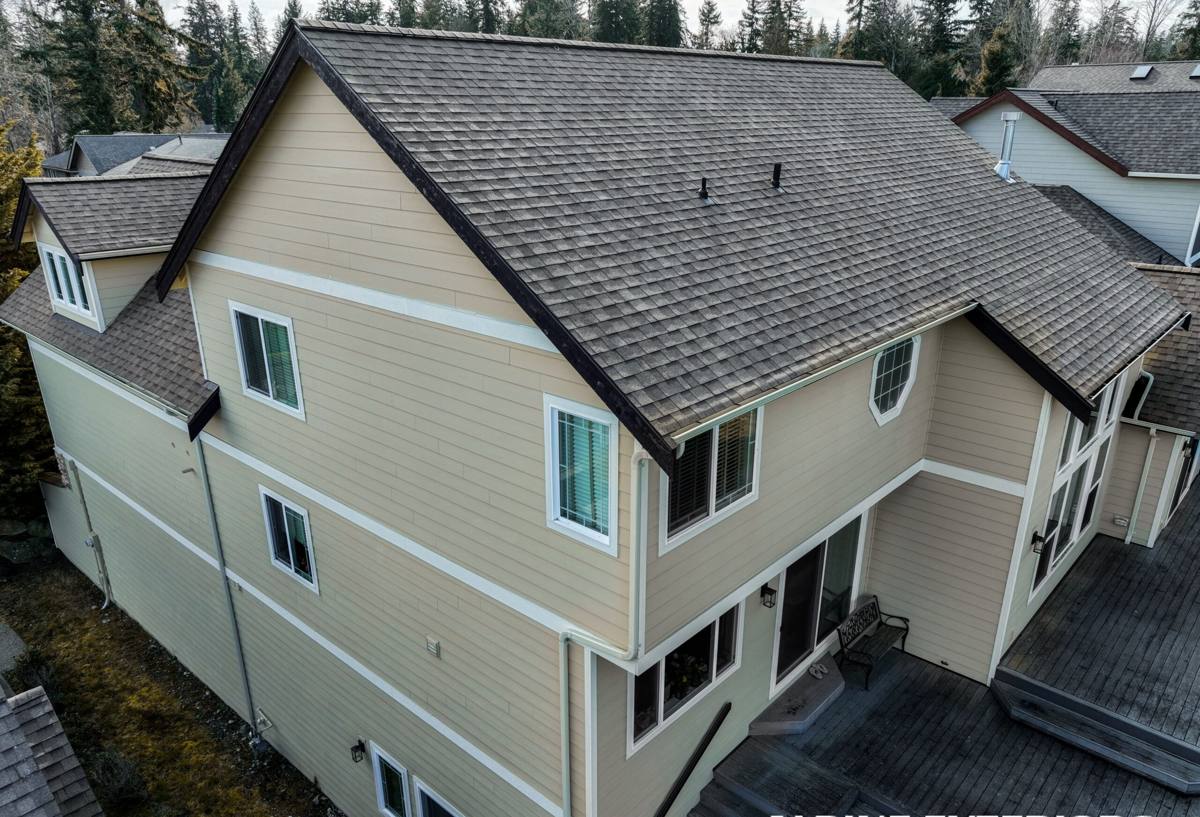
What Green Lake Homes Actually Need From Their Siding
Every siding material on the market claims to handle Pacific Northwest weather. Not all of them handle it the same way. In a neighborhood like Green Lake, where mature trees shade a lot of siding for most of the day and humidity lingers in the air even between rain events, the material on your walls needs to do three things well:
- Resist moisture absorption — siding that swells, softens, or wicks water at seams and butt joints will eventually fail from the inside out, often before the surface shows obvious damage.
- Shed and resist moss and algae growth — shaded, damp surfaces are where moss gets a foothold first, and once it's established it holds moisture against the siding, accelerating whatever material weakness is underneath.
- Hold a factory finish without constant repainting — repainting siding on a two-story home every few years is expensive and disruptive, and in a damp climate, paint failure is often the first visible sign that the substrate underneath is already compromised.
These aren't abstract concerns. They're the specific failure points we see most often on older homes in shaded, moisture-heavy pockets of Seattle, and they're the reason material choice matters more here than it would in a drier climate.
Why We Only Install James Hardie Fiber Cement
James Hardie's fiber cement siding is engineered from cement, sand, and cellulose fibers — a composition that doesn't absorb water the way wood-based or wood-fiber products do, and doesn't have the thermal expansion issues that can loosen seams on vinyl over time. For a neighborhood dealing with sustained damp and low sun exposure, that moisture stability is the baseline requirement, not a bonus feature.
A few specifics that matter for this climate:
- ColorPlus factory finish — baked-on color that resists fading and chipping far better than field-applied paint, which matters when your siding rarely gets enough sun to fully dry between rain events.
- HZ5 and HZ10 product engineering — Hardie manufactures climate-specific formulations; the versions appropriate for the Pacific Northwest are built with our freeze-thaw cycles and moisture exposure in mind, not a generic national spec.
- Non-combustible core — an increasingly relevant consideration given regional wildfire smoke seasons, even in urban Seattle.
- A transferable warranty backed by a manufacturer with decades of fiber cement production, which matters if you sell the home before the siding's service life is up.
We don't install LP SmartSide, vinyl, Cemplank, Allura, or unfinished cedar or spruce siding. Some of those products are reasonable choices in the right application — we're not here to trash them. But we've made a standard for our own crews, and it's built around installing one product system correctly rather than juggling several with different tolerances, fastening requirements, and failure modes. Consistency in what we install is part of how we guarantee consistency in how we install it.
What a Correct Installation Actually Involves
Siding failures on damp, shaded properties are rarely about the product itself — they're almost always about installation details that get rushed or skipped. In Green Lake specifically, we pay close attention to:
Water Management Behind the Siding
A weather-resistive barrier and properly integrated flashing at every window, door, and penetration is what actually keeps water out of your wall assembly — the siding itself is the second line of defense, not the only one. On homes with heavy tree cover and prolonged damp exposure, we don't cut corners here even if it means slower progress on a given wall section.
Proper Fastening and Clearances
Hardie siding has specific nailing patterns, minimum clearances from grade, decks, and roof lines, and butt joint treatment requirements. Getting these wrong doesn't cause immediate problems — it causes problems three to seven years later, which is exactly the kind of failure that's hardest to trace back to the installer.
Ventilation Behind the Cladding
A rainscreen gap lets any moisture that does get behind the siding drain and dry out instead of sitting against the sheathing. On heavily shaded lots — common around Green Lake's mature street trees and tucked-in lots — this detail does a lot of quiet work over the life of the siding.
Caulking and Sealant Discipline
Over-caulking is almost as common a mistake as under-caulking. Hardie's installation spec calls for sealant at specific points, not everywhere — sealing joints that are supposed to allow drainage traps water instead of releasing it.
Cost Factors for Siding Installation in Green Lake
Every home is different, and we don't quote pricing without seeing the property, but the factors that move the price on a Green Lake siding job are fairly consistent:
| Factor | Why It Matters |
|---|---|
| Existing siding removal | Tear-off and disposal of old siding (especially if it's original wood or damaged material) adds labor and dump fees |
| Sheathing and water damage repair | Homes with long-term moisture exposure sometimes have soft sheathing under the old siding that needs to be addressed before new siding goes on |
| Home height and access | Two-story homes and properties with limited side-yard access take longer and require more scaffolding or lift work |
| Trim and detail complexity | Bungalow-style trim, multiple gables, and dormers add cutting and fitting time compared to simple wall planes |
| Siding profile selected | Lap siding, shingle-style panels, and board-and-batten each have different material and labor costs |
| Tree cover and site prep | Lots with mature trees sometimes need pruning or protection measures before work can proceed safely |
Our Process for a Green Lake Siding Project
The steps don't change much from house to house, but the details we check do, based on what we typically find in this part of Seattle.
- On-site assessment — we walk the exterior, check for moss buildup, soft spots, and existing moisture damage, and note shade patterns and drainage around the foundation.
- Written estimate — a clear scope covering removal, any sheathing repair, water-resistive barrier, flashing, siding profile, and finish color.
- Tear-off and substrate inspection — once old siding is off, we can confirm sheathing condition and address anything that wasn't visible beforehand.
- Water management installation — housewrap, flashing, and rainscreen components go in before a single piece of Hardie touches the wall.
- Siding installation to manufacturer spec — correct fastening, clearances, and joint treatment throughout.
- Final walkthrough — we review the finished work with you and cover basic care going forward.
Why Hiring a Crew That Already Works Green Lake Matters
Siding installation isn't a one-size-fits-all trade. A crew that mostly works drier, sunnier parts of King County can install Hardie siding competently and still miss the details that matter most in a neighborhood with Green Lake's specific microclimate — shaded lots, proximity to two large bodies of water, and moss pressure that starts earlier and lasts longer than it does a few miles inland. Knowing which walls need extra attention to drainage, which lots need moss treatment before work even starts, and how the local moisture pattern behaves through the seasons comes from doing the work here repeatedly, not from a general contractor's license.
We also know what Green Lake's mix of housing stock tends to have going on underneath old siding — older bungalows sometimes have original sheathing that's held up fine, and sometimes have decades of hidden moisture damage. Either way, we'd rather find out and address it properly than button up new siding over a problem that's just going to resurface.
Simple Maintenance Checklist for Hardie Siding in a Damp Climate
Correctly installed Hardie siding is low-maintenance, but "low" isn't "none." A little seasonal attention goes a long way in a climate like ours:
- Rinse siding annually to remove dust, pollen, and early moss growth before it establishes
- Keep tree branches and shrubs trimmed back from siding to improve airflow and sun exposure
- Check caulking at trim and window edges every year or two and have it touched up if it's cracking
- Clear debris from the base of walls and out of gutters so water doesn't pool against the siding
- Watch for any soft spots, discoloration, or bubbling paint, which can indicate a flashing or sealant issue worth catching early
If your Green Lake home's siding is showing its age — or you're planning ahead before moss and moisture do more damage — we're happy to walk the exterior with you and give you a straightforward, no-pressure estimate using the form below.