 Seattle Exterior
 Why Wallingford Siding Takes More Punishment Than People Expect
Wallingford sits close enough to Lake Union and the Ship Canal, and close enough to the broader Puget Sound marine air mass, that its siding deals with a slower, wetter kind of weathering than homeowners moving in from drier climates usually expect. It's rarely dramatic. There's no hurricane season here. But the combination of salt-tinged marine air, long stretches of driving rain off the Sound, and a moss season that can run from early fall through late spring adds up to steady, cumulative stress on whatever material is covering the walls. Siding in this part of Seattle doesn't fail from one bad storm — it fails from thousands of hours of dampness that never quite dries out, especially on north- and west-facing walls shaded by mature trees.
King County's climate is temperate, which is exactly why it's deceptive. Homeowners see mild temperatures and assume the exterior envelope is under less stress than in places with real winters or hurricanes. In practice, the opposite is often true: constant moisture exposure without long dry spells to let materials fully recover is harder on wood-based products than a few intense storms would be. Any siding installed in Wallingford has to be chosen and installed with that slow-burn moisture cycle in mind, not just judged on how it looks the day it goes up.
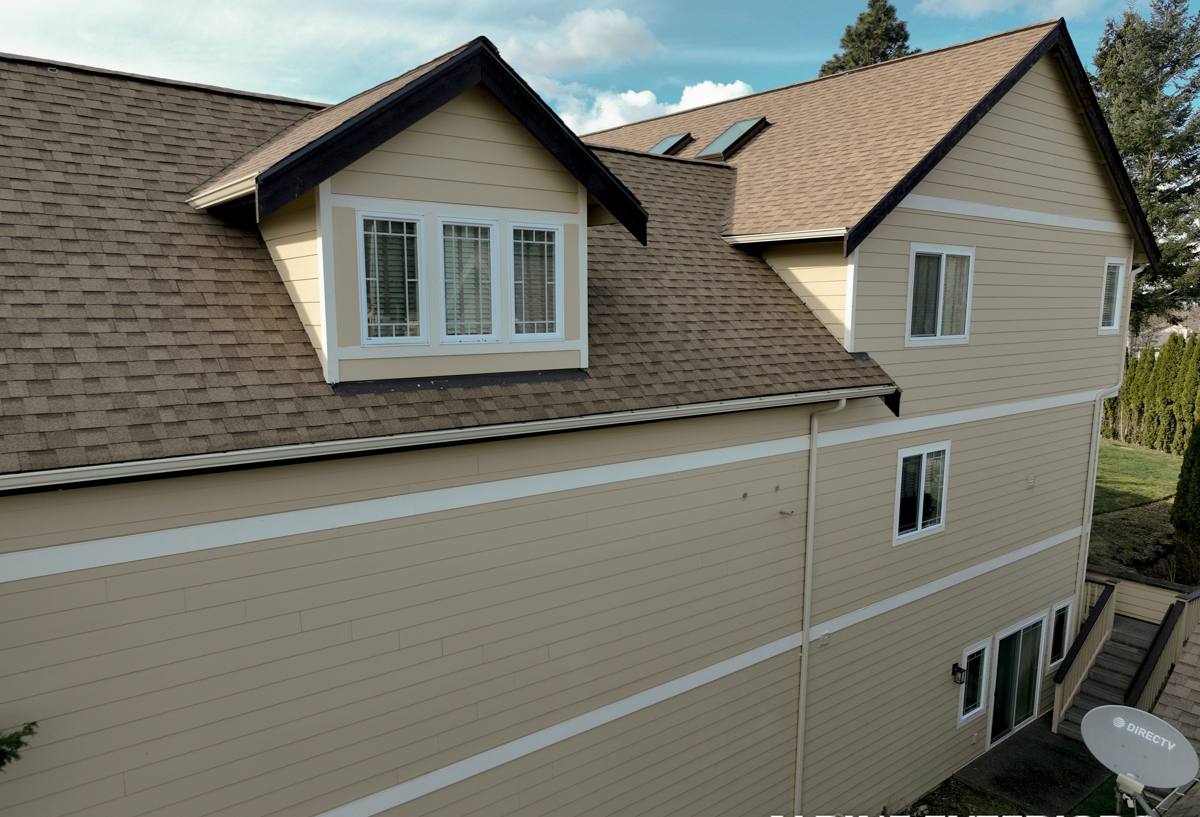
Wallingford's Housing Stock Adds Its Own Wrinkle
Wallingford is known for its concentration of early-1900s craftsman bungalows and foursquares, along with newer infill built to match the neighborhood's scale. That older housing stock brings specific siding challenges: original wall assemblies often have less of a drainage plane than modern construction, window and door openings were framed to older tolerances, and additions or remodels over the decades have sometimes introduced flashing details that don't match the original build. Replacing siding here isn't just a materials decision — it's an opportunity to correct decades of small water-management compromises that are usually invisible until the old siding comes off.
This is also a neighborhood where curb appeal and architectural character matter. A siding job that doesn't respect the lines, trim proportions, and reveal spacing of a craftsman-era home stands out in a way it wouldn't in a newer subdivision. Any contractor working in Wallingford needs to balance getting the building science right with matching the aesthetic the neighborhood is known for.
What This Means for Material Choice
A siding product that swells, cups, or holds moisture against the wall assembly is a poor match for this combination of old framing and constant dampness. It's a big part of why this company installs James Hardie fiber cement exclusively and does not install vinyl, LP SmartSide, primed spruce, cedar, or other fiber cement brands. Each of those products has legitimate uses elsewhere, but none of them, in our professional judgment, holds up to Pacific Northwest moisture cycling on older homes as consistently as Hardie's engineered fiber cement does.
Why We Standardized on James Hardie for This Climate
James Hardie manufactures its siding in formulations engineered for specific climate zones rather than a single one-size-fits-all product. The Pacific Northwest, including Seattle and King County, falls into the HZ5 zone — engineered for regions with sustained moisture and moderate freeze-thaw cycling rather than the extreme heat and humidity of the Gulf Coast (HZ10). That distinction matters: it means the siding on a Wallingford job isn't a generic national product, it's formulated for exactly the kind of weather this neighborhood sees most of the year.
Fiber cement is non-combustible, which is a real advantage as wildfire smoke seasons have become a more regular part of the regional calendar, and it doesn't provide the same food source for moisture-loving growth that wood-based products do. The factory-applied ColorPlus finish is baked on under controlled conditions rather than field-applied, which matters in a climate where field-painted surfaces rarely get the extended dry curing time they'd get somewhere hot and arid. That finish is also backed by a transferable warranty, which carries real value on a home in a neighborhood where resale and curb appeal both matter.
What We Tell Homeowners Considering Alternatives
Vinyl is inexpensive and low-maintenance, but it expands and contracts significantly with temperature swings, can become brittle over time, and doesn't hold paint if a homeowner ever wants to change the color. LP SmartSide and other engineered wood products perform reasonably well when detailing is followed exactly, but they're wood-based, and wood-based siding is simply more sensitive to the kind of sustained damp exposure Wallingford sees than fiber cement is. Cedar and primed spruce look excellent when new but require a maintenance commitment — refinishing, caulk inspection, moisture monitoring — that most homeowners underestimate until they're several years in. We don't install any of these, not because they're bad products in the abstract, but because we've made a professional call that fiber cement is the better long-term fit for this specific climate and this specific housing stock.
What a Correct James Hardie Installation Actually Involves
The material is only half the equation. Hardie siding installed against manufacturer specification performs close to its rated lifespan; Hardie siding installed with shortcuts can develop problems in a fraction of that time, regardless of how good the panels themselves are. This is the part of the job that's invisible once the siding is up, and it's the part that separates a crew that knows what it's doing from one that doesn't.
Moisture Management Comes First
Before a single piece of Hardie goes up, the wall needs a proper water-resistive barrier, correctly lapped and sealed at every penetration. On older Wallingford homes this often means addressing existing sheathing condition first — siding is only as good as what's behind it, and a common mistake is installing beautiful new siding over compromised sheathing that was never actually inspected.
Flashing and Fastening
Every window, door, and roof-to-wall transition needs flashing detailed so water sheds outward and down, never backward into the wall cavity. Hardie panels need to be face-nailed or blind-nailed per the manufacturer's specified pattern, with the correct fastener type and spacing, and with the gaps at butt joints, inside corners, and trim left exactly per spec rather than caulked tight and painted over to hide a shortcut.
Clearances and Trim
Hardie specifies minimum clearances from grade, roof lines, decks, and other horizontal surfaces so water and debris don't wick into the bottom of the siding. On a mature, tree-lined lot — common throughout Wallingford — that also means accounting for how close landscaping and irrigation sit relative to the wall, since a sprinkler head aimed at the siding every day works against even a well-installed product.
Our Process From First Call to Final Walkthrough
- Assessment and measure: We walk the exterior, check the condition of existing sheathing and trim where accessible, and measure for material takeoff and waste factor.
- Written scope and estimate: You get a clear breakdown of product line, color, trim details, and what's included — no vague allowances.
- Tear-off and inspection: Old siding comes off, and we inspect sheathing and framing before anything new goes up. This is where hidden moisture damage from years of small leaks usually surfaces, and we flag it honestly rather than covering it.
- Weather barrier and flashing: Housewrap, flashing, and trim go in first, detailed for water to move down and out.
- Hardie installation: Panels or lap siding installed to Hardie's fastening schedule and clearance requirements, not just "close enough."
- Final walkthrough: We review the finished work with you before calling the job done.
Comparing Your Siding Options for a Wallingford Home
| Product | Moisture Behavior in This Climate | Maintenance Burden | Typical Lifespan | Fire Resistance |
|---|---|---|---|---|
| James Hardie fiber cement | Engineered for sustained moisture; does not swell or rot | Low — factory finish, periodic caulk checks | Multi-decade with correct install | Non-combustible |
| Vinyl | Sheds water but can warp with heat/cold cycling | Low, but can't be repainted long-term | Moderate, varies with UV and impact exposure | Combustible, can melt/deform |
| Cedar / primed spruce | Absorbs moisture; needs consistent finish upkeep | High — refinishing and inspection cycle | Shorter without diligent maintenance | Combustible |
| LP SmartSide / engineered wood | Performs adequately if detailing followed exactly | Moderate — edge sealing and caulk sensitive | Depends heavily on installation quality | Combustible |
What Affects the Cost of a Wallingford Siding Job
Every estimate is specific to the home, but a few factors consistently move the number for jobs in this neighborhood:
- Home size and wall complexity — dormers, bump-outs, and multiple gables all add labor and trim work.
- Condition of the sheathing underneath the old siding, which usually isn't known until tear-off.
- Access — narrow lots, mature landscaping, and setback from the street can affect staging and scaffolding.
- Hardie product line and color selected — lap siding, panel systems, and shingle-style profiles carry different material costs.
- Trim scope — full trim replacement versus reusing sound existing trim where it makes sense.
We give a written estimate before work starts and flag anything that changes once tear-off reveals the condition of the wall underneath — no surprise change orders sprung on you at the end.
Living With Hardie Siding in Wallingford: A Maintenance Checklist
Fiber cement is low-maintenance compared to wood, but "low-maintenance" isn't "zero-maintenance," especially with this much shade and moisture in the picture. A short seasonal routine keeps a correctly installed Hardie job looking and performing the way it should for decades.
- Rinse siding and clear moss or algae from shaded, north-facing walls once or twice a year — a soft wash, not a pressure washer aimed directly at seams.
- Walk the exterior each fall and check caulking at trim joints, window returns, and corners for cracking or separation.
- Keep gutters clear so overflow doesn't run down the wall face during heavy rain events.
- Trim back branches and shrubs holding damp foliage against the siding — airflow matters more here than in drier climates.
- Check the base of the siding near grade and any deck or patio transitions for debris buildup that traps moisture.
Why a Crew That Already Works Wallingford Matters
Installation quality is the single biggest variable in how long any siding job actually lasts, more than the brand printed on the product. A crew that regularly works this neighborhood already understands its typical wall assemblies, its shade patterns, and the moisture behavior that comes with proximity to the water — none of which shows up in a generic installation manual. That local repetition is what turns a manufacturer's spec sheet into a job that's actually built for this address, on this lot, under these trees.
If your Wallingford home's siding is showing moss buildup, soft spots, peeling paint, or you're simply planning ahead for a replacement, we're happy to take a look and walk you through what we find — no pressure, no obligation. A free estimate gives you a clear, honest picture of your home's exterior and what correct James Hardie installation would involve, using the form below.