 Seattle Exterior
 Why Kirkland Homes Need Windows Built for This Climate
Kirkland sits in a marine west coast climate zone, and that shapes what a window has to survive here. The moisture-laden air moving off Puget Sound and Lake Washington means wood trim, sills, and even some vinyl frames spend most of the year damp. Add in months of driving, wind-blown rain and a long moss and mildew season that runs from fall through spring, and you get a set of conditions that punish poorly sealed or poorly flashed windows in ways a drier climate never would. A window that would be fine for a decade in Eastern Washington can start failing in Kirkland within a few years if it wasn't installed with this climate in mind.
This isn't about scare tactics — it's about being honest that King County weather is a real design constraint. Custom window work here means matching the product, the flashing details, and the installation sequence to a house that will see standing moisture at the sill, wind-driven rain hitting the glass at an angle, and long stretches of gray, humid weather where nothing dries out quickly.
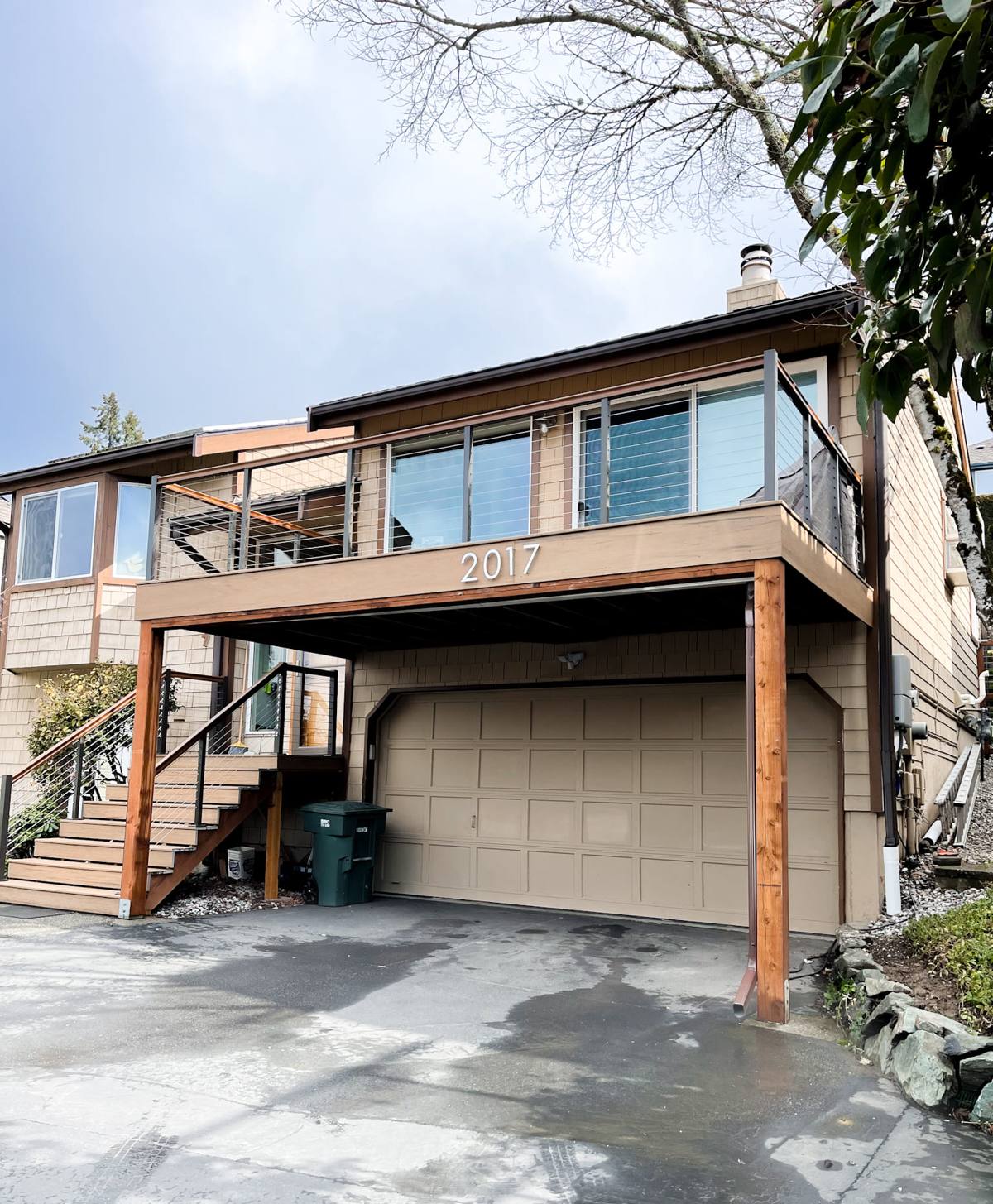
What "Custom" Actually Means for Kirkland Homes
Kirkland's housing stock is a mix — older Craftsman and mid-century homes closer to downtown and the lake, newer construction in the hillside neighborhoods, and a good number of remodels and additions that don't match standard window sizes. "Custom" windows aren't a luxury upgrade for their own sake; they're often the only correct answer when a home's rough openings, wall depth, or architectural style don't line up with off-the-shelf sizing.
Common Custom Scenarios We See in Kirkland
- Older homes with non-standard or slightly out-of-square openings from decades of settling
- Additions or remodels where new window openings need to match existing sightlines and trim profiles
- Larger view openings toward the lake or greenbelt that need reinforced framing and higher-performance glass
- Replacing single, oddly-sized windows without re-siding the whole wall
- Matching historic or period-appropriate profiles on older Kirkland neighborhoods while upgrading performance underneath
In every one of these cases, the goal is the same: a window that fits the actual opening precisely, seals correctly the first time, and matches the house instead of looking bolted on.
Signs Your Kirkland Home Needs New or Custom Windows
Most homeowners don't think about their windows until something goes wrong. Here's what we're typically called out for in this area, and what it usually means.
| What You're Seeing | Likely Cause |
|---|---|
| Fogging or moisture between glass panes | Failed seal — the insulated glass unit has lost its gas fill and is no longer serviceable |
| Soft or discolored wood at the sill or corners | Water intrusion behind the frame, often from failed or missing flashing |
| Black or green growth on frames or sills | Moss/mildew taking hold where moisture sits too long without drying — very common in our climate |
| Drafts or noticeable cold spots near the glass | Aging seals, single-pane glass, or a frame that's shifted out of square |
| Windows that stick, won't latch, or are hard to open | Frame warping from repeated wet/dry cycles, or original poor installation |
If you're seeing more than one of these on the same window, it's usually not a one-off fix — the underlying seal or flashing has failed and the whole unit needs to come out.
Material and Glass Options for This Climate
There's no single "best" window material — the right choice depends on the home, the budget, and how much upkeep you want to take on. Here's how the common options actually perform in a wet, moss-prone climate like Kirkland's.
| Material | How It Handles Our Climate | Trade-Offs |
|---|---|---|
| Vinyl | Won't rot, resists moisture well, low maintenance | Limited color/profile options on some lines; lower-end vinyl can flex on large openings |
| Fiberglass | Very stable in wet/dry cycling, holds paint well, strong for larger custom openings | Higher upfront cost than vinyl |
| Wood (clad exterior) | Best classic appearance for older Kirkland homes; exterior cladding protects against rain | Interior wood still needs periodic attention; any cladding breach can trap moisture against the wood |
| Aluminum | Strong and slim sightlines for modern designs | Poor insulator unless thermally broken — not our first recommendation for this climate without that upgrade |
For glass, we default to dual-pane, low-E coated units on virtually every job here — the combination of energy performance and condensation resistance matters more in King County's damp winters than it does in drier climates. On west- and south-facing openings that catch more direct rain, we also talk through glass coatings and frame drainage design case by case.
The Installation Process That Actually Keeps Water Out
Most window failures we get called to fix in Kirkland aren't a bad window — they're a poorly installed one. The window itself is only half the system; the flashing, the water-resistive barrier integration, and the sealant details are what actually keep driving rain out of the wall.
What a Correct Installation Includes
- Removing the old unit and inspecting the rough opening and sheathing for hidden rot or moisture damage before anything new goes in
- Installing sill pan flashing so any water that does get past the window drains back out, not into the wall cavity
- Integrating flashing tape with the home's existing weather-resistive barrier in the correct shingle-lap order — top layer over bottom, always
- Setting the window level, plumb, and square, then securing it per manufacturer fastening specs
- Insulating the gap between frame and rough opening without over-packing it, which can bow the frame
- Sealing the exterior with the correct sealant at the correct joints — sealing everything, including intentional drainage gaps, causes water to get trapped instead of drained
- Finishing interior and exterior trim to match the home
That sill pan and flashing integration step is where we see the most corners cut on prior installs around Kirkland. It's invisible once the trim goes back on, which is exactly why it's the step that causes callbacks two or three years later when nobody remembers what's behind the wall.
Moss, Mildew, and Long-Term Maintenance in a Wet Climate
Kirkland's long moss season isn't just a roof and siding problem — it affects window sills, tracks, and weep holes too. Organic growth holds moisture against the frame longer, which accelerates wear on both wood and lower-quality vinyl. A correctly installed window with clear weep holes and proper drainage sheds this moisture instead of trapping it.
- Keep weep holes (the small drainage openings at the base of the frame) clear of debris, dirt, and moss buildup
- Rinse sills and tracks periodically, especially after long dry spells when pollen and debris accumulate before the rains return
- Watch for green or black growth in corners — it's a sign moisture is sitting rather than draining
- Re-caulk exterior trim joints (not drainage gaps) if you see cracking or gaps forming, typically every several years depending on sun exposure
- Have wood-clad windows inspected periodically where cladding meets glass or trim, since that's where a breach is most likely to start
Our Process, From Estimate to Final Walkthrough
We keep this straightforward because homeowners are usually juggling a lot when they're dealing with window issues. A typical project looks like this:
- On-site assessment — we look at the actual openings, existing framing, and any signs of prior water intrusion, not just take measurements off a form
- Honest recommendation — material, glass, and design options that fit the home and the budget, including what we would and wouldn't recommend for this climate
- Custom order — units built to the actual opening dimensions rather than forcing a standard size
- Installation — full removal, inspection of the opening, proper flashing and sealing, and finish trim work
- Walkthrough — operating every window with you before we consider the job done
Why a Crew That Already Works Kirkland Matters
Window installation quality depends heavily on understanding what's actually happening behind the siding of homes in this specific area — the age of construction common to different Kirkland neighborhoods, the way older homes here were originally flashed (or weren't), and how King County's building department expects window replacement work to be permitted and inspected when it's required. A crew that works this area regularly isn't guessing at any of that. That local familiarity is what keeps a project moving on schedule and keeps surprises — hidden rot, out-of-square openings, mismatched trim profiles — from turning into costly change orders mid-project.
What to Look for When Hiring for This Work
- Proper Washington state contractor licensing and insurance, verifiable and current
- A written explanation of their flashing and sealing method, not just a product brand name
- Willingness to inspect the rough opening before quoting a firm price, since hidden damage is common in older homes
- Manufacturer-backed warranty on the window itself, plus a clear labor warranty from the installer
- Local references or a track record of work in Kirkland and nearby King County neighborhoods
If you're weighing new windows, a full replacement, or a custom-sized opening on a Kirkland home, we're happy to take a look and give you a straight, no-pressure assessment of what your home actually needs. Fill out the form below for a free estimate.