 Seattle Exterior
 Windows Built for What Rainier Valley Actually Deals With
Rainier Valley sits in one of Seattle's older, more established residential pockets, with tree-lined streets, a mix of early-1900s bungalows, mid-century houses, and newer infill construction spread across hilly terrain in southeast King County. That combination of age, tree cover, and topography means the windows on these homes take a specific kind of beating year after year. Marine air moving in off Puget Sound carries salt and moisture even into inland neighborhoods, driving rain hits exposed west- and south-facing walls hard during fall and winter storms, and the shade from mature trees keeps siding, trim, and window frames damp long after a storm passes. That dampness is exactly what feeds moss and mildew growth on sills, tracks, and exterior casings.
None of that is unique to any one house. It's the baseline condition every window on every home in this part of Seattle has to perform under. Custom windows done right account for that from the start, rather than treating it as an afterthought.
The Moisture Problem, Specifically
Water damage around windows rarely shows up as an obvious leak first. It usually starts as a soft spot in the sill, a slight discoloration in the interior trim, or a window that's suddenly harder to open and close because the frame has swollen. By the time you notice it, moisture has often been working its way behind the trim for months. In a climate with as much sustained wet weather as Seattle gets, the flashing, sealant, and drainage details around a window matter as much as the window unit itself.
Older Housing Stock Adds Another Layer
A lot of Rainier Valley homes still have original or early-replacement windows, some with wood frames that were never properly maintained, others with older aluminum-frame single-panes that were common decades ago. These openings were often built to different rough-opening standards than what's used today, which means a proper custom window job usually involves more than just swapping glass — it means correcting old framing issues so the new window actually performs the way it's supposed to.
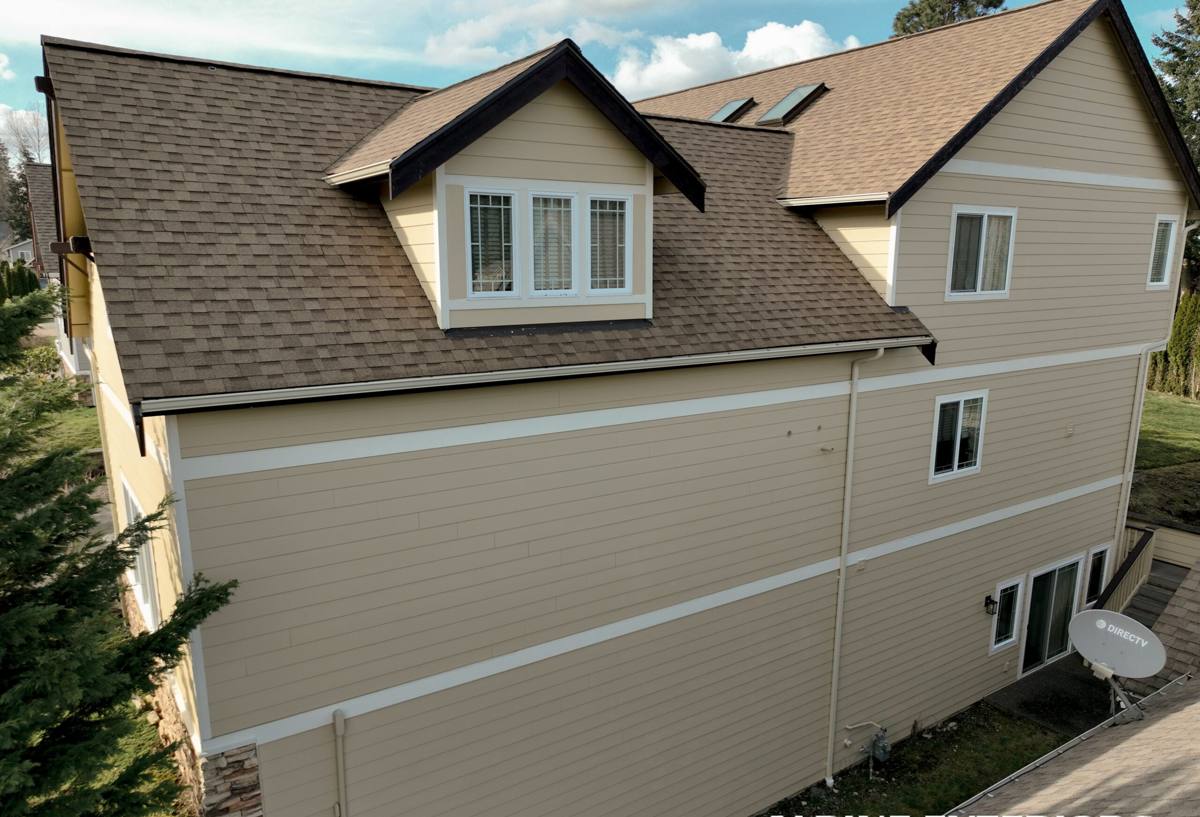
What a Correct Custom Window Installation Actually Involves
"Custom" doesn't just mean a non-standard size. It means the window, the flashing, and the surrounding wall assembly are all worked out together for that specific opening, rather than forcing a stock unit into a space it doesn't quite fit. On an older Rainier Valley home, that's often the difference between a window that lasts fifteen years and one that lasts thirty.
Frame and Flashing Details
Water management is the part of a window install that homeowners never see once the trim goes back on, and it's the part that determines whether the job holds up. A correct install includes:
- Properly lapped flashing tape at the sill, jambs, and head so water sheds outward and down, never inward
- A sloped sill pan that directs any water that does get past the exterior seal back outside instead of into the wall cavity
- Backer rod and exterior-grade sealant sized correctly for the gap, not just caulk smeared over a joint
- Weep holes or drainage paths left clear, not accidentally sealed shut
Sealing, Insulation, and Energy Performance
Gaps around the window frame get filled with low-expansion foam or mineral wool insulation rather than packed too tight, which can bow the frame and cause the window to bind. Interior air sealing matters too — a window can be watertight on the outside and still leak conditioned air around the frame if the interior side isn't sealed properly. In a house that's heated most of the year, that gap shows up directly on the energy bill.
Choosing the Right Window Material for This Climate
There's no single "best" window material — the right choice depends on the home's age, exposure, and how much upkeep the owner wants to take on. Here's how the common options generally compare for a wet, marine climate like Seattle's:
| Material | Moisture Resistance | Maintenance | Typical Cost Tier |
|---|---|---|---|
| Vinyl | Good — won't rot, resists moss and mildew staining well | Low | Lower to mid |
| Fiberglass | Very good — dimensionally stable, holds paint and seals well over time | Low to moderate | Mid to higher |
| Wood-clad (exterior-clad, wood interior) | Good on the exterior side; interior wood needs the seal to stay intact | Moderate | Higher |
| Aluminum | Fair — prone to condensation without a thermal break, can corrode near salt air over time | Moderate | Varies widely |
We don't push one brand or one material on every job. For a shaded, west-facing wall that stays damp most of the winter, we'll usually steer a homeowner toward vinyl or fiberglass because they hold up to sustained moisture with the least fuss. For a front elevation where the owner wants a wood interior look, wood-clad can still be the right call — it just comes with a clear expectation that the interior finish needs to be maintained so water never gets a path to the wood underneath.
Our Process, Start to Finish
1. On-Site Assessment
We look at the existing openings, check for any hidden rot or framing damage around the current windows, and talk through what's actually driving the replacement — energy loss, condensation, appearance, or a window that's simply failed.
2. Measuring and Material Selection
Every opening gets measured individually. On older homes, openings are rarely perfectly square, and a custom-sized window accounts for that instead of relying on shims to make up the difference.
3. Removal and Opening Prep
Old windows come out carefully so we can inspect the sill and framing underneath. Any soft wood or existing moisture damage gets addressed before a new window ever goes in — installing a new window over a compromised opening just hides the problem for a few more years.
4. Installation
Flashing, sill pan, insulation, and sealant go in following the sequence that actually manages water correctly, not just what's fastest.
5. Interior and Exterior Finish
Trim, casing, and paint or stain get matched to the home so the new window looks original to the house, not bolted on.
6. Final Walkthrough
We test every operable window for smooth function and check the seals before calling the job done.
Signs Your Current Windows Are Past Their Useful Life
Not every window needs replacing, and we'll tell you honestly if a repair or re-seal will hold. These are the signs worth a closer look:
- Visible fogging or moisture trapped between panes of a double-pane window
- Frames that are soft, discolored, or show moss or mildew building up at the sill
- Windows that are difficult to open, close, or lock — often a sign the frame has swelled or shifted
- Noticeable draft or cold spot near the window even when it's fully closed
- Condensation forming on the interior glass regularly during colder months
- Visible gaps or cracked, dried-out caulking around the exterior trim
Why Local Installation Experience Matters Here
Window installation practices that work fine in a dry climate don't automatically work in Seattle. A crew that mostly installs in low-moisture regions can get the window itself right and still miss the flashing and drainage details that matter most where it rains for months at a stretch. Working regularly on homes throughout King County — including the older housing stock common in neighborhoods like Rainier Valley — means we've already seen how these specific homes fail and what it actually takes to prevent it, rather than working it out on your house for the first time.
It also means we're familiar with the kind of framing quirks that show up in homes of this age and era: settling, non-square openings, and older trim details that need to be matched rather than replaced with something generic.
Keeping New Windows Performing Long-Term
A well-installed window still needs some basic upkeep in this climate, especially with the moss and moisture pressure common under tree cover:
- Clear debris and moss from sills and tracks a couple of times a year, especially after fall leaf-drop
- Check exterior caulking annually and re-seal any cracked or separated joints before winter rains set in
- Keep weep holes clear so water can drain out instead of pooling in the frame
- Wipe down interior sills if condensation regularly forms during cold snaps — persistent moisture indoors is worth addressing at the source, not just wiping up
What Affects the Cost
Pricing on a custom window job depends on a handful of factors rather than a flat per-window rate: the number of openings, whether any framing repair is needed once the old window comes out, the material chosen, window size and style (fixed, casement, double-hung, etc.), and access — a second-story window on a hillside lot takes more time than a ground-floor opening. We won't give a real number without seeing the openings, but we're upfront about what's driving the estimate once we do.
If you're weighing custom windows for a Rainier Valley home, we're happy to take a look and walk you through what your specific openings need — no pressure, no upsell, just a straight assessment and a free estimate using the form below.