 Seattle Exterior
 Siding Built for Rainier Valley's Housing Stock
Rainier Valley is one of Seattle's older, established residential areas, running along the west side of Lake Washington through King County. The homes here reflect decades of growth — early-1900s craftsman bungalows, mid-century ramblers, postwar infill, and a steady wave of newer construction and remodels. That mix means siding contractors working this neighborhood run into everything from original wood lap siding that's been painted a dozen times to 1970s-era composite panels that were never meant to last this long.
What ties these homes together isn't their age or style — it's the climate they've all had to survive. Seattle's marine weather doesn't discriminate between a 1920s bungalow and a 2015 remodel. Whatever is on the exterior wall has to hold up to the same driving rain, the same damp shoulder seasons, and the same moss pressure year after year. That's the lens we bring to every Rainier Valley siding job: not just what looks good going up, but what's still going to be doing its job in twenty years.
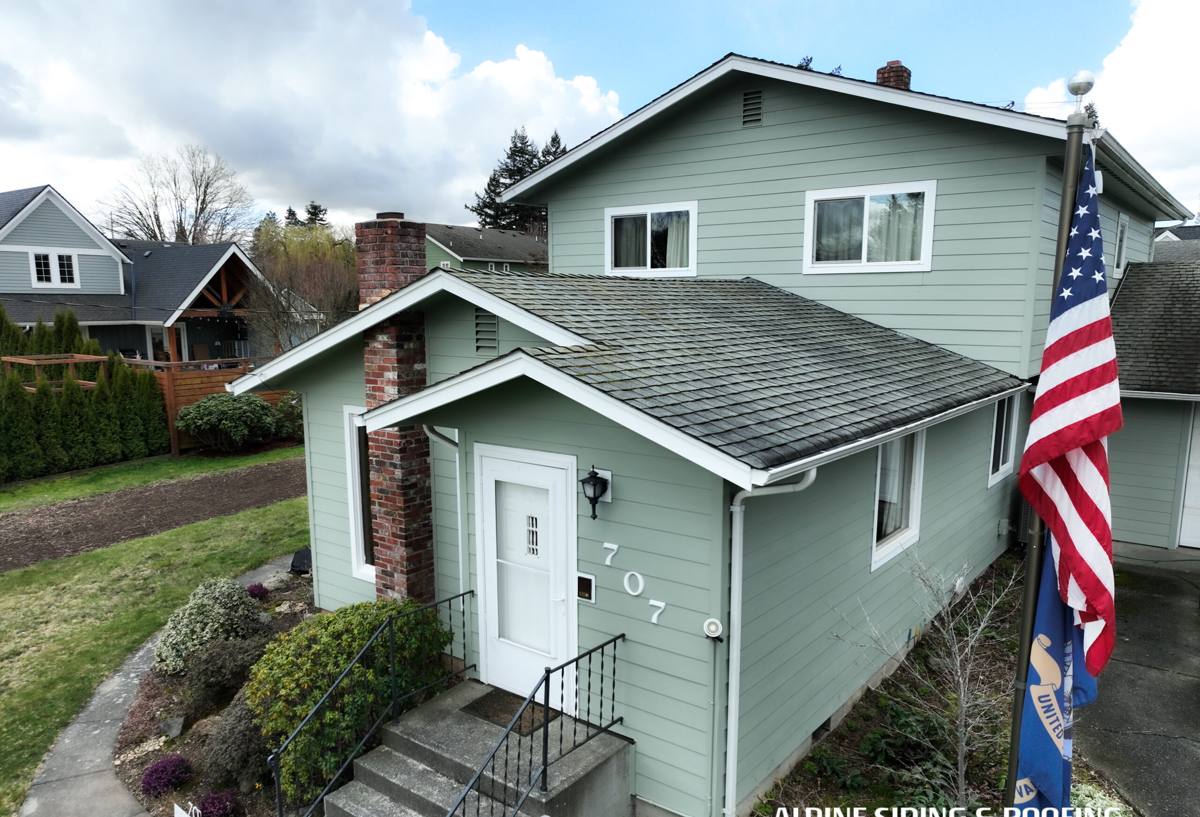
What Seattle's Climate Actually Does to Siding
The regional climate context matters more here than most homeowners realize until something goes wrong. King County's weather pattern — long stretches of low-intensity rain, humid air off Puget Sound, and short, weak summers for drying out — is genuinely hard on exterior materials in ways that drier climates never test.
Driving rain and prolonged moisture exposure
Seattle doesn't get the short, heavy downpours you'd see in the Midwest or Southeast. It gets weeks of steady, wind-driven rain that finds every gap, seam, and fastener hole in a siding system. Materials that rely on a painted or coated surface to keep water out are only as good as that coating — and coatings fail faster here because they rarely get a real chance to dry out between storms.
A long moss and mildew season
Between the shade from mature trees common in older Seattle neighborhoods and the persistent humidity, moss and mildew growth is close to a year-round concern rather than a seasonal one. Moss holds moisture directly against a wall surface, which accelerates rot in wood-based products and breaks down paint film faster than dry conditions ever would.
Salt-laden marine air
Weather systems moving through the greater Puget Sound region carry salt-influenced marine air well inland, and homes throughout Seattle — including neighborhoods set back from the water — see its slow effect on fasteners, trim, and any siding material with metal components. Over years, that combination of salt air and constant moisture is what separates siding that ages gracefully from siding that needs constant upkeep.
Why We Standardize on James Hardie for This Climate
We install James Hardie fiber cement exclusively — not vinyl, not LP SmartSide, not Cemplank or Allura, not primed spruce or cedar. That's a deliberate standard, not a limitation of what we're capable of installing. Fiber cement engineered specifically for Pacific Northwest conditions solves the three problems above in ways wood- and polymer-based products structurally can't.
James Hardie's HZ5 product line is engineered for climates with significant moisture exposure and temperature swings — which describes King County well. It's non-combustible, doesn't swell or delaminate when it takes on ambient moisture the way engineered wood products can, and it holds a factory-applied ColorPlus finish that's baked on under controlled conditions rather than field-painted. That matters directly for Rainier Valley homes: a factory finish resists the fading and film breakdown that Seattle's rain and UV cycle cause faster than most homeowners expect.
We're not going to tell you every alternative product is bad — some perform reasonably well when installed and maintained correctly. But we've made a professional call: after years of repair calls and replacement jobs, the products we refuse to install are the ones that put more long-term maintenance burden and moisture risk on the homeowner than we're willing to hand someone. Fiber cement, installed to spec, doesn't carry that same downside.
How the common alternatives stack up
| Material | Moisture behavior in PNW climate | Fire performance | Typical maintenance | Realistic lifespan here |
|---|---|---|---|---|
| James Hardie fiber cement | Dimensionally stable; doesn't swell or rot from moisture | Non-combustible | Occasional wash; repaint only if not ColorPlus | 30+ years with correct install |
| Vinyl siding | Doesn't rot, but seams and edges allow water behind panels; can warp | Combustible, melts at low heat | Low, but panels crack/fade over time | 15–25 years |
| LP SmartSide (engineered wood) | Wood-based; vulnerable at cut edges and seams if moisture gets in | Combustible | Regular caulk/paint inspection needed | 20–30 years if maintained closely |
| Cedar / primed spruce | Absorbs moisture, prone to cupping, checking, and rot in wet climates | Combustible | Frequent repainting/sealing | 15–25 years, shorter without upkeep |
What a Correct James Hardie Installation Involves
Fiber cement performs the way it's engineered to only when it's installed the way James Hardie specifies. This is where most siding failures actually originate — not from the material, but from shortcuts during installation. On Rainier Valley homes specifically, we pay close attention to a few details that matter most given the local conditions:
- Proper clearance and flashing: siding kept off grade, decks, and roof lines by the manufacturer's minimum clearance, with flashing directed to shed water away from the wall assembly.
- A continuous weather-resistive barrier: a correctly lapped and taped moisture barrier behind the siding, since Hardie board is not itself a waterproofing membrane.
- Correct fastening pattern: nails or screws placed and spaced per Hardie's install guide, driven flush (not overdriven), which prevents the cracking and water entry points that come from rushed installs.
- Caulked and sealed penetrations: every point where siding meets a window, vent, or fixture sealed to keep driving rain from tracking behind the boards.
- Factory-cut edges where possible: minimizing field cuts that expose raw fiber cement edges, which is especially relevant in a climate where cut edges left unsealed can wick moisture.
Skip any one of these and you can end up with a product rated for decades performing far worse — trapped moisture behind the cladding, staining, or early paint and caulk failure that has nothing to do with the siding material itself and everything to do with how it went on the wall.
What We Commonly Find on Rainier Valley Siding Jobs
Every neighborhood has its own pattern of problems, shaped by its housing stock and tree cover. On Rainier Valley homes, the issues we see most often when we're called out for an inspection or estimate include:
Moss buildup on shaded and north-facing walls
Mature street trees and closer lot spacing in older sections of the neighborhood mean some wall faces rarely get direct sun. Moss and algae take hold there first, and on wood-based siding that moisture retention eventually works its way into seams and fastener holes.
Trim and butt-joint failure
Where siding boards meet trim or each other, caulking breaks down faster in a climate with this much rain cycling. Once that seal opens up, water gets behind the cladding and the damage often isn't visible until it's already spread.
Paint film breakdown on older wood siding
Original wood siding on older Rainier Valley homes has usually been repainted multiple times. Each repaint cycle gets shorter as the substrate ages, and homeowners are often surprised how much of their maintenance budget over the years has gone into simply keeping paint on the walls.
Our Process, Start to Finish
We keep the process straightforward because most homeowners are dealing with siding for the first time and don't want surprises mid-project.
- Free on-site estimate: we walk the exterior, check for moisture damage or rot behind existing siding where accessible, and measure for an accurate quote.
- Product and color selection: we go through the relevant James Hardie lines and ColorPlus color options suited to the home's style and the surrounding streetscape.
- Prep and removal: old siding comes off, the sheathing underneath gets inspected, and any rot or damage is addressed before anything new goes on.
- Weather barrier and flashing: a correctly lapped moisture barrier and flashing details go in before a single piece of Hardie board is installed.
- Installation to manufacturer spec: fastening, clearances, and sealing all done per James Hardie's published installation requirements — not shortcuts.
- Final walkthrough: we go over the finished job with the homeowner before calling it done.
Why It Matters That We Already Work This Neighborhood
A crew that already works Rainier Valley regularly isn't guessing at permit requirements, typical lot setbacks, or how King County jurisdictional rules apply to exterior work — that groundwork is already done. It also means we've seen how this specific neighborhood's housing stock ages: which vintages of homes tend to have moisture issues at the sheathing, which lot orientations get hit hardest by shade and moss, and what a realistic timeline looks like given Seattle's rain patterns during a project.
That local familiarity translates into fewer surprises during the job — not a different installation standard. The James Hardie install spec doesn't change by neighborhood; what changes is how efficiently we plan around this area's access, weather windows, and common existing conditions.
What to Ask Before You Hire Anyone for Siding Work
Whether you go with us or another contractor, these are worth asking before you sign anything:
- Are they installing to the manufacturer's written specification, or their own shortcut version?
- Will they inspect and address the sheathing and moisture barrier, not just swap panels?
- Do they carry proper licensing and insurance for exterior work in King County?
- Can they explain why they recommend a specific product line for your home's exposure?
- Is the warranty tied to correct installation, and who's responsible if it isn't installed to spec?
If your Rainier Valley home's siding is showing moss staining, failing paint, soft spots at trim, or you're just planning ahead, we're happy to take a look. The estimate is free, there's no pressure to commit on the spot, and you'll walk away with a clear, honest picture of what your home actually needs.