 Seattle Exterior
 Redmond's Climate Is Harder on Siding Than It Looks
Redmond doesn't get the direct salt spray that hits homes right on Puget Sound, but that doesn't mean its siding has an easy job. This is a heavily wooded, tree-canopy neighborhood on the Eastside, tucked between Lake Washington and Lake Sammamish, and that combination creates its own set of problems: shaded north and west walls that stay damp for days after a storm, gutters and roof valleys that collect fir needles and leaf litter, and a long stretch of the year where humidity just sits against exterior walls instead of drying off in the sun.
Add King County's driving rain — the kind that comes in sideways during fall and winter storms, not just straight down — and you get siding that's constantly fighting moisture intrusion at seams, corners, and butt joints. Combine that with shade and tree cover, and you get the region's long moss and algae season, where anything with texture, gaps, or wood content becomes a growing surface for six to eight months of the year. None of this is dramatic on its own. It's cumulative. It's what separates a siding job that looks fine for three years from one that actually holds up for thirty.
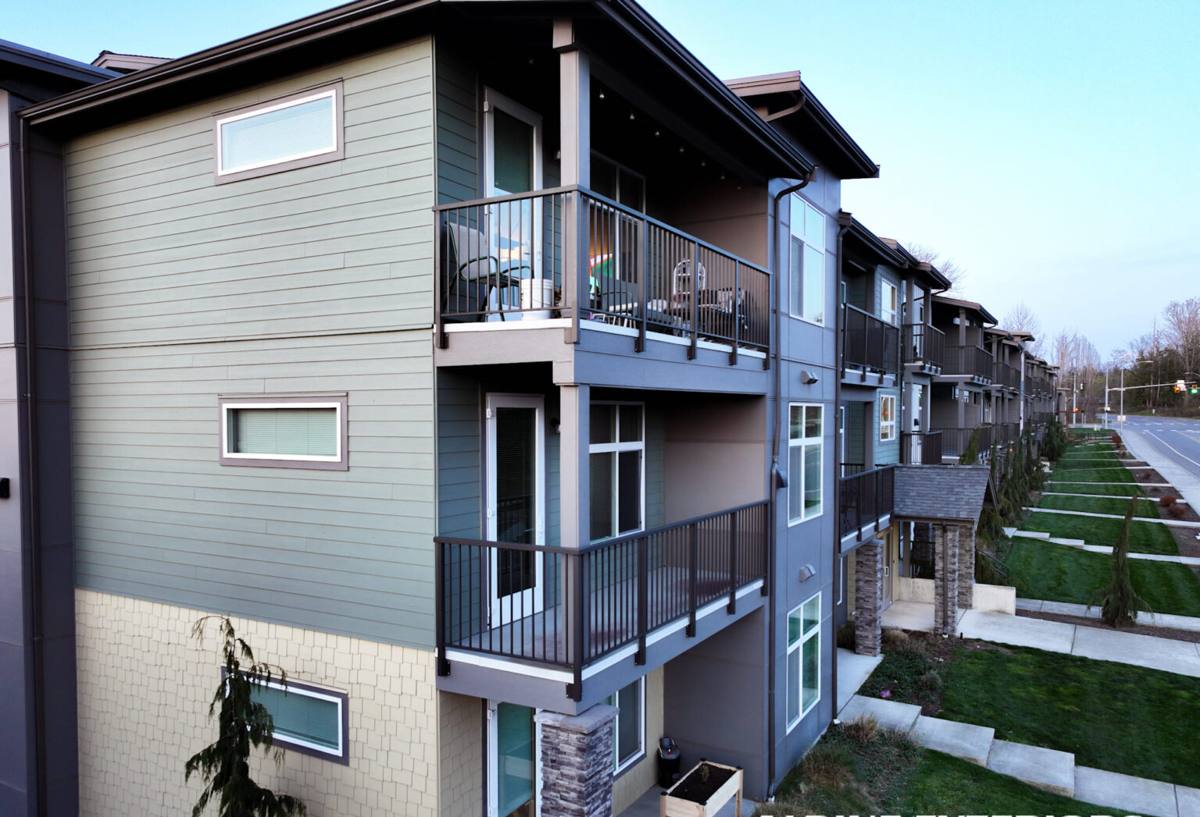
What Redmond Homes Actually Need From Their Siding
Given that climate, the priority list for Redmond siding isn't exotic — it's water management, moisture resistance, and a surface that doesn't feed moss and mildew. Specifically:
- A drainage plane or rainscreen gap behind the siding so water that gets past the surface can actually get back out, instead of sitting against the sheathing.
- Correct flashing at every window, door, and roofline transition — this is where the vast majority of real moisture damage starts, not through the siding field itself.
- A factory-cured finish that resists moss and algae growth better than a field-painted or bare wood surface, especially on shaded elevations.
- Material that doesn't swell, rot, or delaminate when it stays wet for extended periods, which is the normal condition for a shaded Redmond exterior wall from October through April.
- Fastening and joint spacing that accounts for real Pacific Northwest humidity cycling, not just a generic install spec written for a drier climate.
This is also why we don't treat every siding job the same regardless of product. A siding system that performs fine in a dry inland climate can struggle here, and Redmond's tree cover makes the shaded, damp side of a house even less forgiving than the sunny side.
Why We Only Install James Hardie Fiber Cement
We install James Hardie fiber cement siding exclusively — no vinyl, no LP SmartSide, no Cemplank, no Allura, no primed spruce or cedar. That's a deliberate standard, not a default. James Hardie's HardieZone system includes an HZ5 product line engineered specifically for climates like ours: high moisture, freeze-thaw swings, and long wet seasons. Fiber cement itself is non-combustible, doesn't rot, and doesn't provide the organic material that wood-based sidings can, which matters directly for moss and mildew resistance on shaded Redmond walls.
The ColorPlus factory finish is baked on and cured under controlled conditions rather than brushed on at the jobsite, which gives it materially better resistance to the fading, peeling, and moss staining that field-applied paint struggles with over a Northwest winter. Hardie also backs the product with a strong, transferable warranty — but a warranty only means something if the installation was done to spec, which is why we treat flashing, gapping, and fastening details as non-negotiable, not optional extras.
We're upfront that other products get some things right — vinyl is cheap and fast, engineered wood siding can look warm and natural, cedar has real character. But for a climate that punishes moisture-sensitive materials and rewards non-combustible, factory-finished ones, fiber cement is what we're willing to put our name behind and what we install on every job, including our own trucks' worth of Redmond projects.
Our Installation Process on a Redmond Job
1. On-Site Assessment
We walk the exterior, check the current siding and any water damage at trim, windows, and rooflines, and look specifically at shaded and tree-covered elevations where Redmond homes tend to show the most wear first.
2. Tear-Off and Sheathing Check
Old siding comes off and we inspect the sheathing underneath. If there's soft or water-damaged wood — which shows up more often on the shaded side of a house — it gets addressed before anything new goes up. Covering over damaged sheathing just hides a problem that gets worse.
3. Weather-Resistive Barrier and Rainscreen
We install a proper weather-resistive barrier and drainage gap so that any moisture that gets behind the siding has a way out instead of sitting trapped against the wall assembly — this step matters more here than almost anywhere else in the state given how long walls stay damp under tree cover.
4. Flashing at Every Penetration
Windows, doors, roof-to-wall transitions, and any other penetration get flashed correctly before siding goes over them. This is the detail work that actually determines whether a siding job lasts.
5. Hardie Installation to Manufacturer Spec
Panels or lap siding go up with the fastening pattern, gapping, and clearances James Hardie specifies for our climate zone — not shortcuts, not "close enough."
6. Final Walkthrough
We walk the finished job with you, cover care and maintenance specific to a shaded, tree-covered lot, and make sure everything meets the standard we'd want on our own house.
Signs a Redmond Home Needs New Siding, Not Just Repairs
| What You're Seeing | What It Usually Means |
|---|---|
| Persistent moss or dark streaking on shaded walls | Surface is holding moisture and organic growth; may still be cosmetic if caught early |
| Soft or spongy spots when pressed | Water has reached the sheathing — this is a structural concern, not cosmetic |
| Paint that keeps failing in the same spots every couple years | Likely a moisture or flashing issue underneath, not a paint quality issue |
| Visible gaps or warping at seams and corners | Original installation or material may not be handling our wet-dry cycling |
| Rising heating bills with no other explanation | Compromised siding and drainage plane can let conditioned air and moisture pass through the wall |
What Drives the Cost of a Redmond Siding Job
| Factor | Why It Matters |
|---|---|
| Home size and elevation count | More square footage and more corners/transitions means more material and labor |
| Condition of existing sheathing | Water-damaged sheathing found during tear-off needs repair before new siding goes up |
| Siding profile and trim complexity | Lap siding, panel systems, and trim detail all price differently |
| Site access | Tree cover, tight lot lines, and steep grades common on Eastside lots can affect staging and labor time |
| Color and finish selection | ColorPlus factory finishes vs. field painting affect both cost and long-term maintenance |
We give straight, itemized estimates rather than a single vague number, so you can see what you're actually paying for.
Why a Local Eastside Crew Matters for This Job
Siding installation is detail work, and the details that matter change with the microclimate. A crew that regularly works Redmond and the surrounding Eastside communities already knows which elevations on a given lot orientation stay shaded and damp longest, how tree canopy affects drying time after a storm, and where King County inspectors and permitting offices tend to focus. That's not something you get from a crew that mainly works a different climate zone and treats every job identically. It shows up in where we prioritize flashing detail, how we handle drainage on shaded walls, and how we set expectations for moss and maintenance before the job even starts.
What to Expect From a Contractor Doing This Job Right
- A written, itemized estimate — not a single round number with no breakdown
- A real answer about sheathing condition before the tear-off is finished, not after siding is already back up
- Correct flashing at every window, door, and roofline, checked and photographed as part of the job, not assumed
- Manufacturer-spec fastening and gapping for James Hardie's HZ5 climate zone, not a generic install pattern
- A clear explanation of what maintenance your specific lot and elevation will realistically need going forward
Get a Straight Answer on Your Siding
If your Redmond home is showing moss buildup, recurring paint failure, or siding that's just getting tired, we're glad to take a look and tell you honestly what we see — repair, partial replacement, or full replacement — with no pressure either way. Reach out for a free estimate and we'll walk your property in person before recommending anything.