 Seattle Exterior
 Why Renton Decks Wear Out Faster Than People Expect
A deck in Renton takes a different kind of beating than a deck in a dry climate. It isn't one big storm that does the damage — it's the accumulation of a long, wet season, humid air off the Sound and Lake Washington, and moss that gets a running start every fall and doesn't let go until late spring. Wood expands, contracts, absorbs moisture, and dries out again dozens of times a year. Fasteners corrode. Flashing that was installed a little too casually starts to leak. None of this shows up overnight, which is exactly why so many decks in this area look fine from a distance while quietly failing underneath.
Driving rain is part of the problem too. When wind pushes rain sideways against a house, it finds its way behind ledger boards, under railing posts, and into any gap where the original builder didn't flash things correctly. Add in salt-laden air that speeds up corrosion on fasteners and hardware, and you've got a climate that is genuinely harder on outdoor structures than most homeowners realize until they start poking at soft wood with a screwdriver.
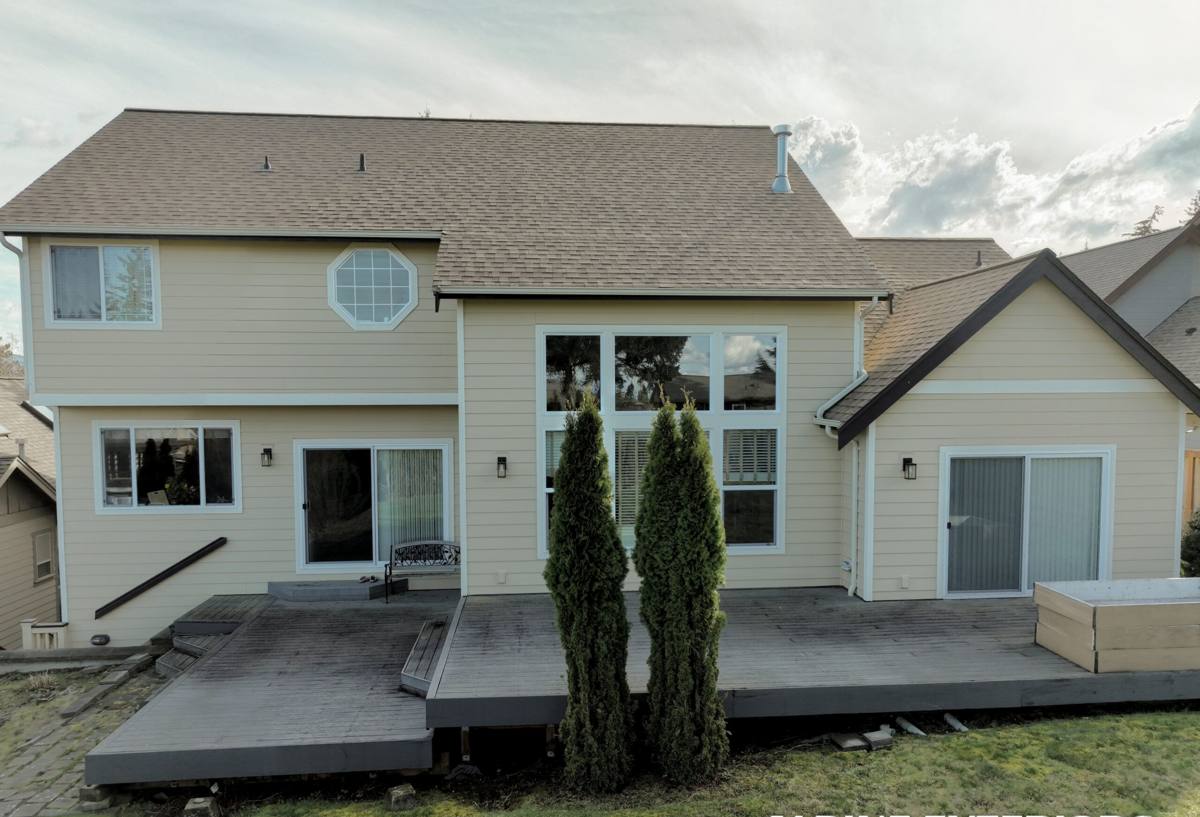
Signs a Renton Deck Needs More Than a Pressure Wash
Moss and algae staining are the visible symptom, but they're rarely the actual problem — they're just evidence of moisture sitting where it shouldn't. Before we talk about repair, it helps to know what's cosmetic and what's structural.
- Decking boards that feel spongy, springy, or noticeably softer than the boards around them
- Dark staining or a persistent damp line where the deck meets the house (the ledger board)
- Railings or posts that wobble, flex, or have visible cracking at the base
- Gaps opening up between boards, or fasteners backing out and standing proud
- Green or black growth that returns within weeks of cleaning
- A musty smell coming from underneath the deck, especially after rain
- Visible rust streaking from screws, bolts, or joist hangers
Any one of these on its own might be minor. Several together usually mean the structure underneath has been absorbing water longer than the surface has been showing it.
What a Proper Deck Repair Actually Involves
A repair that only addresses the top surface — new boards, a coat of stain, done — treats the symptom and skips the cause. A repair that actually holds up in this climate starts underneath.
Ledger Board and Ledger Flashing
The ledger is the board that attaches the deck to the house, and it's the single most common failure point we find. If the flashing behind it was missing, undersized, or installed without proper overlap, water has likely been running down the wall and into the rim joist for years. Fixing decking without correcting the ledger flashing is one of the more common shortcuts we see in prior repair work — it looks finished but leaves the real problem in place.
Framing and Joists
Joists carry the actual load of the deck. Rot at joist ends, corroded joist hangers, and undersized or missing blocking are all things that don't show from above but matter enormously for safety. We check for soft spots by probing with an awl, not just by looking.
Posts and Footings
Posts that sit directly on or in contact with soil are almost always the first thing to fail in a wet climate, since ground contact keeps wood damp far longer than open air ever would. Footings that have shifted, cracked, or settled unevenly can throw the whole structure slightly out of level, which stresses everything connected to it.
Railings and Guardrails
Loose railings are a safety issue, not a cosmetic one. We check post attachment, baluster spacing, and overall rail height against current code requirements any time we're doing repair work near a railing system, even if the railing itself wasn't the original complaint.
Repair vs. Replace: How We Decide
Not every deck needs a full rebuild, and not every deck should be patched. The honest answer depends on how much of the structure is still sound.
| Factor | Leans Toward Repair | Leans Toward Replacement |
|---|---|---|
| Framing condition | Joists and beams are solid, only isolated boards affected | Rot or soft spots found in multiple structural members |
| Ledger connection | Flashing is intact, attachment is sound | Ledger shows sustained water damage or was never properly flashed |
| Age of deck | Under 15 years, built to a reasonable standard | Older deck nearing the end of typical service life |
| Footings/posts | Stable, level, no visible movement | Settling, cracking, or ground-contact rot present |
| Code compliance | Railings and spacing already meet current code | Structure predates current guardrail or attachment requirements |
We'd rather tell a homeowner honestly that a targeted repair will hold for years than sell a full rebuild that isn't needed — and just as important, we won't recommend patching a deck whose framing is genuinely compromised, because that's not a repair, it's a delay.
Materials That Actually Hold Up Here
Material choice matters more in a climate like this than in drier parts of the country, because the difference between a good decision and a mediocre one compounds every wet season.
- Pressure-treated lumber remains a solid, economical choice for framing and is often the right match for repairing an existing wood deck, but it needs proper sealing and shouldn't be left to weather unprotected.
- Cedar has natural rot resistance and a warmer look, though it's softer and needs more regular maintenance than treated lumber.
- Composite decking resists moss and moisture absorption far better than wood on the surface, which matters given how long moss season runs here — but it's not maintenance-free, and it doesn't fix a rotten frame underneath it.
- Stainless or coated structural screws and joist hangers cost more than standard hardware but resist corrosion from the area's damp, salt-tinged air, which is exactly the kind of detail that determines whether a repair lasts five years or fifteen.
- Self-adhering flashing membrane at the ledger and any post base is non-negotiable in our process, regardless of which decking material a homeowner chooses.
Our Deck Repair Process in Renton
1. Full Structural Walkthrough
We inspect from underneath as well as on top — probing joists, checking the ledger connection, and testing posts and footings — before we quote anything. A repair estimate based only on what's visible from the top isn't a real estimate.
2. Written, Itemized Scope
You get a clear breakdown of what's being repaired and why, so you're not guessing whether you're paying for cosmetic work or structural work.
3. The Repair Itself
We replace what's compromised, correct flashing and water management issues at the source, and match materials and fasteners appropriately rather than reusing corroded hardware just because it's still technically holding.
4. Cleanup and Final Check
Site cleared, hardware checked for tightness, and a final walkthrough so you know exactly what was done and what to watch for going forward.
Permits and Code Considerations in King County
Depending on the scope of the work, deck repairs in Renton and unincorporated King County can fall under different permit thresholds — a like-for-like board replacement is usually treated differently than reframing or rebuilding a structure. Guardrail height, baluster spacing, and attachment strength are areas where code has tightened over the years, so a repair on an older deck is often a good opportunity to bring a railing system up to current standards even if that wasn't the original ask. We handle the permit question as part of scoping the job rather than leaving homeowners to figure it out on their own.
Maintenance Checklist to Extend the Life of a Repair
A repaired deck still needs upkeep, especially through a long moss season. A little regular attention goes a long way toward avoiding a repeat call.
- Clear leaves, needles, and debris from between boards before they trap moisture
- Rinse off moss and algae growth before it has a chance to establish, rather than after it's thick
- Check the ledger area for staining or dampness at the start and end of the wet season
- Look underneath once or twice a year for standing water, soft framing, or pest activity
- Re-seal or re-stain wood decking on the schedule the product actually calls for, not just when it looks faded
- Tighten or replace any hardware showing rust before it fails
- Keep gutters and downspouts near the deck clear so runoff isn't dumping directly onto or under it
Why Hiring a Crew That Already Works in Renton Matters
A lot of deck problems in this region come from work that was done without accounting for how much water this area actually sees. A crew that works Renton regularly knows which failure points show up again and again in this climate — ledger flashing, ground-contact posts, moss buildup in shaded yards — and inspects for them by default instead of by luck. That local pattern recognition is the difference between a repair that addresses the actual cause and one that just replaces what's visibly damaged and calls it done.
If you're noticing soft spots, staining, or a deck that just doesn't feel as solid as it used to, we're happy to take a look and give you an honest read on what's actually going on underneath. Use the form below to request a free, no-pressure estimate — we'll tell you straight whether you're looking at a targeted repair or something bigger.