 Seattle Exterior
 Metal Roofing for Shoreline Homes
Shoreline sits close enough to Puget Sound that salt-laden air is part of daily life, and far enough into the Seattle tree canopy that shade, needle drop, and moss are a constant. Add a wet season that runs long and heavy, and you have a set of conditions that will find every weakness in a roofing system faster than almost anywhere else in King County. Metal roofing handles that combination better than most materials on the market, but only when it's specified and installed correctly for this specific climate. A metal roof built for a dry inland town isn't automatically right for a house three miles from saltwater under a stand of Douglas fir.
This page is about one thing: metal roofing, done right, on Shoreline homes. Not a generic rundown of metal roofing everywhere, but what actually matters here — the fastener choices, the flashing details, the panel coatings, and the maintenance habits that keep a metal roof performing for decades instead of quietly failing at the seams.
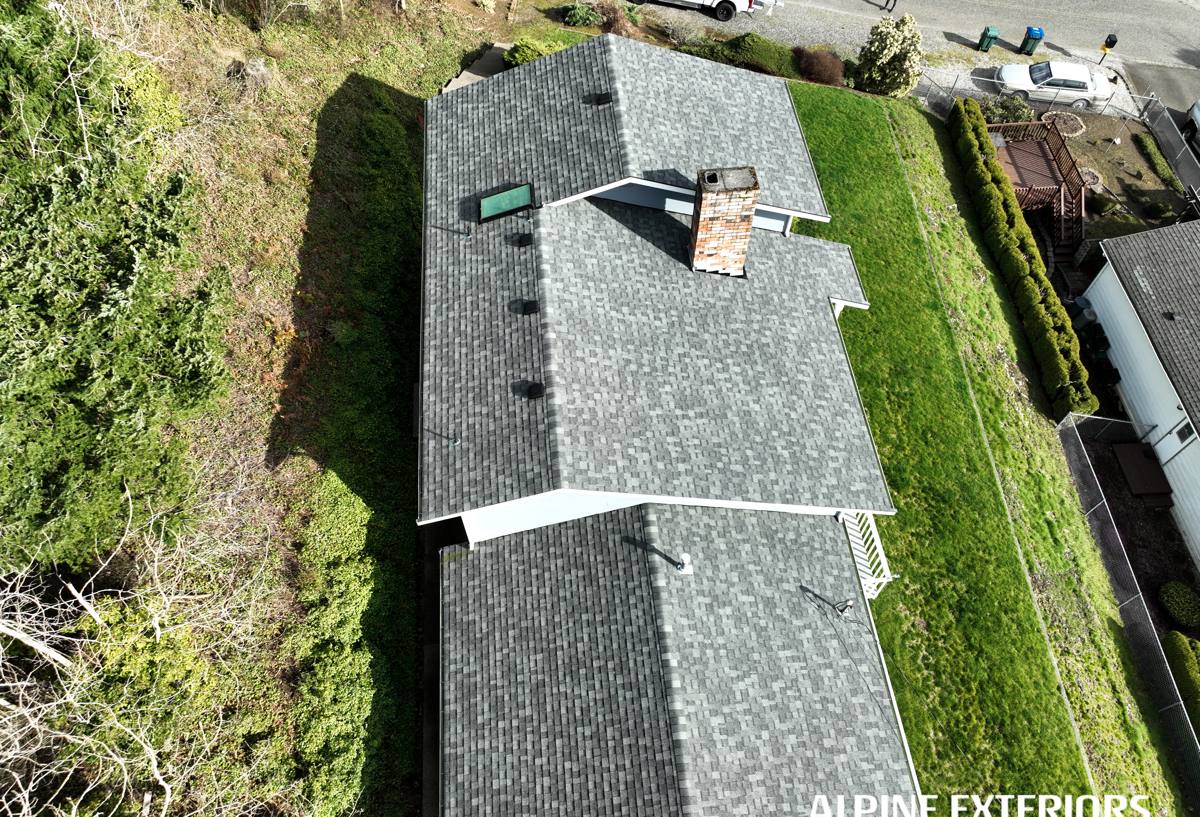
What Rain, Salt Air, and Moss Actually Do to a Roof Here
Wind-Driven Rain
Seattle-area storms rarely dump rain straight down — wind pushes it sideways and up under laps, edges, and penetrations. A roof that would shed a vertical downpour just fine can still leak in a sideways storm if the underlayment, flashing, and panel overlaps weren't detailed for driving rain. This is one of the most common causes of "mystery leaks" we get called out for on older metal and shingle roofs alike.
Salt Air and Corrosion
Homes closer to Puget Sound deal with a slow, steady corrosion pressure that inland Washington roofs simply don't face. Bare or poorly coated steel, mismatched fasteners, and cut edges that were never sealed all become the first failure points. It shows up as rust streaking, pinholing at fastener heads, and galvanic corrosion where dissimilar metals touch — none of which happen overnight, which is exactly why they get ignored until they're expensive.
Moss and Tree Debris
Shoreline's mature tree cover means needles, cones, and organic debris collecting in valleys and behind flashing for most of the year. That debris holds moisture against the roof surface long after the rain stops, which is exactly what moss needs to establish. On metal roofing, moss itself doesn't root into the panel the way it can undermine shingle granules, but debris buildup still traps moisture at seams and fastener penetrations — the actual vulnerable points.
What a Correctly Installed Metal Roof Requires
"Metal roof" covers a wide range of quality, and the difference between a roof that lasts 40-plus years and one that leaks in five almost always comes down to details that aren't visible from the ground.
- A high-temp, self-adhering underlayment at eaves, valleys, and penetrations — not just felt paper
- Fasteners and flashing metal matched to the panel material to avoid galvanic corrosion
- Proper panel overlap and seam direction relative to prevailing wind and water flow
- Closed-cell foam or vented closures at ridges and eaves to block wind-driven rain and pests
- Adequate attic or roof-deck ventilation so condensation doesn't collect under the panels
- Sealed cut edges on every panel, not just factory edges, to stop corrosion from starting inward
- Ice-and-water shield or equivalent at valleys, where debris and standing moisture concentrate
Skip any one of these and the roof can still look correct for years while a problem builds underneath it. This is the gap between a roof that's "installed" and one that's installed for this climate.
Choosing the Right Metal Panel System
Not every metal roofing product is a fit for a Shoreline home. The right choice depends on how close the house is to the water, how much tree cover it sits under, and what look fits the house and neighborhood.
| System | Best For | Trade-Offs |
|---|---|---|
| Standing seam steel | Most Shoreline homes; concealed fasteners, clean lines | Higher upfront cost; requires precise installation to perform |
| Exposed-fastener steel panels | Outbuildings, garages, budget-conscious projects | Fasteners are the weak point over time and need periodic inspection |
| Aluminum standing seam | Homes closest to Puget Sound with the highest salt exposure | Costs more than steel; won't rust, but is softer and can dent more easily |
| Stone-coated steel | Homeowners wanting a shingle or shake look with metal durability | More installation steps; coating chips need touch-up if damaged |
For most Shoreline properties, a Galvalume or painted steel standing seam system is the practical middle ground — strong corrosion resistance, a clean concealed-fastener look, and a proven track record in Puget Sound-area weather. For homes right along the water where salt exposure is heaviest, we'll talk through aluminum as a step up in corrosion resistance, even at a higher material cost. We don't push exposed-fastener panels on primary roofs in this climate — the long-term maintenance burden from failing fastener seals outweighs the upfront savings, and it's a standard we hold ourselves to, not a knock on the product's other uses.
Our Installation Process
Inspection and Deck Assessment
Every job starts with a walk of the roof and attic, not just an estimate from the ground. We're checking deck condition, existing ventilation, and how water has actually been moving across the roof — moss patterns and staining tell us a lot about where past problems started.
Tear-Off vs. Overlay
We'll tell you honestly when an overlay is workable and when it isn't. Overlaying onto damaged or wet decking just seals a problem in place; a tear-off lets us check the deck, add proper underlayment, and correct any ventilation issues that have been building moisture from underneath.
Installation and Flashing
Panels go down with fasteners and flashing matched to the material, sealed cut edges, and closures at every ridge, eave, and penetration. Valleys and any wall-to-roof transitions get the most attention, since that's where wind-driven rain and debris both concentrate.
Final Walkthrough and Cleanup
We walk the finished roof with you, clear the site of scrap metal and old material, and make sure gutters and downspouts are clear and functioning before we call the job done.
Why a Crew That Already Works Shoreline Matters
A lot of what makes a metal roof succeed or fail here isn't in a manufacturer's install manual — it's local knowledge. Knowing which Shoreline neighborhoods sit close enough to the Sound to warrant aluminum over steel. Knowing how much tree cover a given block has and adjusting valley and gutter design accordingly. Knowing King County and City of Shoreline permitting and inspection expectations so the job doesn't stall waiting on paperwork we should have handled up front. None of that comes from a spec sheet — it comes from having done this work, on these streets, in this weather, repeatedly.
It also means we're not guessing at timing. Scheduling a tear-off around the wettest stretches of the year, sequencing work so a roof is never open to weather overnight, and knowing which suppliers actually stock the coatings and gauges that hold up here — that's the difference between a crew passing through and one that treats Shoreline as home turf.
Keeping a Metal Roof Performing Long-Term
Metal roofing is low-maintenance, not no-maintenance. A little attention once or twice a year keeps a well-installed system performing for decades.
- Clear needles and debris from valleys and behind chimneys or dormers each fall
- Keep gutters and downspouts flowing so water isn't backing up under the drip edge
- Check for moss or algae staining at shaded slopes and treat early if it appears
- Have fastener heads and sealant at penetrations inspected every few years, especially on exposed-fastener systems
- Look for any scuffed paint or coating after storms or falling branches, and touch up promptly to stop corrosion before it starts
What Affects the Cost of a Metal Roof in Shoreline
| Factor | Why It Matters Here |
|---|---|
| Panel material and coating | Steel with a quality coating costs less than aluminum; aluminum earns its premium closest to the Sound |
| Roof complexity | Valleys, dormers, and multiple roof planes mean more flashing work and labor time |
| Tear-off vs. overlay | A full tear-off costs more upfront but is often the only honest option on an older, moisture-affected deck |
| Ventilation upgrades | Correcting inadequate attic ventilation adds cost but prevents condensation issues down the line |
| Access and pitch | Steep or hard-to-access roofs, common on Shoreline's older housing stock, add labor time |
Rough installed costs for a quality standing seam steel system in this region typically run in the mid-to-high teens per square foot, with aluminum and stone-coated options running higher. Exact numbers depend entirely on the roof itself, which is why we walk every job in person before quoting.
If you're weighing metal roofing for a Shoreline home, we're glad to take a look and give you a straight, no-pressure estimate — what your roof actually needs, what it doesn't, and what a correct job costs. Use the form below to get started.