 Seattle Exterior
 Magnolia's Peninsula Setting Puts Real Stress on Siding
Magnolia sits on a peninsula bordered by Puget Sound and Elliott Bay, with water on three sides and a lot of mature tree canopy, including the forest and bluffs around Discovery Park. That combination — open water exposure plus heavy shade in older residential pockets — creates a tougher environment for exterior siding than most inland Seattle neighborhoods see. Homes here take on wind-driven rain off the Sound, salt-laden air, and long stretches of damp shade that keep siding wet longer after every storm.
None of that is unique to any one house in Magnolia — it's a neighborhood-wide condition. Any siding installation here has to be planned around it, not just around the style of the home.
Salt Air and Wind-Driven Rain
Elevated, water-facing lots catch wind gusts that push rain sideways into wall assemblies, seams, and trim joints instead of letting it run straight down. Salt content in the marine air also accelerates corrosion on exposed metal fasteners, flashing, and trim — which is a big part of why fastener choice and flashing detail matter more here than in a sheltered inland yard.
A Long Moss and Mildew Season
Seattle's mild, wet winters already favor moss and mildew growth, and Magnolia's tree-shaded streets extend that season further on the north and west-facing walls that rarely see direct sun. Siding that stays damp for days at a time is siding that's working harder, and it's why moisture-tolerant materials and proper ventilation behind the cladding matter as much as the surface finish.
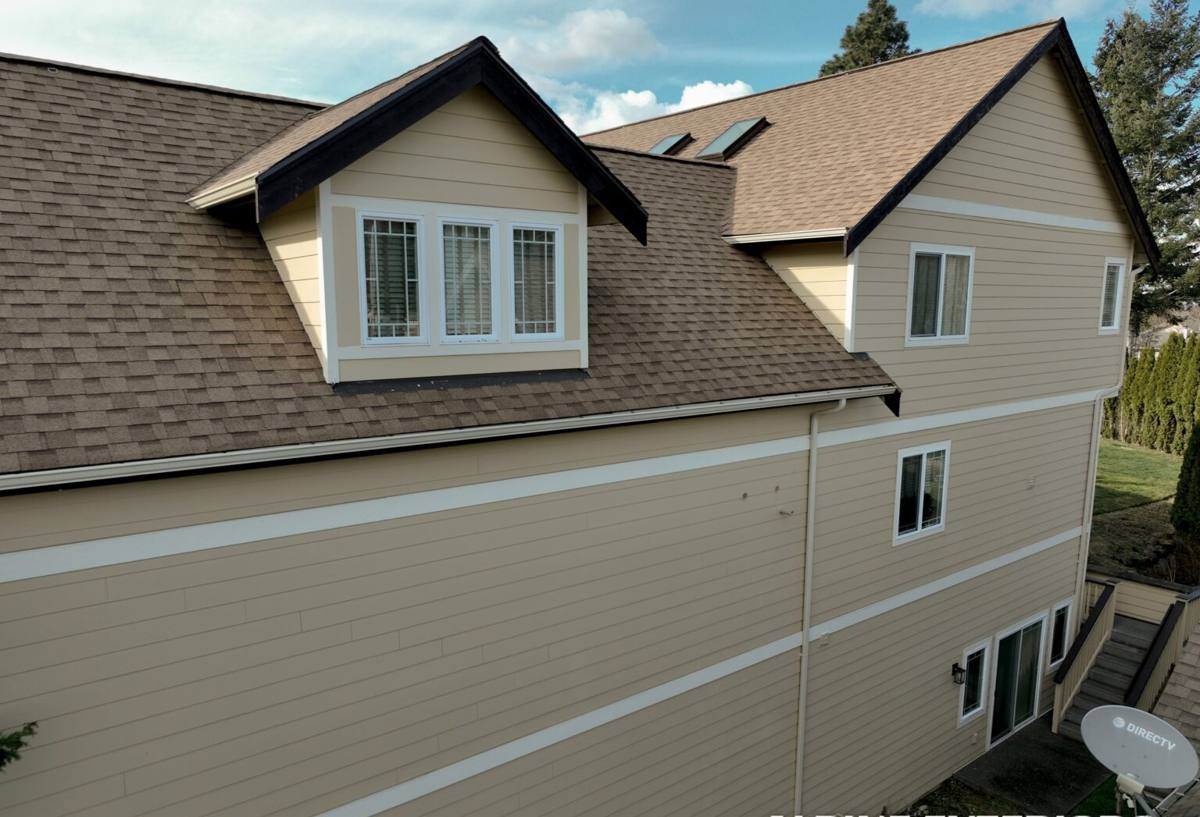
What a Correct Siding Installation Actually Requires
Siding installation is easy to do halfway — get the boards up straight and it looks fine for a year or two. Getting it right for King County's climate means the water management underneath the boards is treated as seriously as the finished look on top.
Water Management Comes First
A correct installation starts with a continuous water-resistive barrier over the sheathing, properly lapped and sealed at every penetration — windows, doors, hose bibs, light fixtures. Flashing goes in at every horizontal joint, window head, and roof-to-wall transition so water is directed out and down, never trapped behind the cladding. On a peninsula lot catching wind-driven rain, sloppy flashing is the single most common reason siding fails early, usually from the inside out where it isn't visible until there's already rot.
Fastening and Clearances
Fiber cement has to be fastened per the manufacturer's specification for the local wind exposure — nail pattern, fastener type, and depth all matter, and using standard fasteners in a high-corrosion marine setting is a shortcut that shows up as staining and loosening years later. Siding also needs proper clearance off grade, roof lines, and decks so water and moss-holding debris don't sit against the bottom edge of the board.
Our Installation Process for Magnolia Homes
The steps are the same everywhere, but how carefully each one is done changes based on what a house is exposed to. On Magnolia jobs we pay particular attention to the water-facing walls and any shaded, moss-prone elevations.
- On-site assessment — we look at wind exposure, tree cover, existing moisture damage, and how the home's walls face the Sound before we plan the job.
- Tear-off and sheathing inspection — old siding comes off and the sheathing underneath gets checked for rot or hidden water damage before anything new goes on.
- Water-resistive barrier and flashing — a new barrier is installed and lapped correctly, with flashing at every joint, window, and transition.
- Hardie installation — boards are fastened to spec with corrosion-resistant fasteners appropriate for a marine environment.
- Trim, caulking, and finish detail — joints are sealed and finished so water sheds away from the building rather than into it.
- Final walkthrough and cleanup — the site is cleaned up and we walk the finished job with the homeowner.
Why We Install Only James Hardie Fiber Cement
We made a standing decision to install James Hardie fiber cement siding exclusively — not vinyl, not LP SmartSide, not cedar, not primed spruce, not other fiber cement brands. That's not a marketing angle; it's because Hardie's product system is engineered specifically for the trade-offs that matter most in a climate like ours, and we'd rather stand behind one system we trust completely than offer several we have reservations about.
HZ5 Engineering for Marine Climates
James Hardie manufactures siding in different HZ (HardieZone) formulations engineered for different regional moisture and freeze conditions. The HZ5 line is built for the wetter, cooler climates found in the Pacific Northwest, which matters directly for a peninsula neighborhood dealing with sustained damp exposure. Fiber cement itself is non-combustible and dimensionally stable — it doesn't swell, warp, or rot the way wood-based products can when they stay wet for extended periods, which is exactly the condition Magnolia's shaded, water-facing lots create.
ColorPlus Factory Finish
Hardie's ColorPlus finish is baked on in a factory-controlled process rather than field-applied, which gives more even coverage and better fade and moisture resistance than a job-site paint job. It also comes backed by Hardie's own finish warranty in addition to the product warranty — a combination that matters on a home exposed to year-round marine moisture and UV.
What Drives the Cost of a Siding Installation
Every Magnolia home is different, so we don't quote off square footage alone. These are the factors that actually move the number:
| Cost Factor | Why It Matters |
|---|---|
| Tear-off vs. install over existing | Full tear-off costs more up front but lets us inspect and fix sheathing and framing issues before they're covered up again |
| Home size and number of stories | More wall area and taller walls mean more material, more staging, and more labor time |
| Trim and architectural detail | Corner boards, window trim, and multiple roof lines all add joints that need to be flashed and finished correctly |
| Existing moisture damage | Rot found once old siding is removed has to be repaired before new siding goes on — this is common on older, shaded Magnolia homes |
| Siding profile chosen | Lap plank, shingle-style, and panel products differ in material and labor time to install |
Mistakes We See on Older Magnolia Homes
Magnolia has a mix of older homes, and a few installation shortcuts show up again and again when we open up a wall that's had a problem:
- Siding installed directly over old, already-damaged material instead of a proper tear-off
- Missing or poorly lapped flashing at window heads and wall-to-roof transitions
- Standard fasteners used in a high-salt-exposure setting, leading to staining and early loosening
- Siding installed with no clearance off grade, decks, or roof lines, letting moisture and moss sit against the bottom edge
- Caulk used to bridge gaps that should have been flashed instead
None of these show up on day one. They show up two, five, or ten years later as soft spots, staining, or moss creeping in at the bottom courses — which is why the installation details matter more than the final coat of color.
After Installation: Keeping Magnolia Siding Looking Right
Correctly installed Hardie siding is low-maintenance, but Magnolia's tree cover and marine air mean it isn't zero-maintenance. A periodic rinse-down of shaded, north-facing walls keeps moss and mildew from taking hold, and it's worth a visual check after major windstorms for any loose trim or caulk gaps, especially on walls that face the Sound directly. Keeping gutters clear and vegetation trimmed back from the walls also goes a long way toward keeping moisture off the siding in the first place.
What to Ask Before You Hire a Siding Crew
Because so much of what makes an installation last is hidden behind the boards, the questions worth asking are about process, not just price:
- Will you do a full tear-off, or install over the existing siding?
- What happens if you find rot or damage once the old siding is off?
- What flashing details will you use at windows, doors, and roof transitions?
- What fastener type and pattern will you use, given the marine exposure?
- Is the manufacturer's warranty backed by a certified or experienced installer, and what does that warranty actually cover?
- Do you have experience working on homes in this specific area, with its wind and moisture exposure?
A crew that already works Magnolia regularly should be able to answer all of these without hesitation, because they've already run into the conditions that make them matter.
If you're weighing a siding project on a Magnolia home, we're happy to take a look and put together a straightforward, no-pressure estimate — just fill out the form below.