 Seattle Exterior
 Siding Repair Built for University District's Housing Stock
University District sits in the thick of Seattle's older, tree-shaded housing stock — a mix of early-to-mid-century homes, converted rentals, and multi-family buildings packed close together near the University of Washington campus. That density and tree canopy create a specific set of siding problems: shaded north- and east-facing walls that rarely dry out, gutters and downspouts that get overwhelmed during heavy rain events, and siding that was often installed decades ago under very different code and material standards than what's available today.
Seattle and King County share a long wet season, driving rain that gets pushed sideways by wind off Puget Sound, and a moss season that can run most of the year on shaded surfaces. None of that is unique to University District, but the neighborhood's tight lot spacing and older tree cover make the effects show up faster and in more predictable places — behind overgrown shrubs, under eaves with poor overhangs, and around windows and trim where old caulk has failed. Repairing siding here isn't just about patching a hole. It's about understanding why that spot failed first.
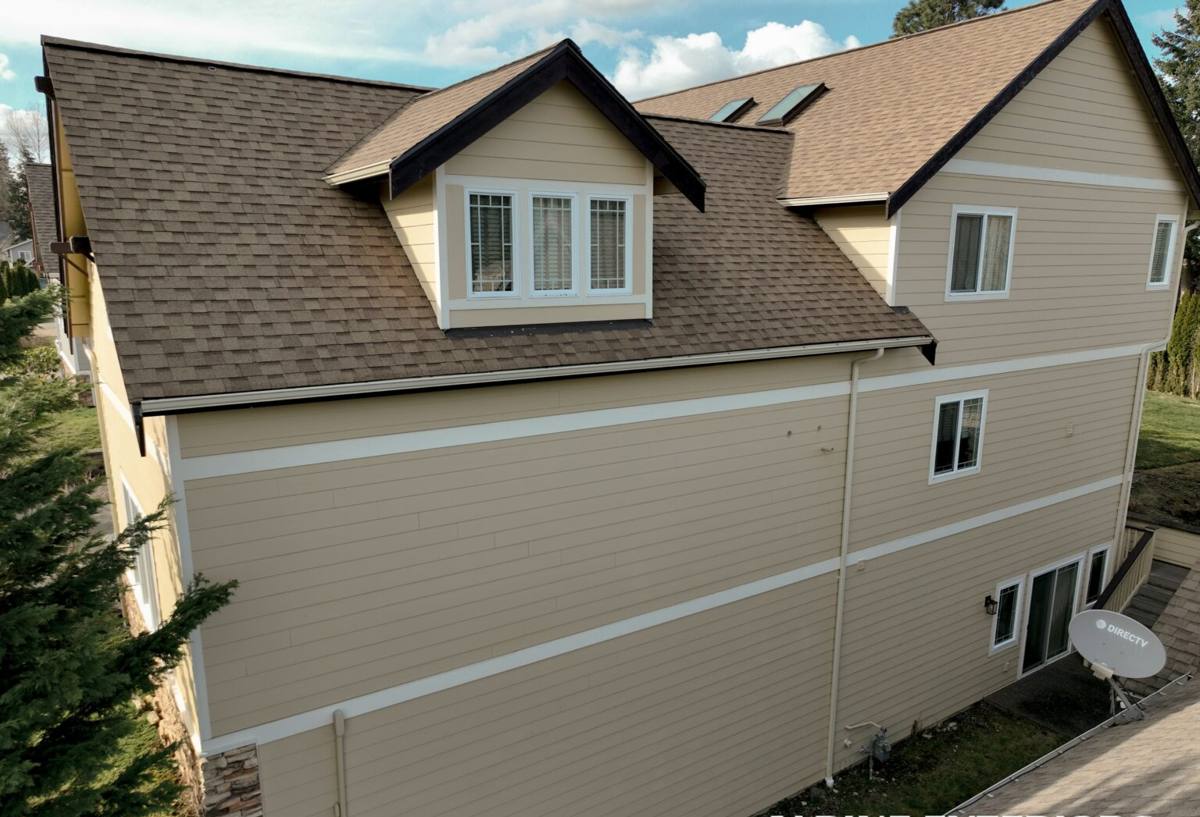
What Seattle's Climate Does to Siding Over Time
Driving Rain and Wind-Driven Moisture
Most siding failures we're called out for aren't caused by rain falling straight down — they're caused by rain being driven sideways into seams, butt joints, and trim intersections during storms. Over years, water finds the smallest gap in caulking or flashing and works its way behind the siding, where it can sit against sheathing far longer than most homeowners realize.
Moss, Mildew, and Organic Growth
Constant moisture plus shade equals moss and mildew, and University District has plenty of both thanks to mature trees and closely built lots. Organic growth on siding isn't just cosmetic — it holds moisture against the surface, breaks down paint and caulk faster, and on wood-based products can accelerate rot underneath.
Salt Air and Airborne Moisture
Seattle's proximity to Puget Sound means a steady dose of salt-tinged, moisture-laden air citywide, even away from the immediate waterfront. That air accelerates corrosion on fasteners and metal flashing and keeps humidity levels elevated longer after storms pass, which matters for how quickly siding materials dry out between rain events.
Temperature Swings
Seattle winters aren't harsh compared to inland climates, but the freeze-thaw cycles that do happen can widen small cracks in caulk and trim that summer heat had sealed shut. Repeated over several winters, that's how a hairline gap becomes a real leak point.
Common Siding Repair Issues We See in University District
The right repair depends heavily on what's already on the wall. Here's what we typically find, by material:
- Older wood siding: soft or delaminating boards near the ground, at butt joints, and under windows where paint has failed and water has been sitting against the wood.
- Engineered wood siding: swelling, edge flaking, and bubbling paint where moisture has gotten into the substrate, especially at cut ends that weren't properly sealed during the original install.
- Vinyl siding: panels that have warped, cracked, or blown off in wind events, and gaps at corners and J-channels that let water behind the whole wall assembly.
- Fiber cement siding: typically the most stable of the group, but even well-installed fiber cement can develop caulk failure at joints, impact damage, or fastener issues that need attention before water gets behind the panel.
In a lot of University District homes with rental history or multiple past owners, we also find repairs on top of repairs — caulk over caulk, paint over rot, patches that were never sealed correctly. Part of an honest repair job is telling you when a patch is genuinely enough and when it's just delaying a bigger fix.
Signs Your Siding Needs Repair
Most siding damage doesn't announce itself with a dramatic failure — it shows up as small details that are easy to write off. Worth checking for:
- Soft or spongy spots when you press on the siding, especially near the bottom of walls
- Peeling or bubbling paint that keeps coming back in the same spots after repainting
- Visible gaps, cracks, or missing caulk at seams, corners, and window or door trim
- Persistent moss or dark streaking that returns shortly after cleaning
- Warped, buckled, or separating panels, particularly after windstorms
- A musty smell or visible staining on interior walls that back up to exterior siding
- Higher-than-expected heating bills, which can point to moisture-compromised insulation behind the siding
What a Correct Siding Repair Job Actually Involves
Diagnosing the Real Problem First
A damaged board is a symptom, not the diagnosis. Before we replace anything, we check how far moisture has traveled — whether it's contained to the siding surface or has already reached the sheathing and framing underneath. Cutting out a bad board without checking what's behind it is how the same repair ends up needed again two years later.
Fixing the Cause, Not Just the Symptom
If a section failed because of missing kick-out flashing, a clogged gutter dumping water down a wall, or caulk that was never installed at a critical joint, replacing the siding alone doesn't solve anything. Correct repair means addressing the water path, not just covering the visible damage.
Matching Material and Finish
Patch jobs that don't match are one of the most common complaints we hear about prior repairs. Getting a repaired section to blend — in material, texture, and finish — takes more care than most quick fixes get, but it's what separates a repair that looks intentional from one that looks like a patch.
Sealing and Flashing Details
The visible siding is the last layer, not the only one. Correct repair work re-establishes proper flashing, house wrap continuity, and sealant at every joint we touch, so the repair holds up under the next few winters of driving rain, not just the next dry season.
Repair or Replace? How We Help You Decide
| Factor | Repair Usually Makes Sense | Replacement Usually Makes Sense |
|---|---|---|
| Extent of damage | Isolated to a few boards or panels | Damage spread across multiple walls or elevations |
| Sheathing condition | Structure underneath is dry and sound | Sheathing is soft, rotted, or moisture-stained |
| Age of existing siding | Siding is otherwise in good condition and mid-life | Siding is near or past its expected service life |
| Material match | Matching material or paint is realistically achievable | Original material is discontinued or won't blend |
| Recurrence | First time this area has had an issue | Same spot has needed repair more than once |
We'll always tell you honestly which side of that table your home falls on. A lot of the time, targeted repair is the right call and full replacement would be overkill. Other times, a home has enough underlying moisture damage or aging material that repairing one section just moves the problem to the next one over.
Why We Repair and Install Only James Hardie Fiber Cement
When we do repair fiber cement siding, James Hardie is the easiest material to work with honestly — and that's part of why it's the only siding system we install on this house's exterior going forward. Hardie's ColorPlus factory finish is engineered to a consistent formulation, which makes color-matching a repaired section far more predictable than trying to match hand-mixed field paint on wood or engineered wood siding years after the original install. It's also non-combustible, resists moisture absorption far better than wood-based products, and Hardie's HZ5 product line is engineered specifically for the wet, temperate conditions we get in the Pacific Northwest.
We're not going to pretend other materials don't have their place — vinyl is inexpensive, engineered wood has a real market, and cedar has genuine aesthetic appeal. But when it comes to what holds up to King County's wet season year after year, resists moss and moisture the way this climate demands, and stays repairable and color-matchable a decade down the road, fiber cement is what we stand behind. If your home currently has a different siding material, we'll repair it honestly and tell you straight when replacement with Hardie is the better long-term move instead of continuing to patch something that's fighting the climate.
Our Siding Repair Process for University District Homeowners
- On-site inspection: we walk the full exterior, not just the spot you called about, since moisture problems rarely stay isolated.
- Moisture and structural check: we assess what's happening behind the siding, not just what's visible on the surface.
- Honest scope and options: you get a clear explanation of what's causing the damage and whether repair or replacement is the right fix.
- Repair or replacement work: including removal of compromised material, correcting the underlying water path, and installing matched or new siding correctly.
- Final detailing: flashing, sealant, and finish work done to hold up through the next wet season, not just look good on the day we leave.
Why Hiring a Crew That Already Works University District Matters
University District's housing stock has real variety — older single-family homes, converted duplexes, and rental properties with landlords managing exteriors from a distance. A crew that regularly works this neighborhood already understands the age range of homes here, the common original construction shortcuts from decades past, and how Seattle and King County permitting applies to exterior repair work. That familiarity means less time spent diagnosing surprises and more time actually fixing the problem correctly the first time.
It also means we're not guessing at how this specific pocket of Seattle's climate behaves. Shaded, tree-covered lots dry out differently than open ones, and repair details that work fine in a sunnier part of the city can fail faster here if they're not accounted for.
If you're noticing soft spots, recurring moss, or paint that won't stop peeling on your University District home, we're happy to take a look. The estimate is free, there's no pressure, and you'll get a straight answer about whether your siding needs a repair or something more.