 Seattle Exterior
 Fiber Cement Siding, Built for Wallingford's Climate
Wallingford is one of Seattle's older, more established neighborhoods, and it shows in the housing stock: craftsman bungalows, early-20th-century foursquares, and a mix of remodeled homes tucked under mature street trees. That tree canopy is part of what gives Wallingford its character, but it also creates a specific set of problems for exterior siding. Shade slows drying time after rain. Overhanging branches drop debris and organic matter onto roofs and wall surfaces. Combined with King County's long wet season and the driving rain that comes off Puget Sound weather systems, siding on a Wallingford home spends a lot of the year damp, shaded, and exposed to conditions that favor moss and mildew growth.
This is exactly the kind of environment where the choice of siding material matters more than most homeowners realize. We install James Hardie fiber cement siding exclusively — not vinyl, not LP SmartSide, not primed wood, not budget fiber cement alternatives. That's a deliberate standard, and in a neighborhood like Wallingford, where shade and moisture are constants rather than occasional weather events, the reasoning behind it becomes very practical.
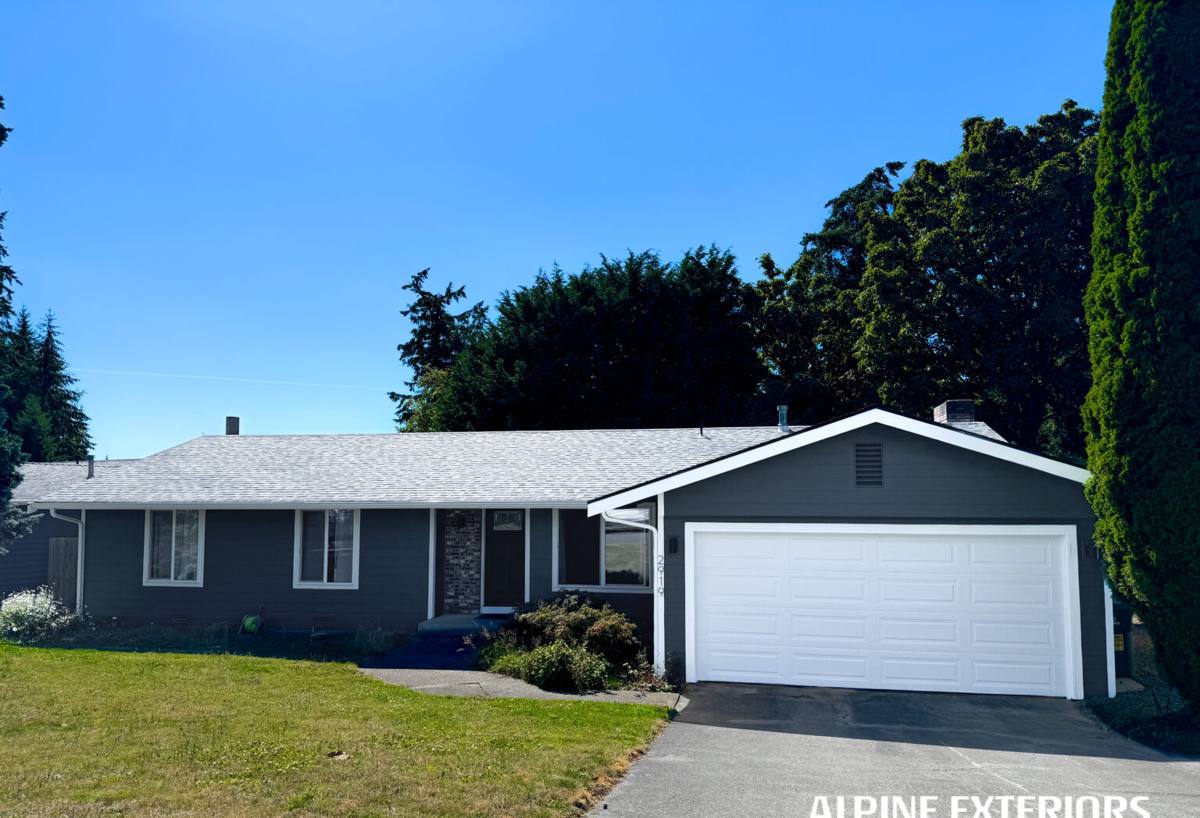
What Seattle's Wet, Shaded Conditions Do to Siding
Every siding material reacts differently to sustained moisture exposure, and Wallingford's tree cover makes that exposure longer than it would be on a more open lot. A few things homeowners in this neighborhood run into regularly:
- Extended damp periods: Shaded walls and north-facing elevations dry slowly after rain, giving moss, algae, and mildew more time to establish.
- Moss and organic buildup: Moss doesn't just sit on the surface — over time it holds moisture against the cladding and, on materials that aren't dimensionally stable, can contribute to swelling or surface breakdown.
- Driving rain intrusion: Wind-driven rain off the Sound pushes water sideways into seams, laps, and trim junctions, which is where poor flashing and caulking details eventually fail.
- Freeze-thaw cycling: King County winters aren't brutally cold, but repeated freeze-thaw swings still stress any material that absorbs water.
- Wood rot risk near tree lines: Homes close to mature landscaping see more organic debris collecting in gutters and against wall bases, which keeps moisture in contact with lower siding courses longer.
None of this is unique to Wallingford — it's Puget Sound climate behavior generally — but the density of mature trees in this particular neighborhood tends to concentrate the effect. A siding material and installation approach that tolerates occasional wet weather isn't quite enough here; it needs to tolerate near-constant dampness for months at a stretch.
Why We Only Install James Hardie in This Neighborhood
James Hardie fiber cement is engineered from cement, sand, and cellulose fiber — it doesn't absorb and swell the way wood-based products can, and it isn't vulnerable to the softening and warping that affects some engineered wood siding when it stays wet for extended periods. For a shaded, damp neighborhood like Wallingford, that dimensional stability is the whole point. Hardie's HZ5 product line is engineered specifically for the kind of climate Seattle sits in — freeze-thaw cycling, sustained moisture, and temperature swings — rather than a generic national spec.
The factory-applied ColorPlus finish also matters more here than it would in a drier climate. A field-applied paint finish has to be maintained and recoated on a schedule, and in a shaded, slow-drying environment that schedule tends to arrive faster than homeowners expect. ColorPlus finish is baked on at the factory under controlled conditions, resists moss staining better than a standard paint film, and carries its own finish warranty separate from the substrate warranty. It's not a cosmetic upgrade — it's a maintenance-interval decision.
We don't install vinyl, LP SmartSide, primed wood, or lower-cost fiber cement alternatives because, in our experience, they ask more of the climate than the climate is willing to give back in a neighborhood like this. That's a professional standard, not a claim that every one of those products fails everywhere — it's that in sustained shade and moisture, we'd rather stand behind one material we trust completely than offer several with different long-term risk profiles.
What a Correct Fiber Cement Installation Actually Involves
Fiber cement siding is only as good as its installation. Hardie's own warranty coverage depends on installation matching their published specifications, and in a wet, shaded climate the details that get skipped on a rushed job are exactly the details that cause problems within a few years.
Moisture Management Comes First
Before any siding goes up, the wall needs a correctly lapped weather-resistive barrier and properly integrated flashing at every window, door, and penetration. Flashing has to shed water down and out, never trap it behind the cladding. This step is invisible once the job is finished, which is exactly why it's the step most often shortcut by crews trying to move fast.
Clearances and Fastening
Hardie specifies minimum clearances from siding to grade, roofing, decks, and other horizontal surfaces — typically several inches — so water has somewhere to go instead of wicking up into the board ends. Fastener placement, spacing, and depth are also specified precisely; over-driven or improperly located fasteners can crack boards or void warranty coverage.
Joint and Butt-Seam Treatment
Every horizontal butt joint is a potential water entry point. Correct technique means back-flashing or properly sealing these seams, not just butting boards together and caulking the face. In a climate with driving rain, this detail determines whether the wall stays dry behind the cladding.
Caulking and Sealant Selection
Not all sealants perform the same in cold, wet climates. The right high-quality, flexible sealant at trim and penetration points keeps its seal through freeze-thaw cycling instead of cracking and opening a path for water within a couple of seasons.
| Installation Detail | Why It Matters in Wallingford |
|---|---|
| Weather-resistive barrier and flashing | Manages the water that inevitably gets past the cladding during long wet stretches |
| Grade and surface clearances | Keeps board ends from sitting in standing moisture near shaded, slow-draining ground |
| Fastener spec compliance | Prevents cracking and preserves manufacturer warranty coverage |
| Butt joint back-flashing | Blocks water intrusion at horizontal seams during driving rain |
| Cold-climate-rated sealant | Holds its seal through King County's freeze-thaw cycling instead of failing early |
| ColorPlus factory finish | Resists moss staining and extends the interval before refinishing is needed |
Our Process on a Wallingford Home
The work looks similar to a standard siding replacement on the surface, but the sequence and inspection points are what actually protect the home long-term.
- On-site assessment: We walk the home, checking existing siding condition, trim, window flashing, moss and moisture staining patterns, and any areas where tree cover or drainage concentrate water exposure.
- Removal and substrate inspection: Old siding comes off and we inspect the sheathing underneath for rot or water damage before anything new goes up — this is often where hidden problems from a prior installation surface.
- Repair and moisture barrier installation: Any damaged sheathing gets replaced, and a correctly lapped weather-resistive barrier goes on with proper flashing integration at every opening.
- Hardie panel or lap siding installation: Boards go up to Hardie's fastening and clearance specifications, with attention to butt joint treatment and consistent reveal lines.
- Trim, caulking, and finish detailing: Corner boards, trim, and penetrations are sealed with climate-appropriate sealant, and touch-up work matches the ColorPlus finish where needed.
- Final walkthrough: We review the completed work with the homeowner and cover basic maintenance expectations specific to a shaded, moss-prone site.
What to Check Before Hiring a Siding Contractor Here
Wallingford's older housing stock and mature landscaping mean every job has site-specific wrinkles — narrow side yards, mature root systems near foundations, and existing wood trim that has to be matched or replaced. A checklist worth using when comparing contractors:
- Do they install to James Hardie's published fastening and clearance specifications, not a generalized "standard practice"?
- Will they inspect and document sheathing condition before covering it back up?
- Do they explain their flashing and moisture-barrier approach in specific terms, not just "we seal everything"?
- Are they familiar with tight-lot and mature-tree-canopy conditions common in older Seattle neighborhoods?
- Do they carry manufacturer certification or training specific to Hardie installation?
- Will they put the warranty terms — both material and labor — in writing before work starts?
Why Local Experience in This Neighborhood Matters
A crew that has worked Wallingford before already knows what a shaded, tree-lined lot in this part of Seattle does to a siding job — where moisture tends to collect, how much clearance a given lot's drainage actually needs versus the code minimum, and what condition to expect when old siding comes off a home of this era. That's not something a crew coming in from outside King County picks up on the first job. It shows up in fewer surprises during removal, tighter sequencing around narrow lots and mature landscaping, and a finished installation that's built for the specific way water moves through this neighborhood, not just a generic Seattle spec.
Longevity and Maintenance After Installation
Correctly installed Hardie siding with a ColorPlus finish is built to hold up with minimal upkeep, but "minimal" isn't "none," especially under tree cover. A periodic gentle wash to clear moss and organic buildup, keeping gutters clear of the leaf litter common in this neighborhood, and trimming back vegetation that holds moisture against the wall all extend the life of the installation. Hardie backs the substrate with a long, transferable limited warranty, and the ColorPlus finish carries its own separate finish warranty — both are only fully valid when installation followed manufacturer specification, which is why the installation details above aren't optional extras.
Getting Started
If your Wallingford home's siding is showing moss staining, soft spots, or visible wear from years of shade and driving rain, it's worth having it looked at before small problems become structural ones. We offer a free, no-pressure estimate — walk the property with us, get a straight assessment of what's going on, and see what a correctly installed James Hardie system would look like on your home. Fill out the form below to get started.