 Seattle Exterior
 Why West Seattle Roofs Age Differently
West Seattle sits on a peninsula, with much of the housing stock perched on bluffs and slopes that face Puget Sound directly. That geography is part of what makes the neighborhood beautiful, and it's also why roofs here take a different kind of beating than roofs a few miles inland. Homes closer to the water deal with salt-laden air that accelerates corrosion on fasteners, flashing, and metal roof components. Add in wind-driven rain that comes in sideways off the Sound during winter storms, and you have moisture finding its way into laps, valleys, and penetrations that would stay dry in a calmer setting.
Then there's the shade. Much of West Seattle's tree canopy, combined with our long gray stretches from fall through spring, keeps roof surfaces damp for days at a time. That's the exact environment moss and lichen need to take hold, and once they do, they work into shingle granules and roof decking in ways that shorten a roof's useful life if left unaddressed. None of this means West Seattle roofs are doomed to fail early — it means they need to be built and maintained with these conditions in mind from the start, not treated like a roof in a drier, more sheltered part of King County.
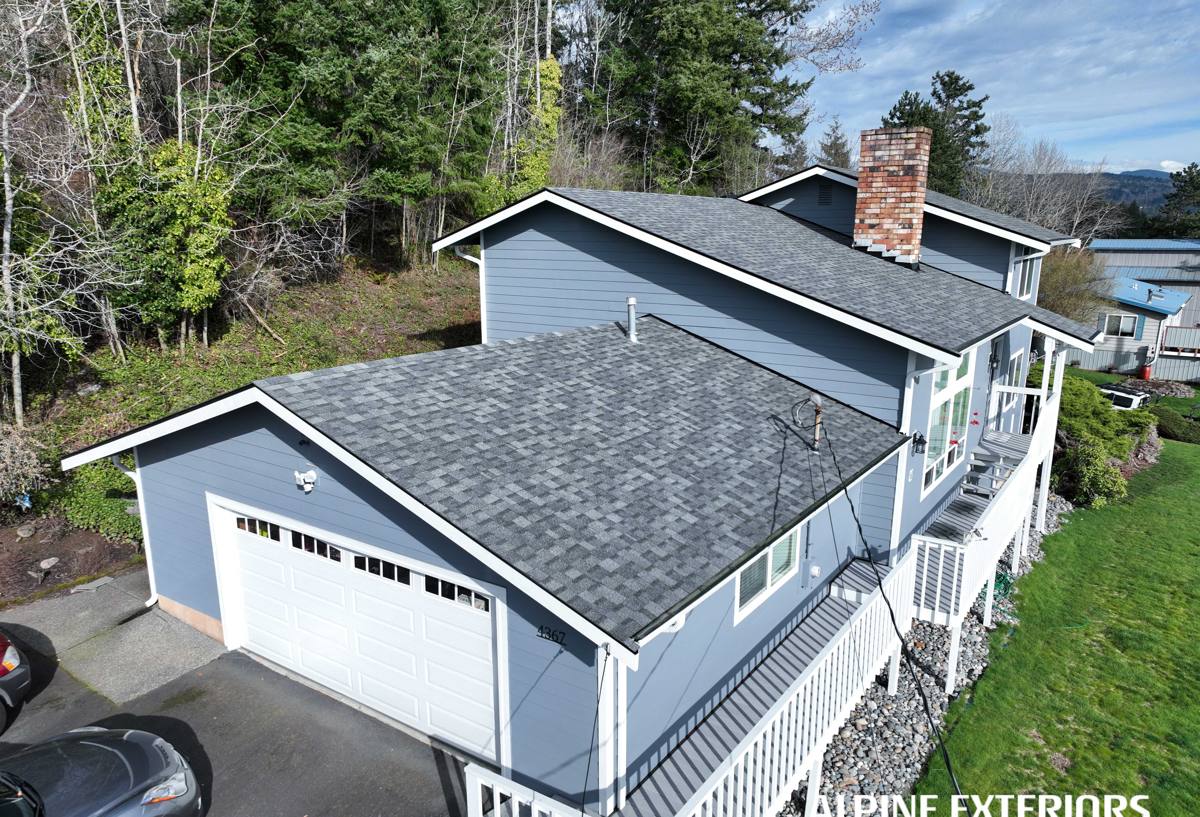
Signs Your West Seattle Home May Need a Roof Replacement
Roofs rarely fail all at once. Most of the time there's a stretch of warning signs before a leak actually shows up inside the house. Here's what we look for, and what you can check from the ground or an attic hatch without getting on a ladder:
- Granules collecting in gutters or at the base of downspouts, which signals shingles are wearing thin
- Shingles that are cupping, curling at the edges, or visibly cracked
- Moss or algae streaking across the roof plane, especially on the shaded or north-facing sections
- Dark staining or a sagging feel to any part of the roofline when viewed from the street
- Daylight visible through the roof deck from inside the attic
- Water stains on interior ceilings or around chimneys and skylights
- A roof that's 20+ years old and has never had a full tear-off, only patches or overlays
Any one of these on its own isn't necessarily an emergency. But two or three together, especially on a home exposed to wind off the water, usually means it's time for an honest inspection rather than another round of patching.
Repair vs. Replacement
Not every roofing problem calls for a full replacement. A localized leak around a single flashing detail, a handful of storm-damaged shingles, or a clogged valley can often be repaired for a fraction of the cost. Replacement becomes the right call when the underlying materials — the decking, the underlayment, the bulk of the shingles — are past their service life, or when repeated repairs on an aging roof are starting to add up without solving the real problem. We'll tell you plainly which category your roof falls into; we don't have any incentive to sell a replacement when a repair will genuinely hold.
What a Correct Roof Replacement Actually Involves
Tear-Off and Deck Inspection
A proper replacement starts with removing the old roofing down to the deck — not layering new material over old. That step matters everywhere, but especially in a climate like ours: it's the only way to find hidden moisture damage, soft or rotted decking, and mold or mildew that's been developing quietly under the old roof. Any compromised decking gets replaced before anything new goes down. Skipping this step is how a roof looks fine for a year or two and then fails from the inside out.
Underlayment and Flashing
Given how much wind-driven rain West Seattle gets off the Sound, underlayment choice and installation quality carry more weight here than in a drier climate. We use synthetic underlayment for its water resistance and durability, with self-adhering ice-and-water membrane at the eaves, valleys, and any roof-to-wall transitions — the spots where wind-blown rain is most likely to find a way in. Flashing around chimneys, skylights, and vent penetrations gets replaced, not reused, since old flashing is one of the most common sources of hidden leaks on a roof that otherwise looks fine.
Ventilation
A roof system needs balanced intake and exhaust ventilation to work correctly — this is where a lot of moss and premature aging problems actually start. Without enough airflow, moisture gets trapped under the roof deck, which keeps the underside damp and accelerates wear from below while also feeding surface moss growth from above. We check soffit and ridge ventilation as part of every replacement and correct it when it's inadequate, which is common on older West Seattle homes that were built or last re-roofed before current ventilation standards were typical.
Material Selection
The right roofing material depends on the home's exposure, roof pitch, and your budget. For a house on an elevated, wind-exposed lot near the water, we'll weigh wind rating and moisture performance more heavily than we would on a sheltered inland lot. For a shaded home under heavy tree cover, algae-resistant shingles and ventilation take priority over wind rating. We walk through these trade-offs with you directly rather than defaulting to whatever's easiest to install.
Comparing Roofing Materials for a West Seattle Climate
| Material | How It Handles Our Climate | Maintenance Considerations |
|---|---|---|
| Architectural asphalt shingle | Good wind rating, widely available in algae-resistant formulations | Periodic moss/algae treatment in shaded areas; standard lifespan for the price point |
| 3-tab asphalt shingle | Lower wind rating; more prone to lifting in exposed, wind-driven-rain locations | Shorter service life; we generally steer water-facing or bluff-top homes away from this option |
| Standing seam metal | Sheds moss and water very effectively; strong wind performance | Requires attention to fastener and coating quality near salt air to avoid corrosion over time |
| Cedar shake | Traditional look, but higher moisture sensitivity in a damp, shaded climate | Needs more frequent inspection and treatment to manage moss and rot risk; higher upkeep commitment |
We're not going to tell you one material is objectively "best" — the right answer depends on how exposed your roof plane is, how much shade it gets, and how much ongoing maintenance you want to take on. What we will do is give you a straight assessment of how each option is likely to perform on your specific roof.
What Drives the Cost of a Roof Replacement
We don't publish blanket pricing because roof cost genuinely varies by house, but these are the main factors that move the number up or down, in roughly the order they matter:
| Factor | Why It Matters |
|---|---|
| Roof size and number of planes | More square footage and more valleys/hips mean more material and labor |
| Roof pitch and access | Steep roofs and homes on tight or sloped West Seattle lots require more safety setup and time |
| Decking condition | Hidden rot or damage found at tear-off adds material and labor to replace it properly |
| Material choice | Asphalt, metal, and cedar carry different material and installation costs |
| Number of penetrations | Chimneys, skylights, and multiple vents each need individual flashing work |
| Layers to remove | Tearing off two layers of old roofing takes longer than tearing off one |
Once we've inspected your roof in person, we'll walk you through exactly which of these factors apply to your home and why, so the estimate makes sense rather than arriving as a single unexplained number.
Our Roof Replacement Process
- Inspection. We get on the roof, check the decking where accessible, and assess ventilation, flashing, and overall condition.
- Written estimate. You get a clear scope of work and pricing before any commitment, with material options explained in plain terms.
- Permitting. We handle the permit process required for roof replacement work in Seattle so you don't have to navigate it yourself.
- Property protection. Landscaping, siding, gutters, and driveways get covered or protected before tear-off begins.
- Tear-off and deck repair. Old roofing comes off, decking is inspected, and any damaged sections are replaced.
- Underlayment, flashing, and new roofing installed. Following manufacturer specifications for the material chosen.
- Cleanup and magnetic nail sweep. We clear debris and sweep the property for stray fasteners before we consider the job done.
- Final walkthrough. We review the finished roof with you and go over warranty coverage.
Why Local West Seattle Experience Matters
A roof replacement crew that regularly works West Seattle knows things a crew coming from farther away has to learn on the fly: which streets and driveways make staging materials and equipment tight, how exposed a given block is to wind off the Sound, and which older homes in the area are likely to have outdated ventilation or undersized decking under the existing roof. That local familiarity translates into fewer surprises during the job and a more accurate estimate up front.
It also means we're not guessing at what performs well here. We see how different materials and installation details actually hold up on West Seattle roofs year after year — which shaded roofs need extra ventilation attention, which exposed roofs need stronger fastening schedules, and where moss tends to come back if it isn't addressed at the source rather than just power-washed off the surface.
Maintaining Your Roof After Replacement
A correctly installed roof still benefits from basic upkeep, especially in our climate. A few habits go a long way toward protecting the investment:
- Keep gutters clear so water isn't backing up under the roof edge during heavy rain
- Trim back overhanging branches to reduce shade, debris buildup, and moss regrowth
- Schedule a visual inspection every year or two, particularly after major windstorms
- Address any moss regrowth early rather than letting it establish across a full roof plane
- Check attic ventilation periodically to make sure vents haven't been blocked by insulation or debris
None of this requires a major time commitment, but skipping it is how a well-installed roof ends up needing avoidable work years earlier than it should.
Get a Straightforward Estimate
If your West Seattle roof is showing its age, or you just want an honest read on where it stands, we're happy to take a look. There's no pressure and no sales script — just a clear inspection, a straight answer, and a written estimate you can take your time with. Use the form below to request your free estimate.