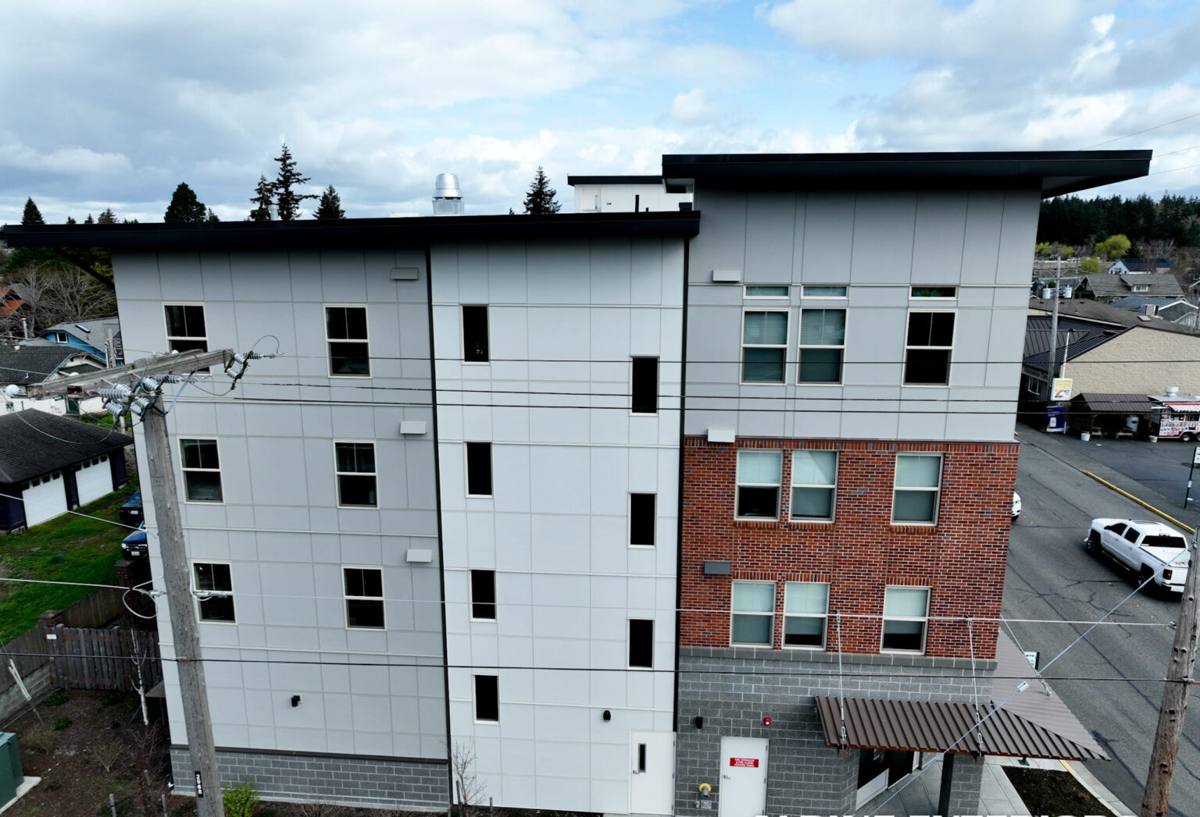
 Seattle Exterior
 West Seattle's Exposure Is Different From the Rest of the City
West Seattle sits up on bluffs and slopes facing directly out over Puget Sound, and that position changes what a window has to deal with day to day. Homes closer to the water catch wind-driven rain coming almost sideways off the Sound, along with salt-laden air that settles on glass, frames, and hardware. Add in the long stretch of gray, damp months that keep north- and shade-facing walls wet for weeks at a time, and you get conditions that are noticeably harder on windows than what a more sheltered inland Seattle block might see.
None of that means West Seattle homes need exotic products. It means the basics — flashing, sealing, drainage, and material selection — have to be done correctly, every time, because there's less room for a shortcut to go unnoticed. A window that's "good enough" in a protected inland yard can start showing problems within a few seasons on an exposed bluff lot.
Signs It's Time to Replace, Not Repair
Not every window issue means a full replacement. But when several of these show up together, repair usually just delays the inevitable and keeps money going into a window that's past its useful life.
- Fogging or a milky haze between panes — the seal has failed and the gas fill or insulating air space is gone
- Drafts you can feel around the frame even with the window fully latched
- Sashes that are painted or swollen shut, or that need force to open and close
- Soft, discolored, or rotting wood at the sill or lower frame corners
- Visible gaps between the frame and the wall, or daylight showing around the edges
- Condensation forming on the inside of the glass or frame during cold, wet stretches
- Moss, mildew, or dark staining building up on or around the frame that keeps coming back
- A noticeable jump in heating costs with no other explanation
If you're only seeing one of these on one window, a repair may still make sense. If it's showing up across multiple windows on the same wall, that's usually a sign the whole assembly — glass, frame, and the flashing behind it — is due for replacement.
What a Correct Window Replacement Job Involves
Removing the Old Window Without Damaging the Opening
The old sash and frame have to come out cleanly, and the rough opening underneath needs to be inspected before anything new goes in. This is where hidden problems tend to surface — soft sheathing, old caulk standing in for real flashing, or water staining that shows a leak has been going on for a while. A correct job stops here and addresses what's found instead of covering it up with a new window and hoping for the best.
Flashing and Weather-Resistive Barrier Integration
This is the step that matters most in a climate like ours and the one that's easiest to shortcut. The window opening needs proper flashing tape or pan flashing at the sill, integrated correctly with the house's weather-resistive barrier so that any water that gets past the window sheds back out instead of pooling behind the trim. On a wall that's taking direct, wind-driven rain, a gap in this layer is what eventually shows up as rot two or three years down the road, long after the installer is gone.
Setting, Shimming, and Sealing
The new window has to be set level, plumb, and square, shimmed correctly so it isn't relying on the frame to hold its shape, and then sealed with the right materials both inside and out. Interior air sealing (not just exterior caulk) is what actually stops drafts and condensation. Exterior sealant has to be compatible with the siding and trim material and applied where it can actually do its job, not just wherever it looks tidy.
Full-Frame or Insert Replacement — Which One Your Home Needs
There are two basic approaches to window replacement, and the right one depends on the condition of what's already in the wall. An insert (or "pocket") replacement keeps the existing frame in place and fits a new window inside it — faster, less disruptive to interior and exterior trim, and a reasonable option when the existing frame is still solid and square. A full-frame replacement removes everything down to the rough opening, which is the right call when there's rot, water damage, or an opening that's no longer square. Skipping a needed full-frame replacement to save time is one of the more common corners cut in this trade, and it's usually the homeowner who pays for it later in the form of a leak.
Choosing Window Materials and Glass for Marine Exposure
Material choice matters more here than in a drier, more sheltered climate. Salt air and constant moisture cycling — wet, then dry, then wet again — put more strain on finishes and hardware over time.
| Material | How It Handles Our Weather | Maintenance | Trade-offs |
|---|---|---|---|
| Vinyl | Won't rot or corrode; handles moisture and salt air well | Low — occasional cleaning | Frame color/size options more limited than wood |
| Fiberglass | Very stable in temperature and moisture swings; strong against wind-driven rain | Low | Higher upfront cost than vinyl |
| Wood or wood-clad | Classic look, good insulator, but exposed wood needs a sound exterior clad or paint system to hold up to salt air and constant damp | Higher — finish upkeep is ongoing | More sensitive to installation quality and moisture intrusion |
| Aluminum-clad wood | Protects the wood exterior from weather while keeping a wood interior | Moderate | Clad seams and corners need careful sealing to stay watertight |
On the glass side, dual-pane with a Low-E coating is the standard baseline for this climate and handles most West Seattle homes well. Triple-pane adds meaningful noise reduction and a bit more insulation value, which some homeowners want on walls facing open water or a busier street, but it's a heavier unit and not a necessity for every home. We'll walk through what actually makes sense for your specific exposure rather than defaulting to the most expensive option.
What It Costs and What Actually Drives the Price
Window replacement pricing varies a lot based on the specifics of the job, and it's worth understanding what moves the number before you start comparing quotes.
| Factor | Why It Affects Price |
|---|---|
| Window size and style | Picture windows and large sliders cost more than a standard single- or double-hung |
| Full-frame vs. insert | Full-frame involves more labor, materials, and interior/exterior trim work |
| Number of openings | Per-window cost typically drops somewhat as the total count on a job goes up |
| Access and height | Second-story or hard-to-reach windows on bluff and hillside lots take more time and equipment |
| Glass package | Triple-pane, upgraded Low-E coatings, or tinted glass add cost over standard dual-pane |
| Condition behind the wall | Rot or water damage found during removal adds repair work before the new window can go in |
We'll always break these out clearly in a written estimate so you know exactly what you're paying for, rather than a single lump number.
Our Process, From Estimate to Cleanup
On-Site Assessment
We look at each window individually — frame condition, sill condition, how exposed that particular wall is to wind and rain — rather than quoting the whole house as one identical package. A wall facing open water often needs a different approach than a sheltered side of the same house.
Proposal and Product Selection
You get a clear, itemized proposal covering materials, glass package, and scope (insert vs. full-frame) for each opening, with the reasoning behind each recommendation so you're not just picking from a catalog blind.
Installation Day
Work areas are protected, old windows are removed carefully, any hidden damage is documented and discussed with you before we proceed, and every opening gets proper flashing and sealing — not just a new window dropped into an old hole.
Final Walkthrough
Every window gets operated, checked for square and smooth function, and inspected for a clean seal inside and out before we consider the job done. We clean up the work area and haul away the old units.
Why Hiring a Crew That Already Works West Seattle Matters
A contractor who works across this part of Seattle regularly has already seen how the local housing stock and local weather interact — older frames that were never flashed correctly the first time, siding types that are common on West Seattle blocks, and the access challenges that come with hillside and bluff lots. That experience shortens the guesswork on your job.
There's also the practical side: permitting and inspection requirements fall under Seattle and King County jurisdiction, and a crew that pulls permits in this area regularly knows the process rather than learning it on your project. If your home is on a slope with limited street parking or tight side-yard access, that's also something a local crew has planned around before, not something they're figuring out for the first time on your street.
Keeping New Windows Performing Through Moss Season
New windows still need a bit of upkeep in this climate, especially through the long damp stretch when moss and mildew growth is at its worst. A couple of times a year, check weep holes at the sill for debris so water can drain out as designed, wipe down frames where moss or algae tends to collect (usually shaded, north-facing walls), and take a look at exterior caulk lines for any cracking or separation. Catching a small sealant gap early is a five-minute fix; left through a few wet seasons, it can turn into a much bigger repair.
If your West Seattle home has windows showing their age — or you just want an honest opinion on repair versus replacement — we're happy to take a look. Fill out the form below for a free, no-pressure estimate, and we'll walk you through exactly what your home needs and why.